


Underglaze Blue Serving Dish
An underglaze blue serving dish carries cobalt pigment beneath a clear glaze, offering durable service and rich pictorial depth for the table.
Underglaze Blue Serving Dish
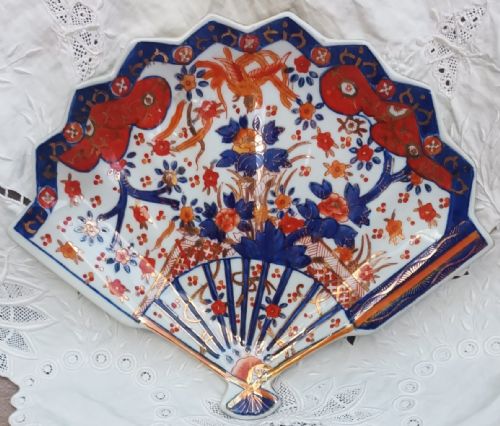
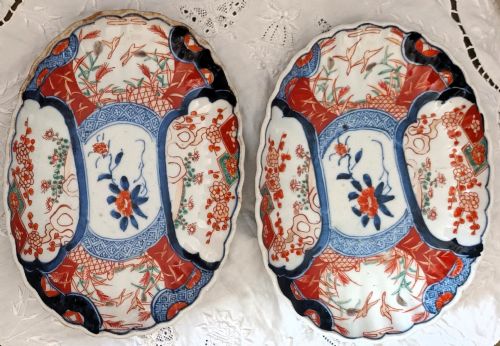
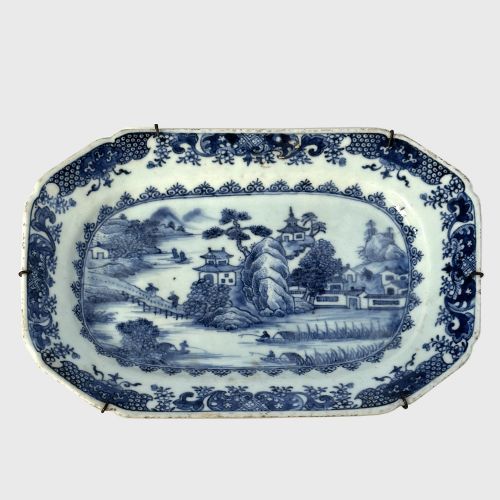
An underglaze blue serving dish encompasses large platters, meat dishes with gravy wells, tureens, and broad bowls produced across the eighteenth and nineteenth centuries. You meet English transfer-printed earthenware from Staffordshire potteries alongside Chinese export porcelain and Japanese Imari ceramics.
The domestic English examples often display topographical views or pastoral scenes in deep cobalt, while Asian export pieces show intricate floral or marine motifs. Each form served a distinct dining purpose, from presenting jointed meats to holding delicate desserts.
Georgian and Victorian earthenware stands beside earlier soft-paste porcelain and Japanese Meiji period wares. This variety reflects the global trade in ceramic tablewares and the domestic shift toward matching service sets.
How they were made
Potters applied cobalt pigment directly to the raw clay body or unfired porcelain before covering the piece in glaze and firing it at high temperatures. This technique locked the pigment beneath the glassy surface, protecting the blue design from cutlery and constant washing.
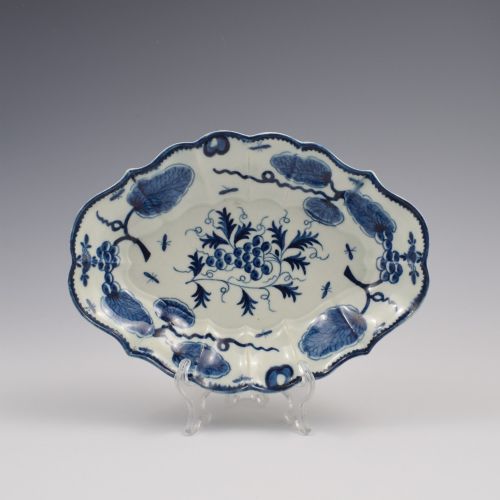
English earthenware utilised copperplate transfer printing to repeat complex pictorial patterns onto flat platters and hollow tureens with speed and precision. Porcelain pieces relied on hand-painted cobalt brushwork, sometimes accented with enamel colours or gilding applied in a subsequent low-temperature firing.
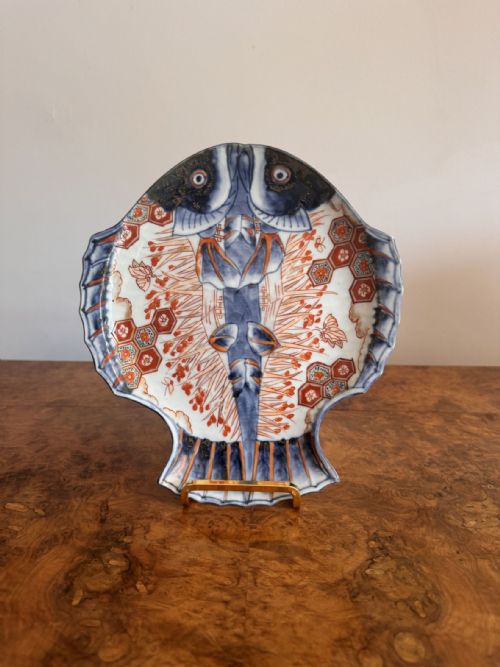
A porcelain dish shaped precisely as a swimming fish proves that table service could possess a sense of theatrical humour.
What varies in quality
The clarity and depth of the cobalt pigment determine much of the visual success, distinguishing a sharp, vibrant transfer or brushstroke from a blurred or runny impression. Body potting also differs, from thick, heavy earthenware meat dishes to translucent porcelain bowls.
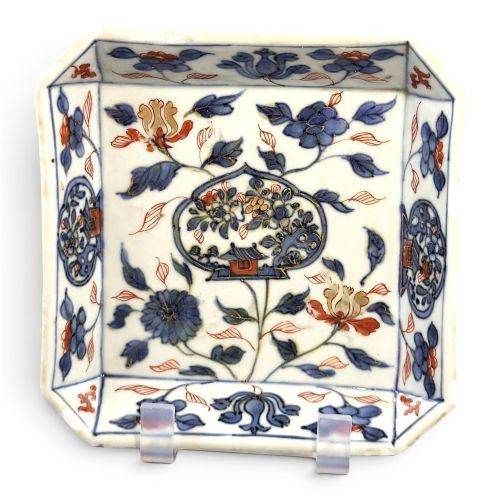
Design complexity and the ambition of the border work separate standard utilitarian tablewares from exhibition pieces intended for grander dining rooms. The crispness of the moulded shape, whether chamfered square or fish-form, reveals the skill of the original workshop.
Copeland and Garrett·Mason·Spode·Elkin Knight and Bridgwood·Worcester·Derby
The Underglaze Blue Serving Dish Glossary
- Underglaze
- A decoration applied to ceramic ware before it is glazed and fired, allowing the pigment to fuse permanently beneath the glass surface.
- Transfer print
- A design applied to pottery by engraving a copper plate, pulling the ink on tissue paper, and pressing it onto the biscuit clay.
- Imari
- A style of Japanese export porcelain characterised by a palette of underglaze blue, iron red, and gold.
- Tureen
- A deep covered serving vessel designed for holding soup, sauce, or large portions of meat at the table.
- Meat dish
- A large ceramic platter, often featuring a recessed well and channel to catch juices during carnal service.
- Soft-paste porcelain
- A ceramic composition made from white clay mixed with ground glass and other materials, fired at lower temperatures than true hard-paste porcelain.
Underglaze Blue Serving Dish: Frequently Asked Questions
Can I still use these dishes for serving food?
These historical ceramics remain food safe when the glaze is intact, though hand washing preserves the soft earthenware bodies and prevents thermal shock.
Many collectors prefer to use them for dry presentation or display to avoid accidental chips on centuries-old edges.
What is the purpose of the well in meat platters?
The sunken channel and reservoir at one end of a meat dish collected juices from carved joints, keeping the meat elevated and the dining table clean.
This functional innovation became standard in nineteenth-century Staffordshire serving platters designed for heavy roast dinners.
How do I distinguish Chinese export from English transferware?
Chinese export pieces show hand-painted cobalt lines with subtle variations in tone, often on a porcelain or soft-paste body.
English transferware relies on mechanically printed patterns with repeating dot matrices visible under magnification, usually on earthenware or pearlware.
Why do some blue and white tones look blurry?
Cobalt pigment bleeds slightly into the glaze during high-temperature firing if the kiln heat fluctuates.
This chemical reaction creates soft, feathered outlines around the transfer print or painted motif, which helps date earlier wares.