




Antique Chinoiserie Serving Plate
An antique chinoiserie serving plate brings together far eastern motifs and domestic dining traditions on tin-glazed earthenware and ironstone.
Antique Chinoiserie Serving Plate
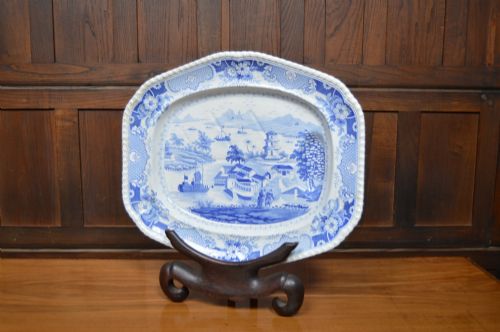
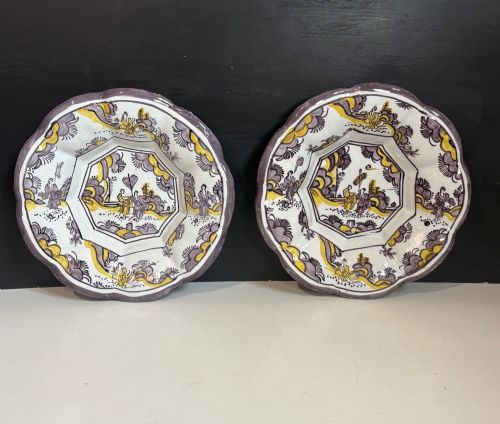
When you examine an antique chinoiserie serving plate, you are looking at large platters, chargers, and meat dishes decorated with imaginary oriental landscapes, temples, and figures. These pieces served practical dining functions in Georgian and Victorian households before transitioning to decorative display.
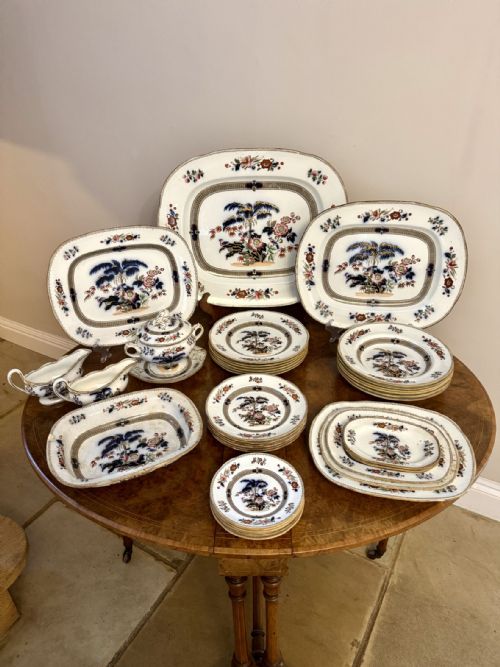
The selections available here span from the eighteenth century into the Victorian era, taking in delft chargers, transfer-printed earthenware, and heavy ironstone bodies. You will frequently encounter blue and white palettes alongside polychrome enamels and gold leaf accents.
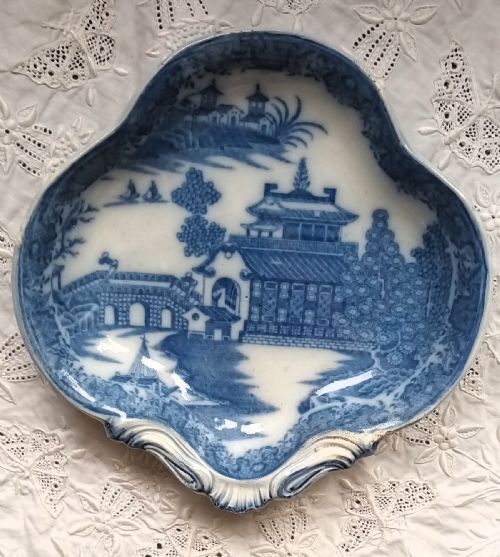
Forms range from simple rectangular meat platters and drainers to deep circular chargers and trefoil dishes. Each piece reflects the enduring European fascination with Chinese art filtered through domestic pottery traditions.
Materials and manufacture
Potters built these serving vessels using earthenware, tin-glazed bodies, and robust ironstone, applying cobalt oxide underglazes and enamel colours by hand or via copperplate transfer printing. Some surfaces receive supplementary highlights in gold leaf to catch the light on a dining table.
The underlying ceramic body dictates the weight and durability of each charger, with ironstone providing a particularly dense substrate for large nineteenth-century platters. Tin-glazed earthenware from earlier decades relies on a softer, opaque white glaze that absorbs cobalt pigment with characteristic blurring at the edges.
Two little quails stand together in the eighteenth-century Kakiemon pattern, proving that birds had opinions on art long before us.
Variations in quality
Quality rests upon the crispness of the transfer print or the painterly confidence of the brushwork, alongside the stability and weight of the ceramic body. Early pieces show lively hand-painted variations in the motifs, while later transferware relies on the precision of the engraved copper plate.
The visual depth of the cobalt oxide and the purity of the white glaze separate standard utilitarian tableware from exceptional decorative chargers. Maker marks stamped or printed to the reverse provide further indication of factory standard.
Wedgwood·Coalport·Copeland and Garrett·Minton·John Rogers and Son·Mason·Elkin Knight and Bridgwood
The Antique Chinoiserie Serving Plate Glossary
- Chinoiserie
- European decorative style reflecting imaginative interpretations of Chinese and East Asian artistic traditions. It appears frequently on ceramics through motifs of pagodas, figures, and exotic gardens.
- Ironstone
- A heavy, durable type of feldspathic stoneware patented in the nineteenth century. It provided a strong body for large serving platters and meat dishes.
- Transferware
- Pottery decorated by applying a printed design from an engraved copper plate onto tissue paper, which was then transferred onto the unglazed or bisque ceramic body.
- Charger
- A large decorative plate or dish, typically exceeding twelve inches in diameter. These pieces were used for serving food or displayed upright on sideboards.
- Tin-glazed earthenware
- Pottery covered with a glaze containing tin oxide, which creates an opaque white surface suitable for painting. Delftware is a prominent example of this technique.
Antique Chinoiserie Serving Plate: Frequently Asked Questions
How were serving plates used?
These large platters and chargers occupied the centre of the dining table for presenting joints of meat, poultry, or game during formal meals.
Servants would bring them from the kitchen to the dining room before carving or serving portions directly to guests.
Are these plates safe for food?
While these antique pieces were originally created for dining, age can cause micro-fissures in the glaze and body.
Modern buyers generally reserve them for display, collection, or gentle service rather than everyday meals.
How do I date an antique plate?
Dating relies on identifying the ceramic body, the manufacturing technique, and any maker marks or registration numbers stamped underneath.
Lighter tin-glazed earthenware typically indicates eighteenth-century origins, whereas dense ironstone and sharp transfer printing point toward the Victorian era.
What is the pagoda pattern?
The pagoda pattern is a classic chinoiserie motif featuring multi-tiered oriental buildings, pavilions, and bridges set within stylised garden landscapes.
Potters reproduced this scenic design across various blue and white transferware services throughout the nineteenth century.