
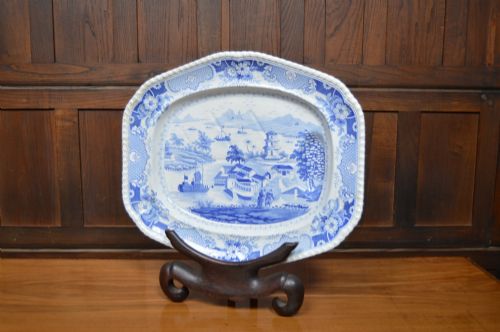
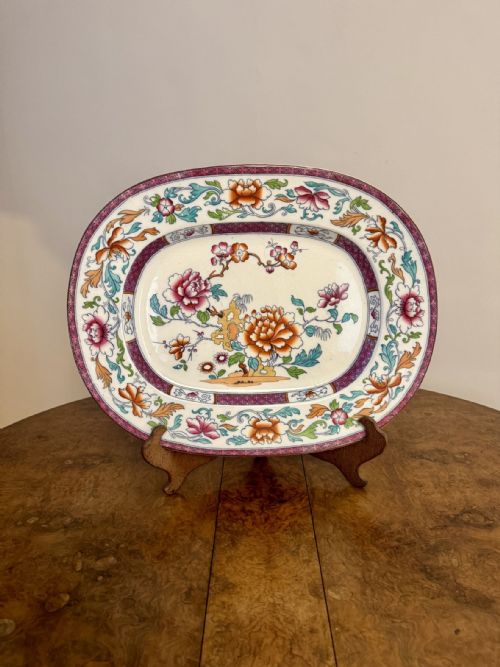


Chinoiserie Meat Dish
These chinoiserie meat dish examples bring bold Asiatic transfer patterns and substantial scale to the table, offering both decorative presence and historic utility.
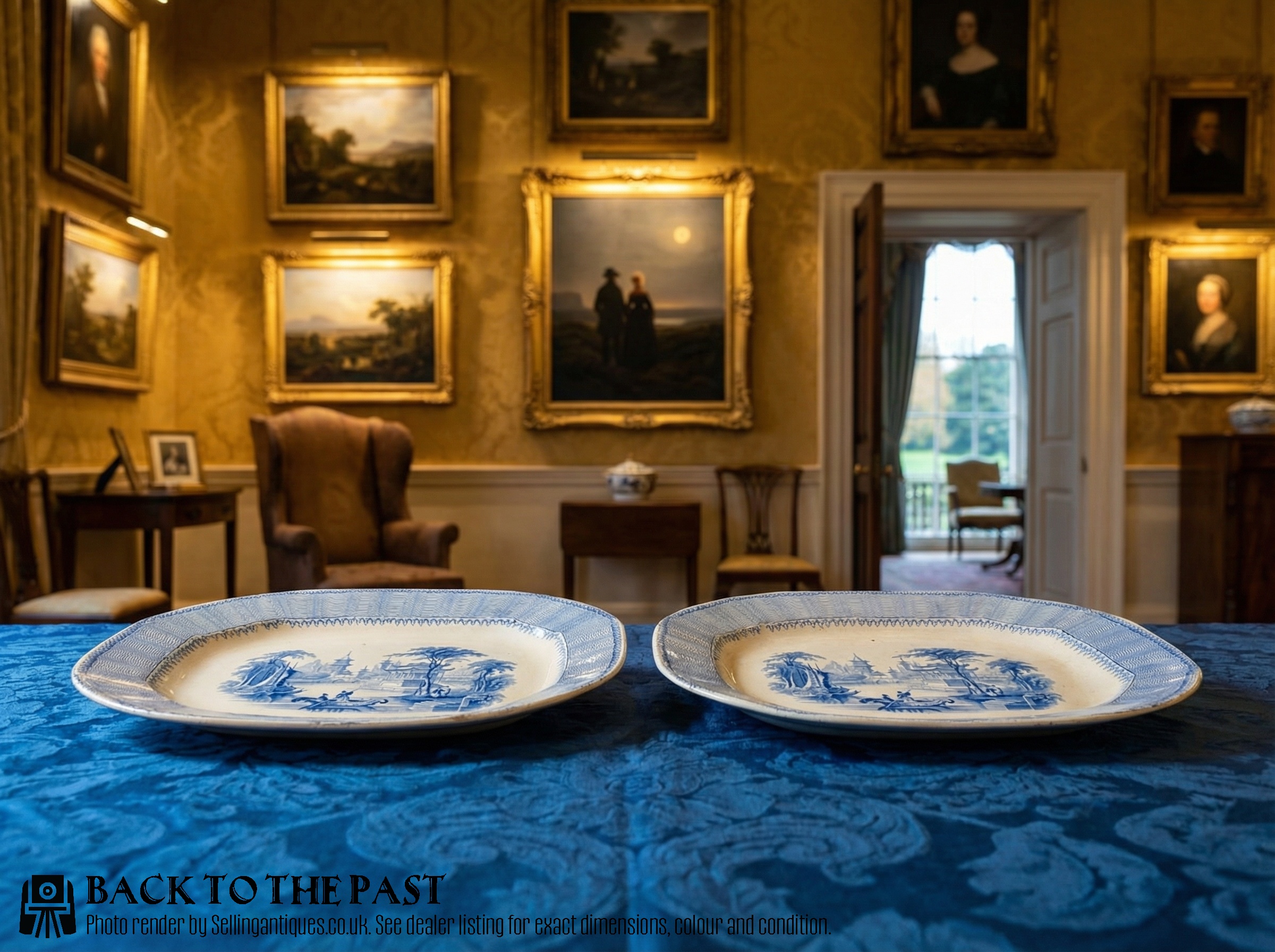
Chinoiserie Meat Dish
A chinoiserie meat dish is a large ceramic platter designed for serving joints of meat, poultry or game at the dining table. The pieces found here span the Georgian, Regency and Victorian eras, taking the form of substantial serving platters, chargers and well-and-tree dishes.
Most examples display blue and white transfer printing with imaginary oriental landscapes, temples and garden motifs. Makers such as Minton and Mason's dominate the range, producing heavy ironstone and earthenware vessels intended for heavy domestic use.
How They Were Made
Potters shaped these large meat dishes from earthenware and ironstone, materials chosen for their durability and weight at the dinner table. Ironstone provided a robust body capable of resisting the heat and knife marks associated with carving joints.
Makers applied the decoration using copperplate transfer printing in blue, often finished with hand-painted enamel or gilt highlights. A transparent lead glaze sealed the ceramic surface, creating the glossy finish seen across nineteenth-century examples.
Some nineteenth-century platters include a subtle well-and-tree channel designed specifically to catch the escaping juices of a Sunday roast.
What Varies in Quality
The clarity and crispness of the transfer-printed pattern set the standard for quality across these platters. Finer pieces maintain sharp details in the temples, foliage and figures without blurring or ink pooling in the glaze.
Subtleties in form also distinguish the range, such as the inclusion of a well-and-tree drainage system or applied crests and gilt borders. The weight and stability of the ceramic body reflect the ambition of the original pottery.
J.W.R.·Copeland & Garrett·Minton·Mason’s·Elkin Knight & Bridgwood
The Chinoiserie Meat Dish Glossary
- Transferware
- Ceramic pottery decorated by applying a printed design from an engraved copper plate onto tissue paper, which was then transferred onto the biscuit fired clay. This technique allowed factories to produce complex blue and white patterns consistently.
- Ironstone
- A dense, heavy type of earthenware patented in the nineteenth century to imitate Chinese porcelain. It proved exceptionally strong for large serving platters.
- Well and tree
- A platter featuring a channeled groove system that runs around the rim and down a central sloping well with a raised tree motif. This design drained meat juices away from the carving surface during dinner.
- Charger
- A large decorative plate or platter used either for serving heavy joints or as an undertplate for smaller courses. They sit at the upper end of nineteenth-century serving scales.
- Chinoiserie
- European artistic style reflecting Chinese and East Asian motifs, particularly popular during the Georgian and Victorian periods. It appears on ceramics through imaginary landscapes, pavilions and exotic flora.
Chinoiserie Meat Dish: Frequently Asked Questions
How were chinoiserie meat dishes used?
These platters served large joints of meat, poultry and game at nineteenth-century dining tables. Their generous proportions accommodated carved portions alongside accumulated juices.
Many examples include recessed wells and drainage channels to separate meat from gravy during carving. They formed the centrepiece of formal service before the adoption of smaller individual plates.
What is the difference between earthenware and ironstone?
Earthenware provides a porous, traditional ceramic body fired at lower temperatures, commonly found in early nineteenth-century domestic wares. It offers a softer weight and traditional cream or white base.
Ironstone contains slag and feldspar, creating a much heavier, vitrified body that resists chipping and staining. This made ironstone the preferred choice for large, heavy-use meat serving platters.
How do I date a nineteenth-century meat platter?
Dating relies on maker marks stamped or printed on the reverse, alongside the style of the transfer pattern and ceramic body. Early nineteenth-century pieces often feature impressed factory marks without registration numbers.
Later Victorian examples introduce diamond registration marks that reveal the exact year and month of design protection. The depth of the blue transfer print and the presence of ironstone also help narrow the period.
Can I use antique platters for serving food?
These historical serving platters remain structurally sound for presenting dry foods and cold meats at the table. Their durable ironstone and lead-glazed surfaces tolerate careful hand washing.
Harsh modern detergents, dishwashers and microwaves should be avoided to protect the historic glaze and transfer-printed decoration from fading or crazing.