


Underglaze Blue Chinese Vase
An underglaze blue chinese vase brings cobalt pigment beneath a clear glaze, offering centuries of ceramic artistry for the discerning interior.
Underglaze Blue Chinese Vase
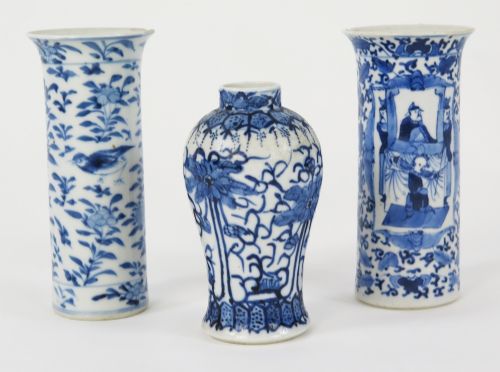
An underglaze blue chinese vase spans several centuries of production, appearing in forms such as ginger jars, double-gourd vessels, and bottle vases. Buyers encounter pieces from the Ming Dynasty through the Qing Dynasty, alongside later nineteenth and twentieth-century examples.
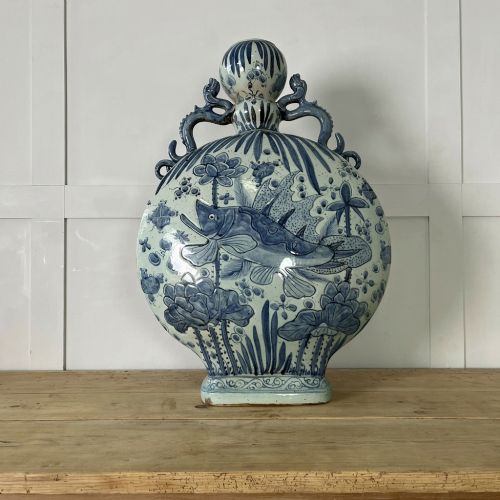
The selection ranges from garlic-mouth and meiping shapes to moon flasks and brush pots. Many pieces carry marks or styles recalling earlier reigns like Kangxi and Qianlong, reflecting a long tradition of historic revival.
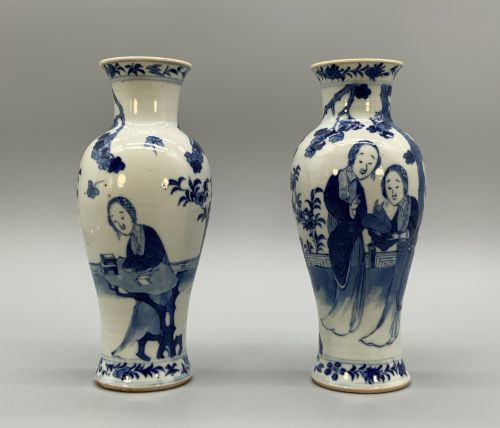
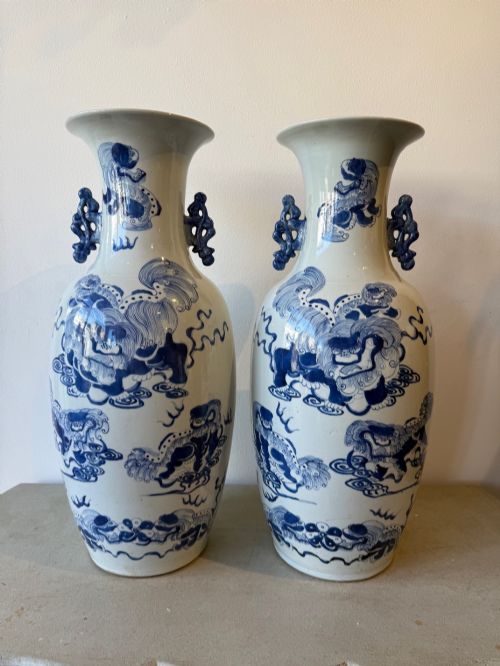
Vessels on this page often incorporate distinct decorative themes, including dragons, figural ladies, lotus motifs, and mythical beasts. These varied shapes and patterns provide clear indicators of period style and workshop origin.
Materials and technique
The primary material across these listings is porcelain, formed into ceramic bodies designed to support cobalt blue glaze and cobalt pigment. Artisans applied the underglaze colour directly to the unbaked clay before covering the vessel with a transparent glaze and firing it at high temperatures.
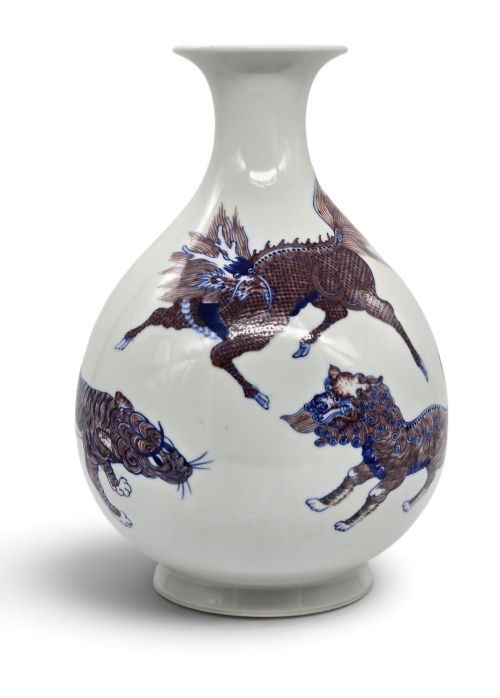
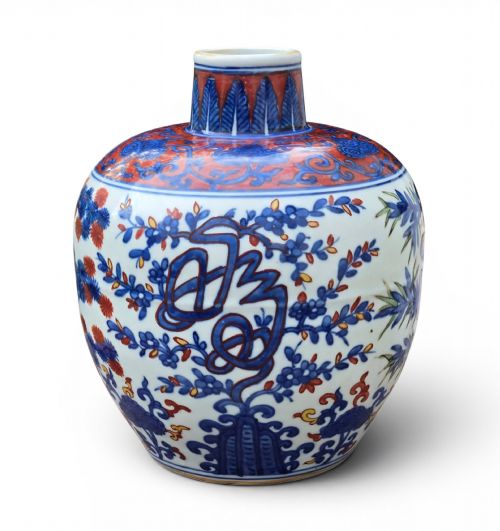
Certain examples combine this cobalt underglaze with iron-red, copper-red, or green enamel accents, adding polychrome contrast to the blue and white body. This technique required precise temperature control in the kiln to ensure both the cobalt and secondary pigments matured correctly.
Cobalt glaze appears alongside copper-red and iron-red enamel pigments across various jar and bottle shapes.
Standards of execution
The distinction between ordinary and exceptional work rests upon the fluidity of the brushwork and the depth of the cobalt pigment. Master painters achieved nuanced shading and sharp detail in complex scenes such as figural narratives or five-clawed dragons.
Excellence also shows in the purity of the porcelain body and the smooth application of the clear glaze over the underglaze decoration. Superior throwing results in balanced proportions across complex shapes like double-gourd vases and tulipières.
The Underglaze Blue Chinese Vase Glossary
- Underglaze blue
- A decorative technique where cobalt pigment is applied to the raw ceramic body before glazing and firing. This method protects the blue design beneath a glassy protective layer.
- Meiping
- A traditional tall-shouldered vase form originally designed for holding plum branches. The narrow neck and sweeping shoulders create a distinct silhouette.
- Kangxi
- A significant reign period within the Qing Dynasty associated with high standards in porcelain production. Pieces in this style often feature vibrant cobalt tones and detailed narrative scenes.
- Double-gourd
- A vessel shape formed by two joined bulbous sections resembling a traditional gourd fruit. This form holds symbolic meaning and requires skilled throwing to balance the upper and lower spheres.
- Wucai
- A ceramic palette meaning five colours, combining underglaze blue with overglaze enamels such as iron-red and green. This technique creates vibrant, multi-coloured pictorial surfaces.
Underglaze Blue Chinese Vase: Frequently Asked Questions
How are these vases dated?
Dating relies on stylistic markers, potting characteristics, and any reign marks found on the base of the vessel. Comparing the cobalt tone and painting style against established historical periods helps place each piece.
Changes in porcelain body composition and glaze texture also offer clues to the era of manufacture.
Where should I display a ginger jar?
Ginger jars work well on mantelpieces, sideboards, or dedicated display tables where their form and cobalt decoration can be appreciated from multiple angles. Their traditional lids complete the balanced silhouette.
Pairing them with neutral backgrounds allows the underglaze blue patterns to stand out clearly within a room.
What do the motifs mean?
Many designs carry traditional symbolic meanings related to longevity, status, or nature. Dragons and five-clawed motifs often signify imperial association, while lotus flowers represent purity.
Figural scenes and scholar themes reflect classical literature and historical narratives favoured by elite patrons.
Can these vases be used as lamps?
Certain vessels on the market have been adapted as table lamps while retaining their original ceramic bodies. This allows collectors to integrate antique porcelain into modern lighting schemes.
Such conversions should be assessed individually to ensure the structural integrity of the ceramic remains undisturbed.