

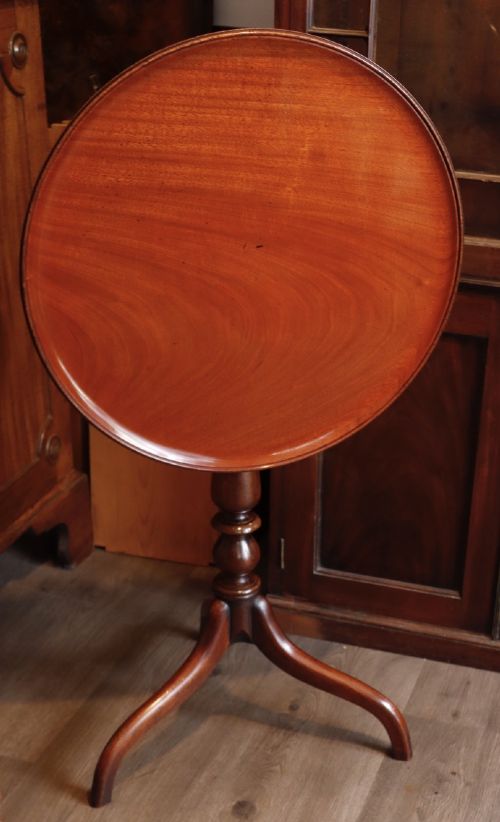
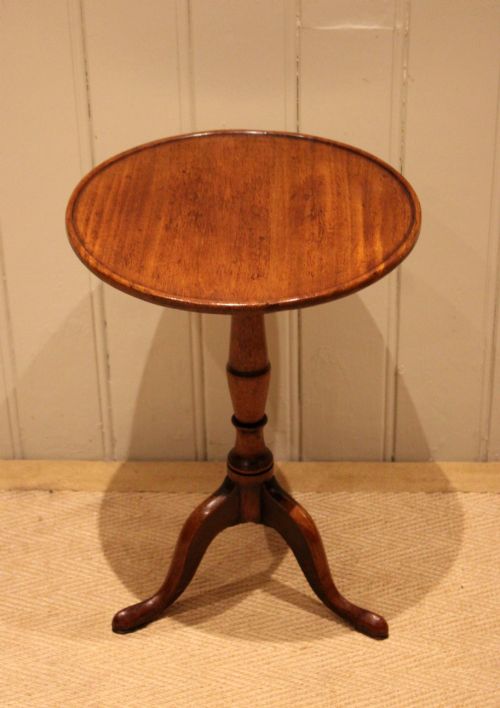
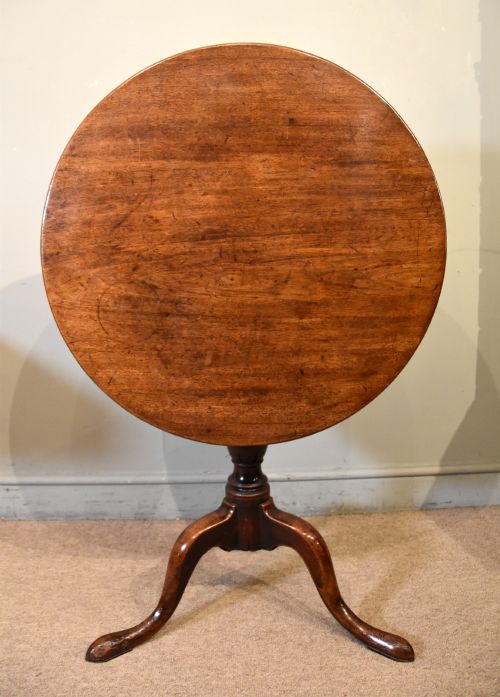
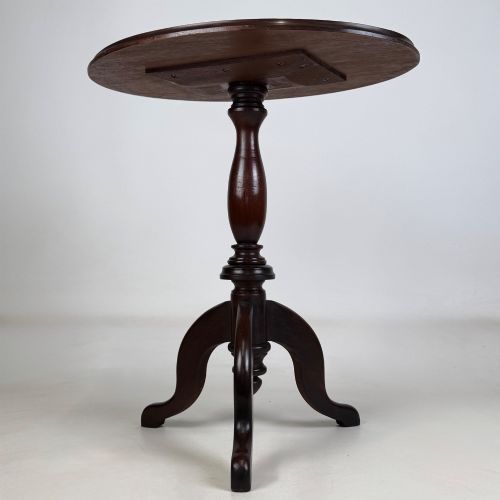
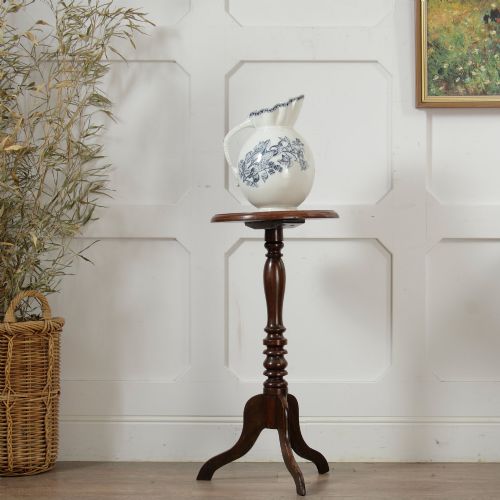
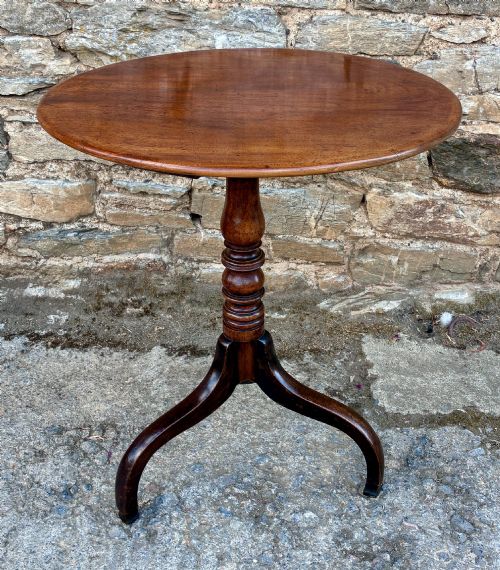
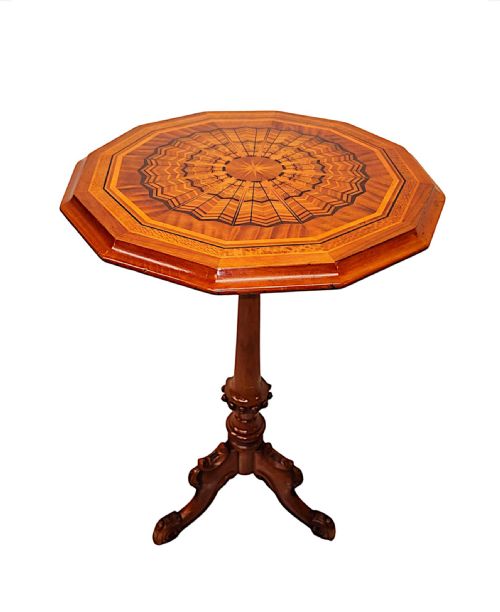
Turned Pedestal Wine Table
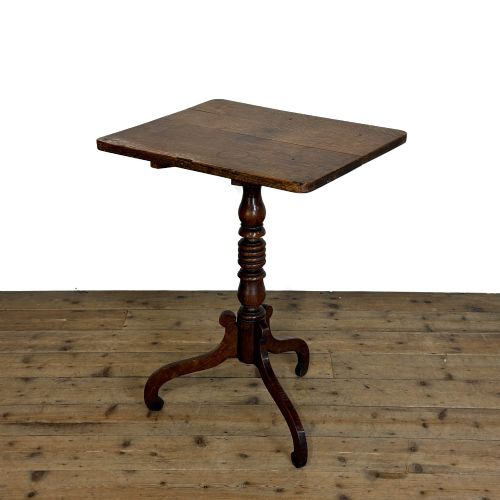
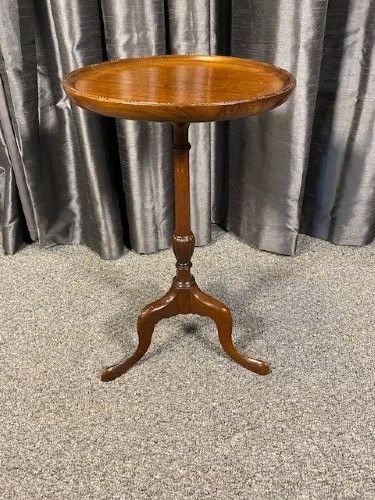
A turned pedestal wine table offers a compact surface raised on a central pillar, designed originally to hold a single glass or bottle.
Turned Pedestal Wine Table
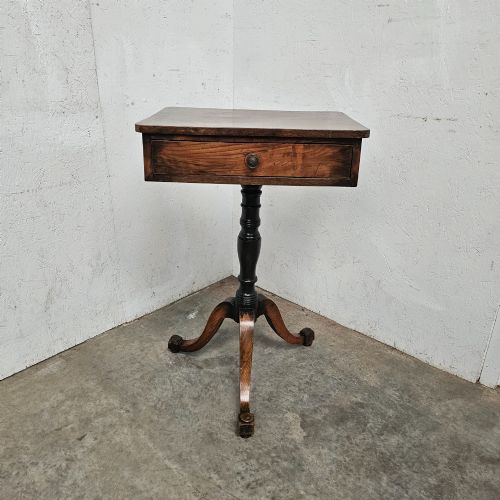
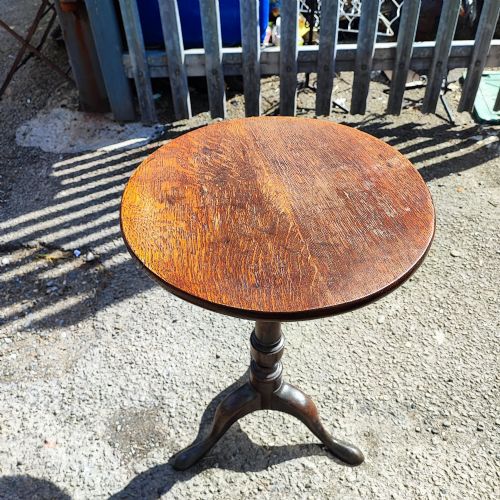
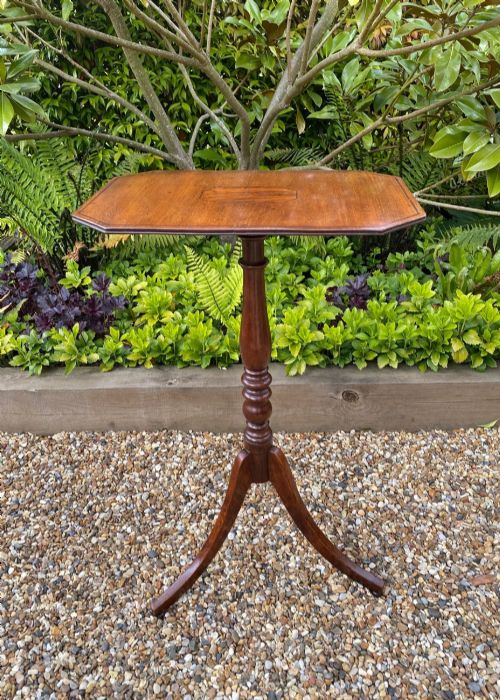
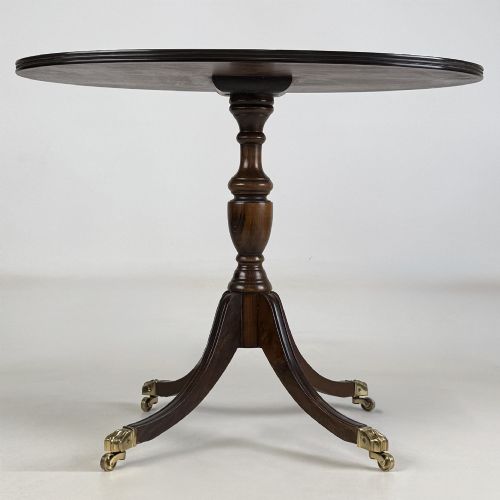
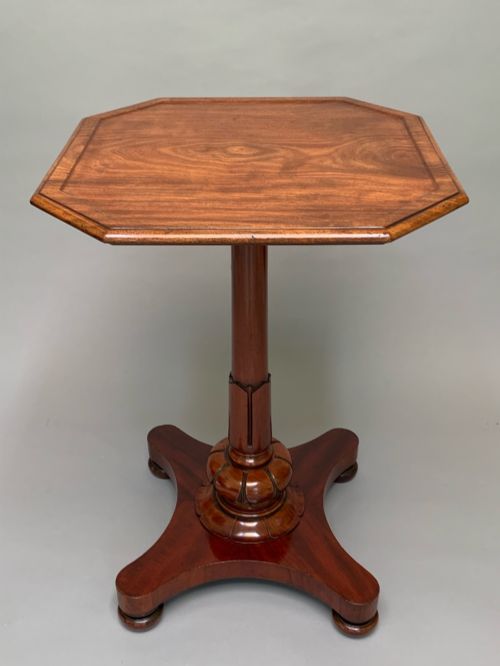
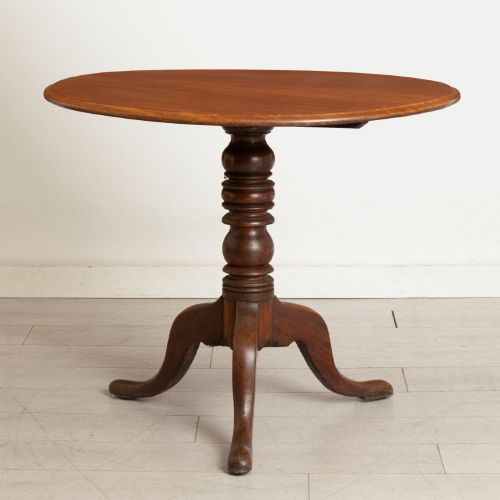
A turned pedestal wine table stands on a central column supported by three legs, forming a stable tripod base that fits easily beside a chair or in a corner. These pieces function primarily as occasional or side tables, offering a small circular or rectangular surface.
The versions most commonly found span the Georgian, Regency, and Victorian periods, with many pieces constructed from dense hardwoods like mahogany and oak. Examples frequently feature a tilt-top mechanism, allowing the top to pivot upright when not in use.
How they were made
Cabinet makers utilised solid timbers such as mahogany, oak, and rosewood, turning the central pedestals on a lathe to achieve reeded, fluted, or bobbin profiles. Tripod legs were often joined to the main shaft using dovetail or wedged tenon joints for structural strength.
Surfaces were frequently finished with veneers, leather inserts, or penwork decoration, then polished with wax or shellac to bring out the grain of the wood. Tilt-top variants incorporated sophisticated brass or wooden catches beneath the surface to secure the tabletop in a horizontal position.
Some nineteenth-century examples feature subtle ink stains on the top, proving their historical owners were perhaps too enthusiastic with their evening claret.
What varies in quality
The refinement of the turning on the central pedestal and the proportion of the tripod legs largely distinguish standard examples from finer works. Master makers achieved balanced silhouettes where the spread of the base matches the diameter of the top.
Selection of timber also determines quality, with figured mahogany, burr oak, and satinwood representing the upper tier of production. Subtle details such as finely carved knees on the legs or precise inlay work elevate the execution of the piece.
The Turned Pedestal Wine Table Glossary
- Tilt-top
- A hinged tabletop mechanism that allows the surface to pivot from horizontal to vertical, making the table simple to store against a wall when empty.
- Tripod table
- Any small table supported by a central pedestal above three spreading legs.
- Birdcage
- A revolving wooden framework beneath the tabletop that allows the surface to both rotate and tilt.
- Bobbin turned
- A style of pedestal shaping where the wood is turned on a lathe to resemble a series of spool-like or rounded beads.
- Pedestal
- The central upright column that supports the weight of the tabletop down to the floor.
Turned Pedestal Wine Table: Frequently Asked Questions
What were wine tables used for?
These small tables were positioned beside seating areas during the eighteenth and nineteenth centuries to hold drinking vessels, candles, or small personal items.
Their portable nature allowed servants to move them easily around a room as guests gathered.
How do I spot a tilt-top mechanism?
Look underneath the circular surface to find a wooden or brass catch fitted between the tabletop and the top of the pedestal.
When released, the surface pivots upward on a hinge to stand flat against the central column.
Are these tables sturdy on carpets?
The three-legged tripod base naturally accommodates uneven floorboards by resting firmly on all three points without rocking.
Thick carpets can sometimes mask this stability, so placing them on firm flooring ensures the best balance.
How do I date a pedestal table?
Examine the timber species, the turning style of the central column, and the method used to join the legs to the shaft.
Georgian and Regency examples tend to feature linear mahogany or oak construction, while Victorian pieces often display heavier proportions or bobbin turnings.