
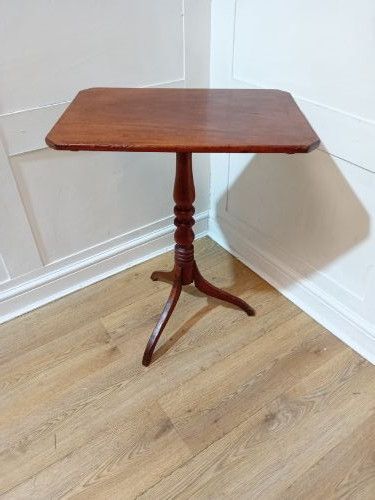
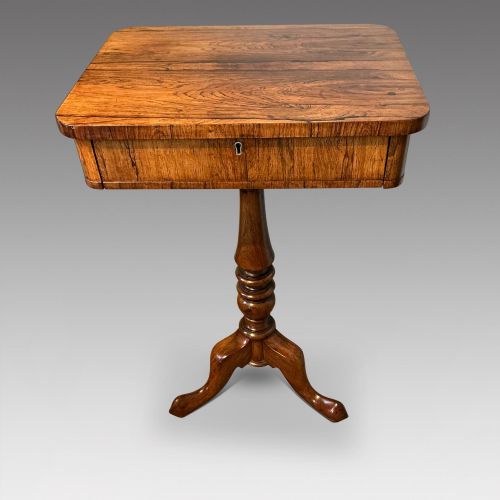
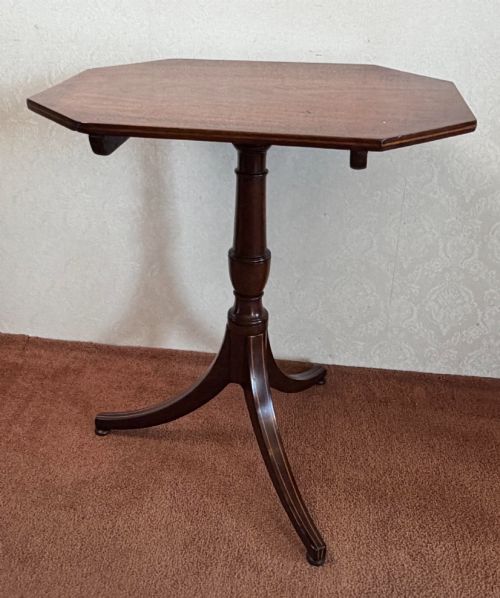
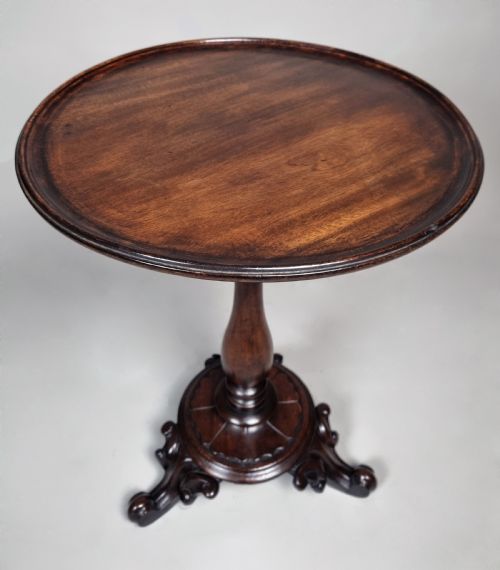
Tripod Base Wine Table
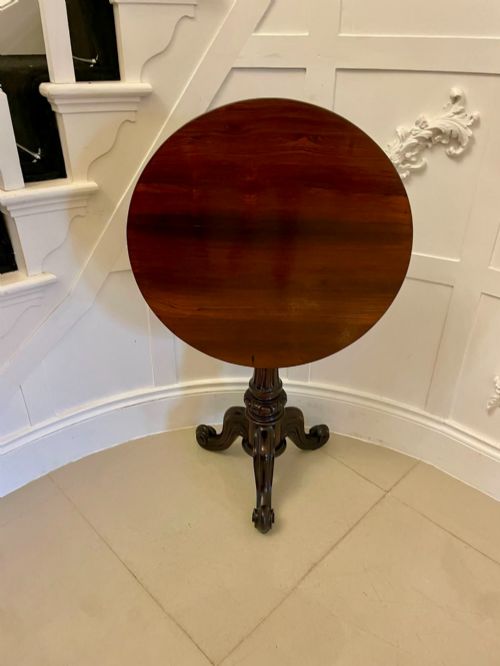
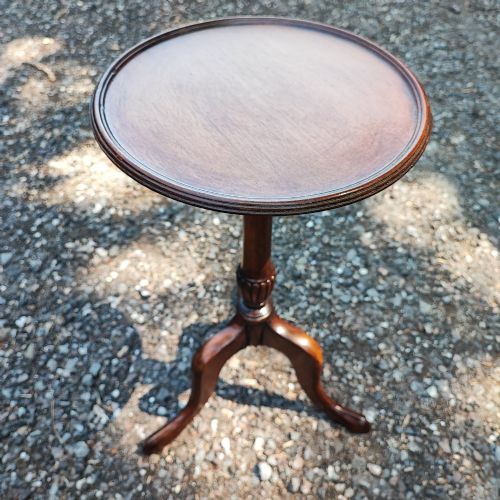
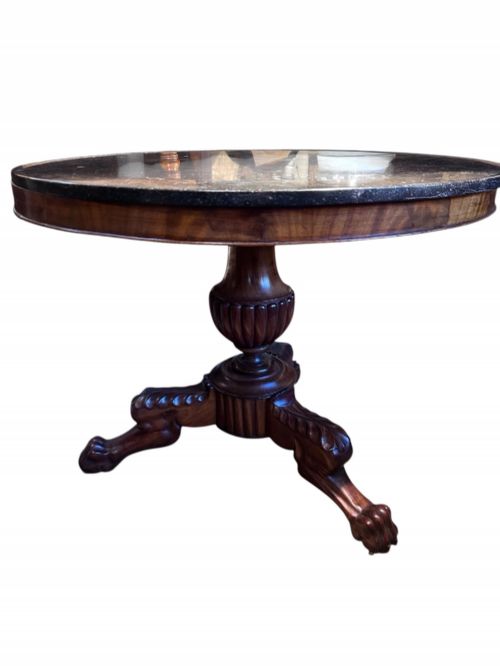
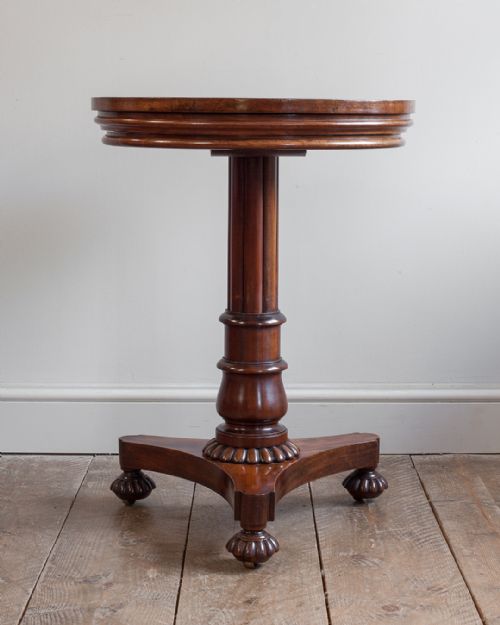
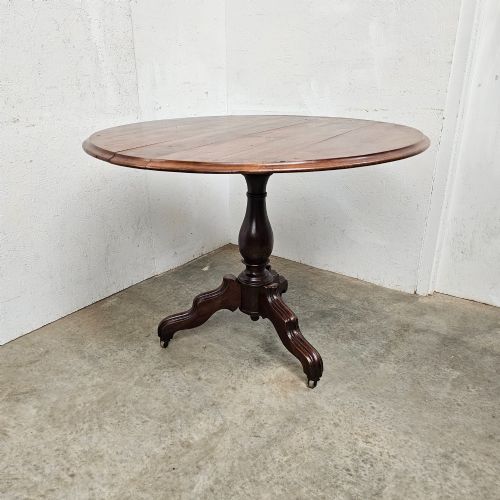
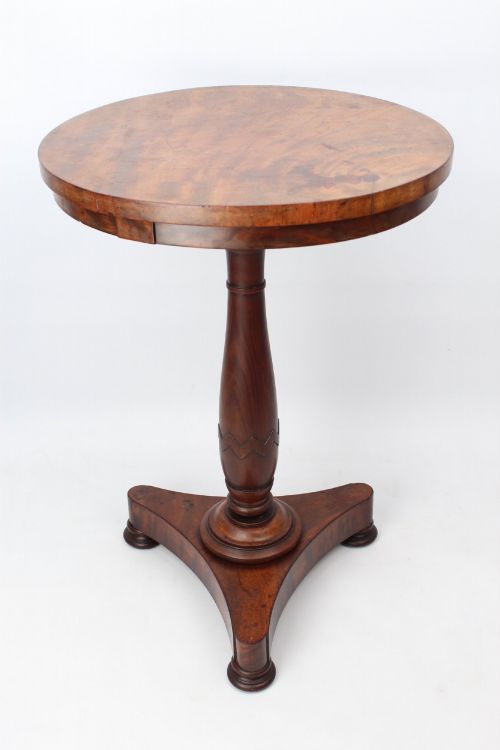
These tripod base wine table examples offer compact circular surfaces supported by three splayed legs, designed originally for holding glasses and bottles.
Tripod Base Wine Table
A tripod base wine table is a small occasional piece featuring a central pillar standing on three splayed feet, created to hold drinks or small items near seating.
The selections span the eighteenth, nineteenth and early twentieth centuries, encompassing Georgian, Regency, William IV, Victorian and Edwardian periods.
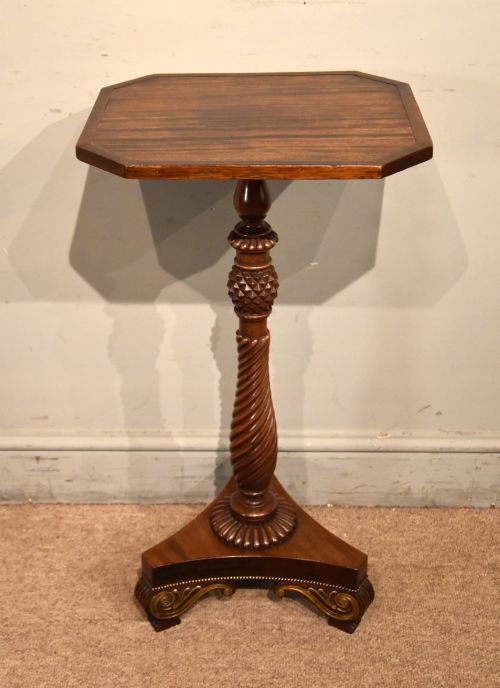
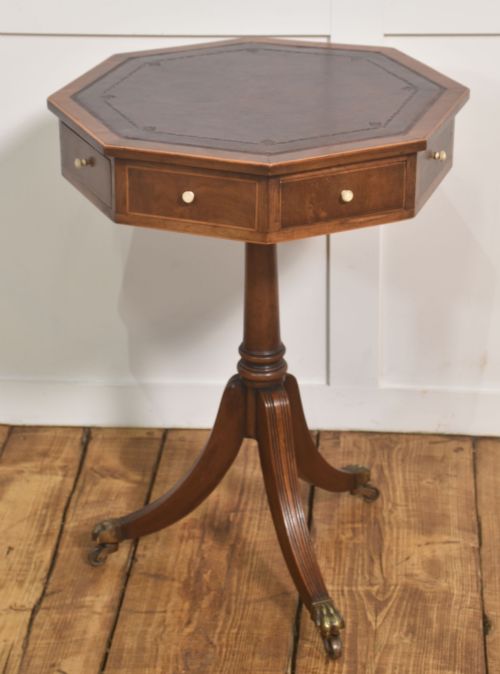
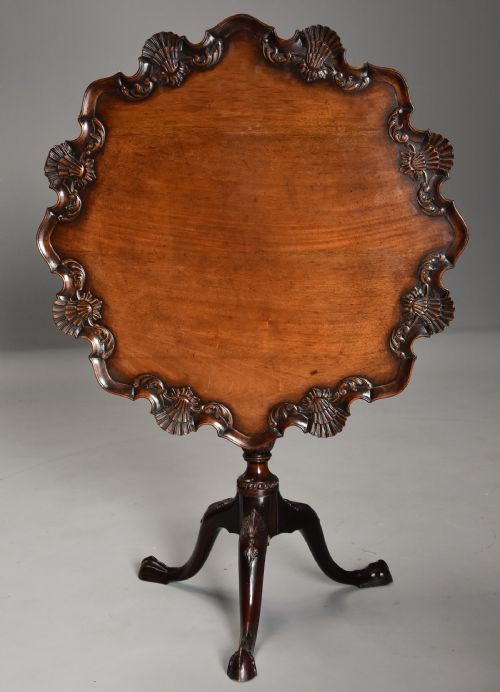
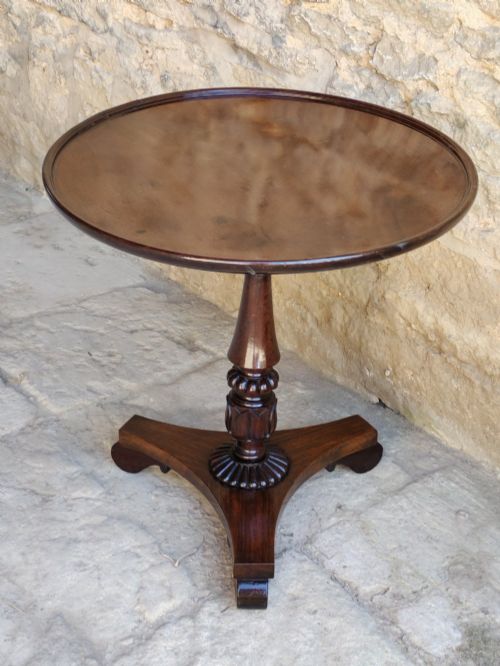
Among these forms, you encounter circular tops, tilt-top mechanisms, dishtop profiles and occasional octagonal drum formats constructed in timber.
Materials and construction
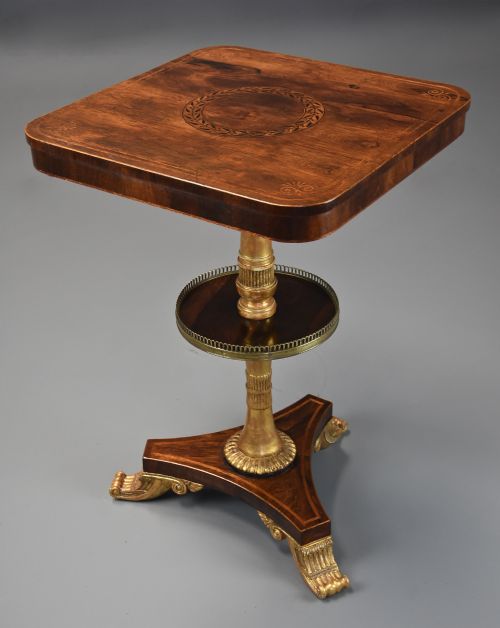
Cabinetmakers utilised dense timbers such as mahogany, rosewood, oak and walnut, frequently applying flame mahogany veneer or boxwood inlay to the top surfaces.
Support structures rely on turned central columns fixed to three outward-curving legs, sometimes incorporating brass fittings, cast iron components or marble inserts.
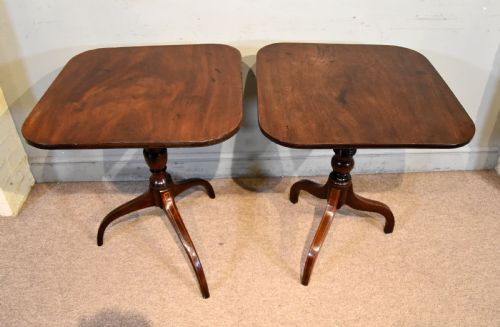
Tilt-top and snap-top actions required precise wooden catches and brass hinges to allow the circular surface to fold flat when not in use.
The listings show tripod base wine table forms executed in mahogany, rosewood, oak, and burr maple, spanning the eighteenth to twentieth centuries.
Evaluation of merit
The calibre of a tripod base wine table depends upon the selection of timber figure, such as well-matched flame mahogany or richly grained rosewood on the top.
The stability and grace of the tripod legs, alongside the crispness of any turned central column or carved details, separate standard production from superior workshops.
Integration of clever mechanisms like snap-top catches or neat boxwood inlay demonstrates greater skill in the original manufacture.
The Tripod Base Wine Table Glossary
- Tilt-top
- A table mechanism allowing the circular surface to pivot vertically on its central pillar for storage. This clever feature saved floor space in period rooms.
- Snap-top
- A spring-loaded catch securing the pivoting top in a horizontal position when in use. It prevents the surface from wobbling while holding glassware.
- Dishtop
- A table surface with a raised, concave rim carved directly from the solid timber. This edge prevented bottles and glasses from sliding off the top.
- Tripod base
- A support system consisting of three splayed legs radiating from a central column. This arrangement provides steady footing on uneven historic floorboards.
- Gueridon
- A small French occasional table supported by a column or figural base. These pieces often feature marble tops or intricate giltwood work.
Tripod Base Wine Table: Frequently Asked Questions
What was a tripod base wine table used for?
These small tables were positioned beside chairs or sofas to hold decanters, wine glasses and small personal items during evening gatherings.
Their compact size allowed servants to move them easily around the room depending on where guests were seated.
How do I tell a Georgian table from a Victorian one?
Georgian and Regency versions tend to display restrained classical proportions with simpler turned columns and understated mahogany surfaces.
Victorian and Edwardian examples often introduce heavier carvings, rosewood veneers, marquetry inlay, or tiered structures reflecting later revival tastes.
Can I use a tilt-top table safely?
The pivoting mechanism is designed to let the top fold flat against the pillar when the table is pushed against a wall.
Ensure the brass catch or wooden wedge locks firmly into place before placing any drinks or items back onto the surface.
Where should I place a wine table at home?
Their small footprint makes them suitable as lamp tables beside a reading chair, or as display surfaces in corners and hallways.
Keep them away from direct heat sources and strong sunlight to protect the polished wood finishes and delicate veneers.