

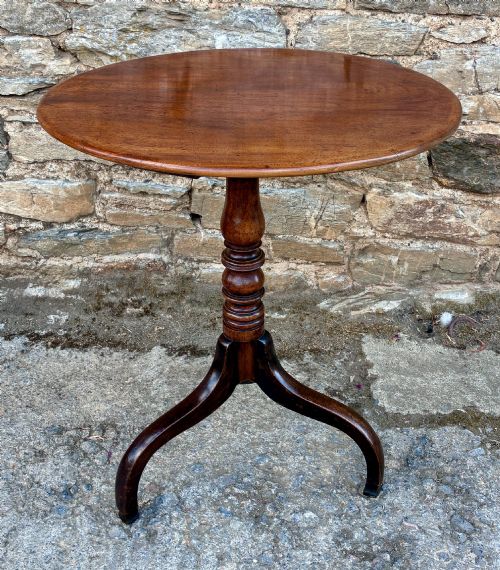
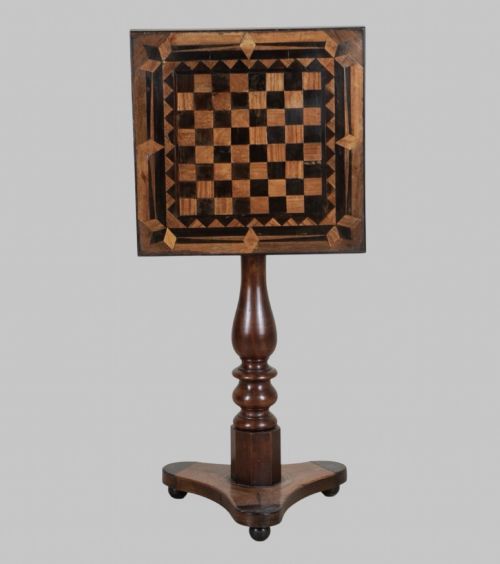
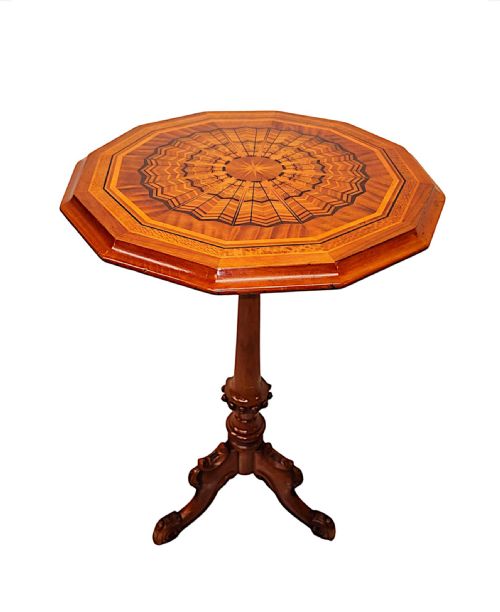
Turned Pedestal Tripod Table
A turned pedestal tripod table offers a compact surface raised on a central pillar and three legs, combining stability with simple grace for any room.
Turned Pedestal Tripod Table
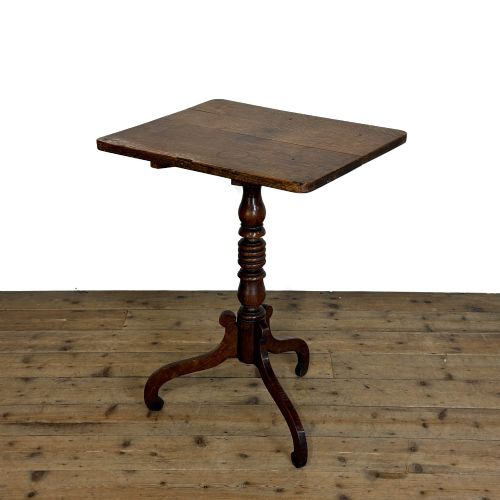
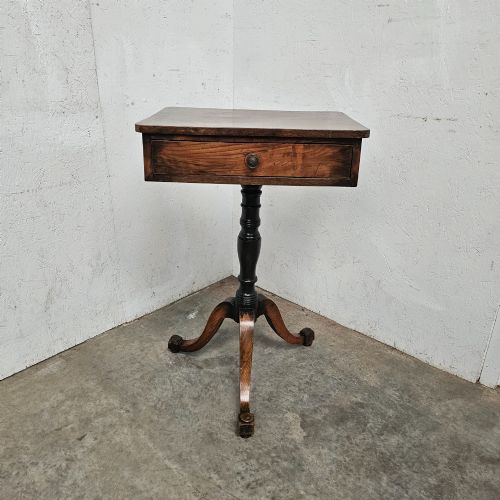
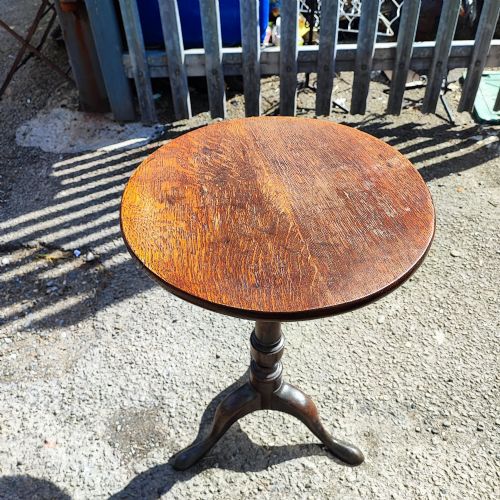
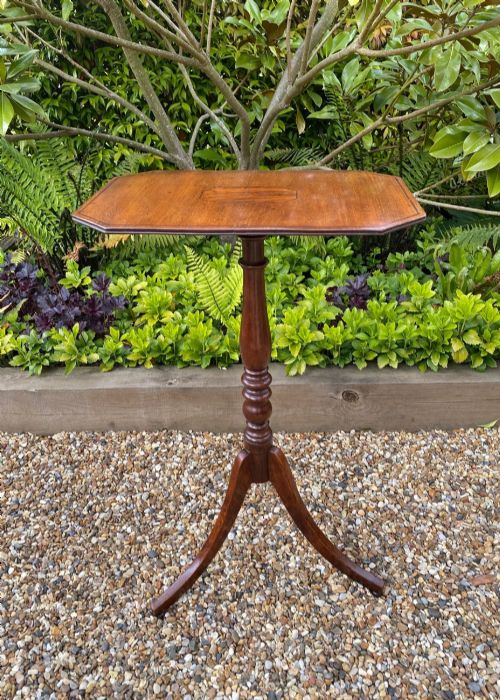
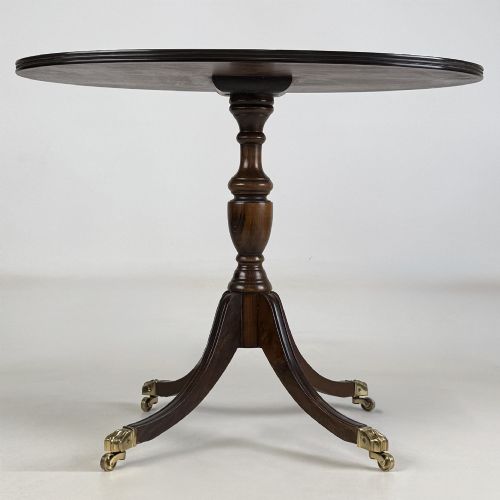
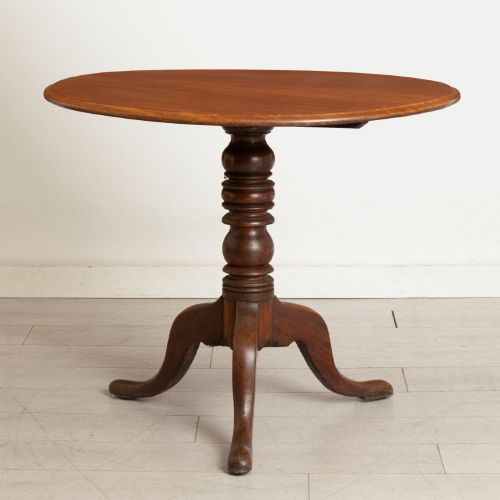
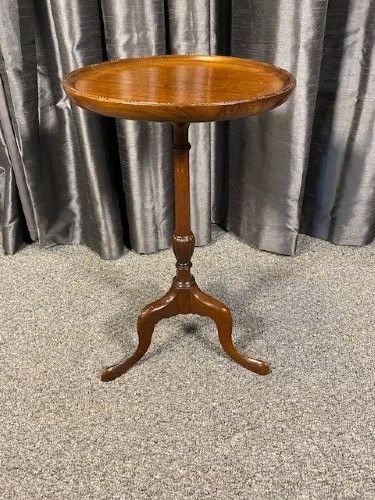
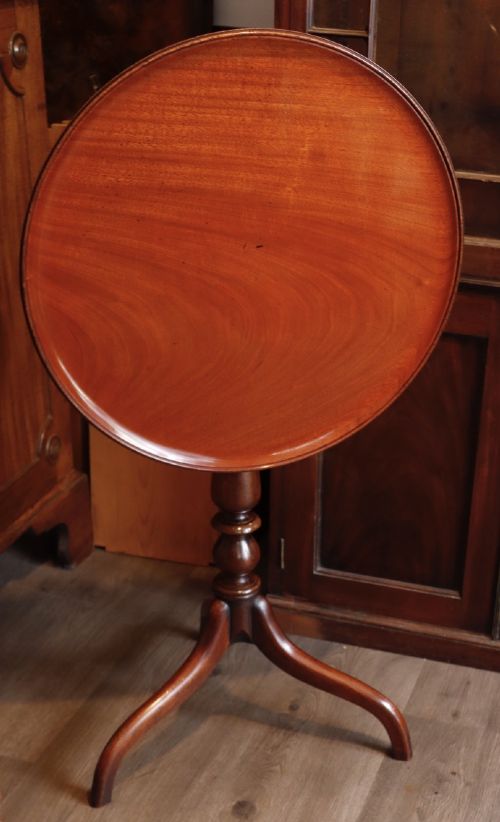
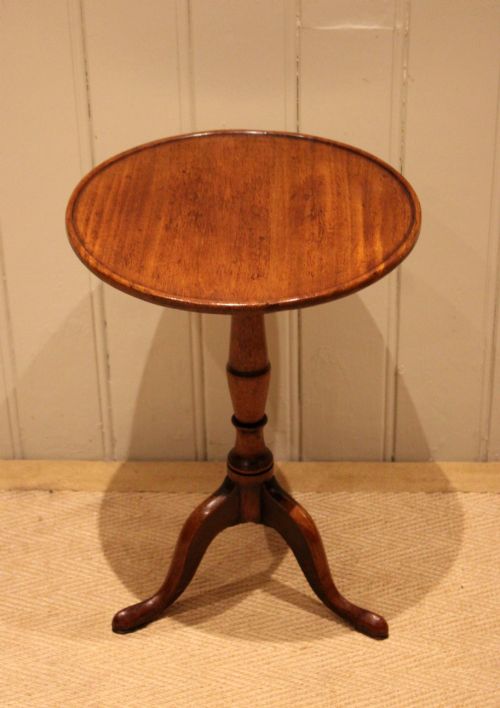
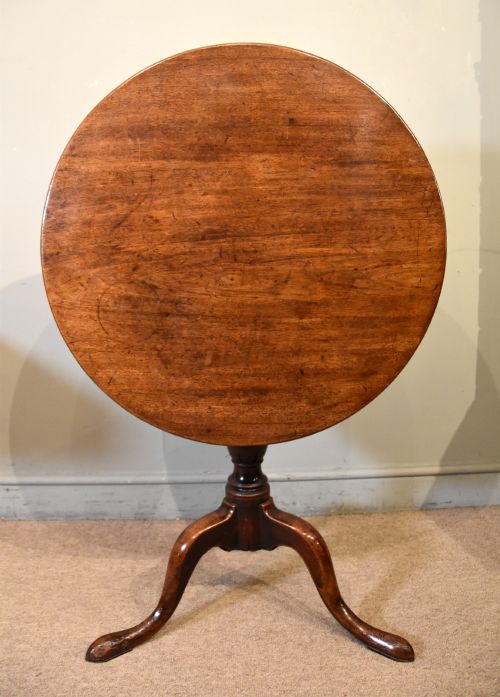
A turned pedestal tripod table brings together a circular or occasionally rectangular top supported by a central turned column that branches into three distinct feet. These pieces appear frequently across eighteenth-century and nineteenth-century eras, spanning Georgian, Regency, and Victorian periods.
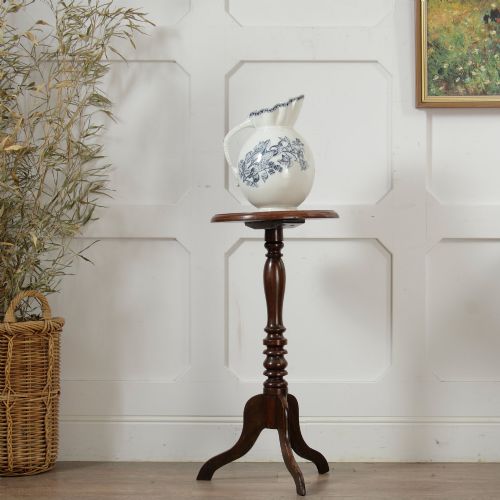
The form functions primarily as a wine table, candle stand, or small occasional table designed to fit beside seating or in corners. Mahogany and oak dominate the selection, though examples in walnut, rosewood, and pine also emerge in various domestic settings.
What varies in quality
The sophistication of the turning on the central pedestal and the grace of the leg curvature dictate the visual success of the piece. Fine examples display well-proportioned tripod legs that sweep outwards naturally without heavy or clumsy junctions.
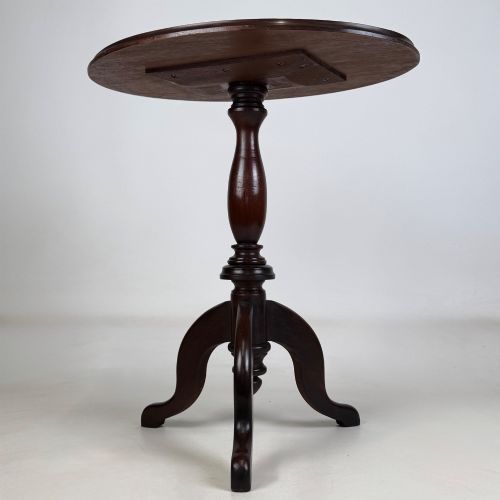
The choice of timber grain and the precision of the joinery where the legs meet the pillar mark the distinction between standard vernacular work and finer cabinetmaking. Mechanisms on tilt-top versions should operate smoothly with tightly fitted hinges and original brass or wooden retainers.
Gillows
The Turned Pedestal Tripod Table Glossary
- Tripod table
- A small freestanding table supported by a central pillar resting on three legs. This construction prevents wobbling on uneven floors.
- Tilt-top
- A hinged tabletop mechanism that pivots ninety degrees. This design allows the furniture to stand flat against a wall when not in use.
- Birdcage
- A revolving wooden framework beneath the tabletop. This assembly permits the surface to both rotate and tilt independently.
- Wine table
- A compact occasional table designed to hold glasses or decanters. These pieces became popular during the Georgian period for dining room hospitality.
- Bobbin turned
- A style of woodwork featuring rows of rounded wooden spheres shaped on a lathe. This decorative turning appears frequently on nineteenth-century sewing and pedestal tables.
Turned Pedestal Tripod Table: Frequently Asked Questions
What were turned pedestal tripod tables used for?
These versatile pieces served primarily as movable stands for holding candles, books, or wine glasses beside seating areas.
Their compact footprint allowed domestic occupants to shift them easily around the room as daily requirements changed.
How do I identify a Georgian tripod table?
Georgian versions typically feature rich mahogany or oak timbers with slender turned columns and pad or snake feet. The proportions tend to emphasise lightness and structural balance.
Examination of the underside often reveals pegged joints and hand-cut elements characteristic of eighteenth-century workshop practices.
What is a tilt-top action?
The tilt-top mechanism uses a hinged block beneath the surface that lets the tabletop lock flat or swing into a vertical position. This clever engineering saved valuable floor space in period homes.
Original brass catches or wooden sliding wedges usually secure the top when lowered for use.
Where should I place a tripod table at home?
The compact design makes these tables ideal as lamp stands beside armchairs or as accent pieces in narrow hallways. Their small circular tops fit neatly into awkward corners.
Avoid positioning them in direct sunlight or near heat sources to protect the polished wood surfaces.