


Round Oak Tilt Table
These round oak tilt tables combine practical folding mechanisms with sturdy timber, offering both surface space and smart space-saving storage when tilted.
Round Oak Tilt Table
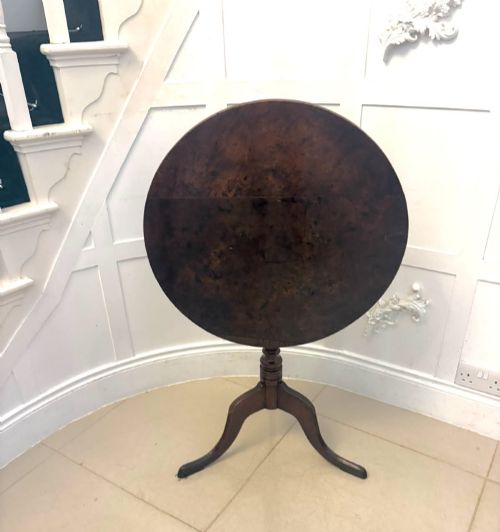
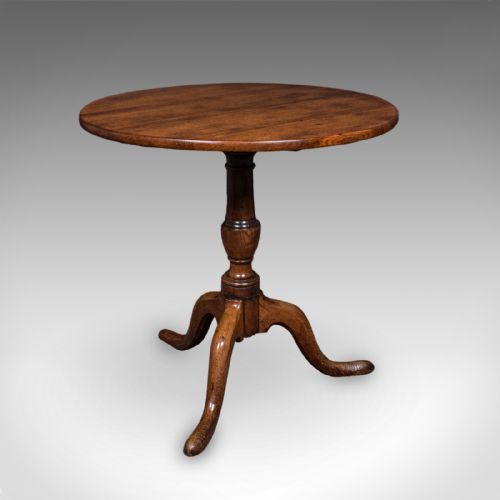
A round oak tilt table serves as a versatile furniture form designed to fold flat for storage or tilt against a wall when not in use. When you search for a round oak tilt table, you encounter pieces spanning the eighteenth and nineteenth centuries, including Georgian, Victorian, and Regency eras.
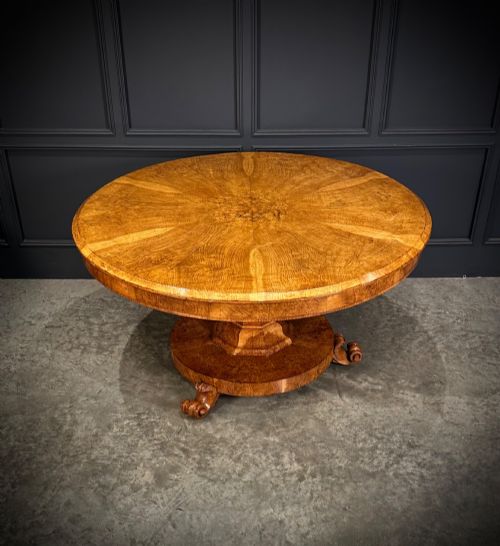
The inventory on this page shows pieces originating from English workshops as well as French provincial regions, taking forms such as occasional tables, breakfast tables, and dining tables. Most examples rely on a tripod base supporting a circular top, though larger dining and breakfast versions often appear.
Buyers meet variations involving specific oak sub-types like pollard oak and burr oak, alongside related fruitwoods and cherry. These items function equally well as lamp tables, side tables, or occasional pieces in traditional and contemporary interiors.
Materials and construction methods
Cabinetmakers utilised solid oak, often selecting figured varieties like pollard oak and burr oak for prominent surfaces to create visual depth and grain movement. Secondary timbers such as beech frequently appear in structural components like the tripod legs and support blocks.
The tilting mechanism relies on a clever catch or block pivot affixed beneath the circular top, allowing the surface to swivel upright on a central pillar. Metal elements such as brass appear in specific locking mechanisms and fittings, while occasional pieces incorporate inlay for decorative emphasis.
Listings feature oak alongside pollard oak, burr oak, beech, brass, fruitwood, cherry, and inlay across Georgian, Victorian, and Regency periods.
Judging the quality of construction and timber
Quality rests significantly on the selection of timber, distinguishing plain boards from richly figured burr or pollard oak sections that require expert sawing. The integrity of the tilt mechanism and the snugness of the catch dictate how securely the top remains horizontal in use.
Proportion and stability define the better examples, where the tripod legs balance the diameter of the top without excessive wobble. Fine turning on the central pillar and clean joinery at the pivot points separate standard utility pieces from finer parlour items.
The Round Oak Tilt Table Glossary
- Tilt top
- A tabletop mounted on a hinge mechanism that allows the surface to rotate into a vertical position. This clever design enabled tables to stand flat against walls when not serving food or drink.
- Tripod base
- A support structure featuring three legs radiating from a central column. This configuration prevents rocking on uneven historical floors.
- Pollard oak
- Timber taken from trees that have been pruned near the trunk to encourage dense, highly decorative branching patterns. The resulting wood exhibits distinctive clustered grain markings.
- Burr oak
- Timber sourced from a tree growth deformity that produces tightly swirled, highly figured grain patterns. Cabinetmakers prize this material for tabletops.
- Vendange table
- A traditional French folding table designed for agricultural use during the grape harvest. These pieces typically feature folding actions suited to seasonal storage.
Round Oak Tilt Table: Frequently Asked Questions
What is a round oak tilt table used for?
These pieces functioned historically as tea, lamp, or supper tables where surface space was needed temporarily. The tilting top allowed the furniture to be cleared away and stored against the wall.
Today, they serve well as side tables, bedside surfaces, or central display points in living spaces, maintaining their dual nature of utility and compact storage.
How do you operate the tilt mechanism?
Most mechanisms utilise a wooden catch, a brass button, or a sliding wedge situated beneath the circular top. Pressing or releasing this catch permits the table surface to pivot ninety degrees.
When returning the top to the horizontal position, ensure the latch engages securely to prevent unintended movement during everyday use.
Are these tables strictly English?
While many examples originate from English workshops during the Georgian and Victorian periods, the selection also includes French provincial and country pieces. French versions frequently take the form of folding vineyard tables.
Both traditions utilise oak and fruitwoods, though construction details and base profiles differ between regions.
How do I tell an 18th-century table from a 19th-century one?
Eighteenth-century examples, particularly from the Georgian period, often feature simpler, elegant tripod proportions with pegged joints and hand-turned pillars. Nineteenth-century pieces sometimes incorporate heavier Victorian scaling, aesthetic movement carvings, or elaborate pollard oak veneers.
Examining the construction marks, timber shrinkage, and fastener types helps clarify the period of manufacture.
How do I care for an antique oak surface?
Keep wooden surfaces away from direct heat sources and strong sunlight to prevent timber splitting and fading. Regular dusting with a dry, soft cloth maintains the finish without needing heavy polishes.
Applying occasional appropriate wax preserves the moisture content and natural sheen of historical oak timber.