
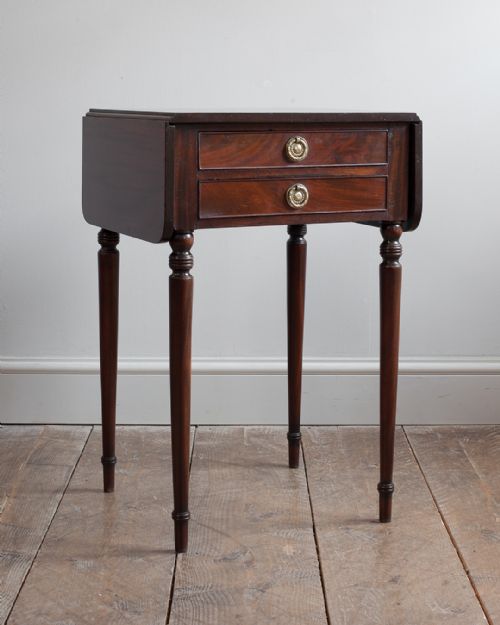
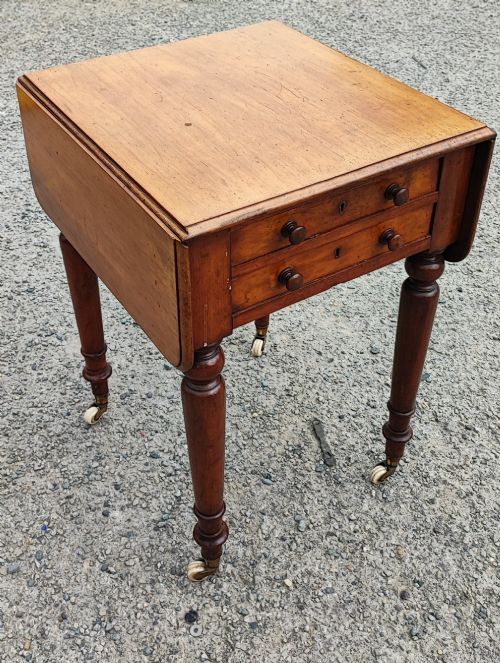
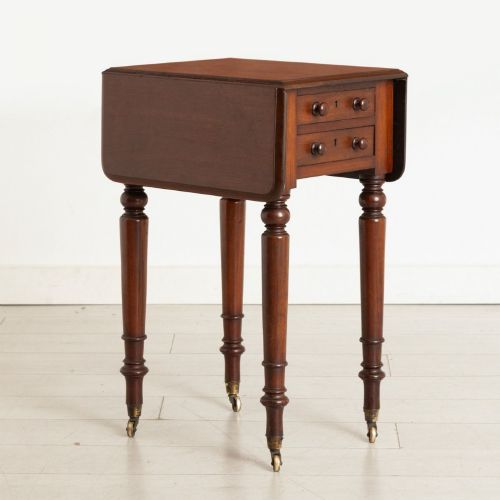
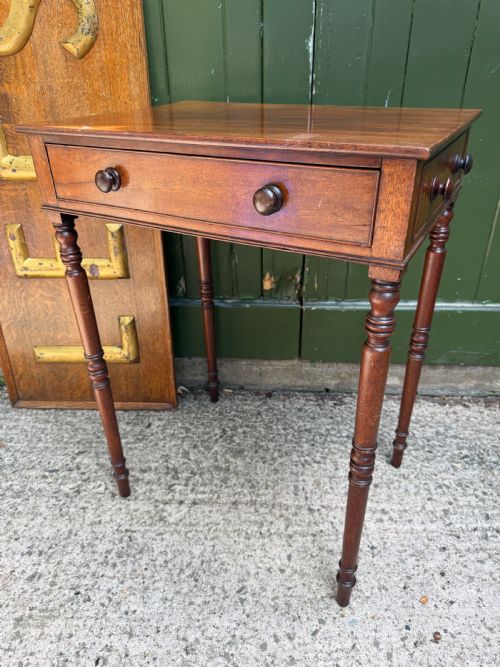
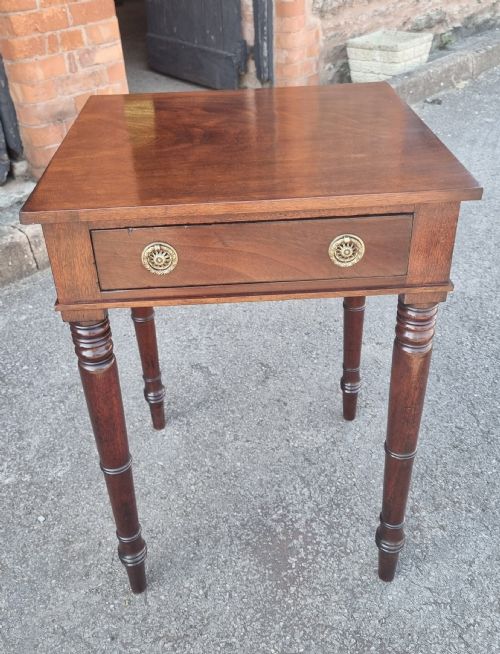


Turned Leg Work Table
A turned leg work table brings tactile warmth and domestic history into a room through honest joinery.
Turned Leg Work Table
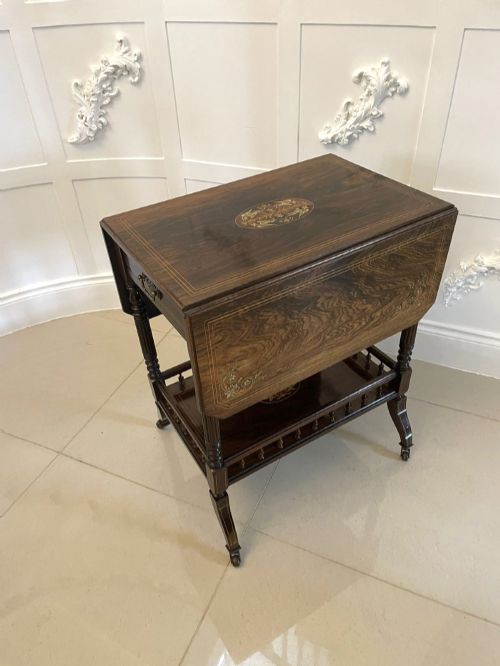
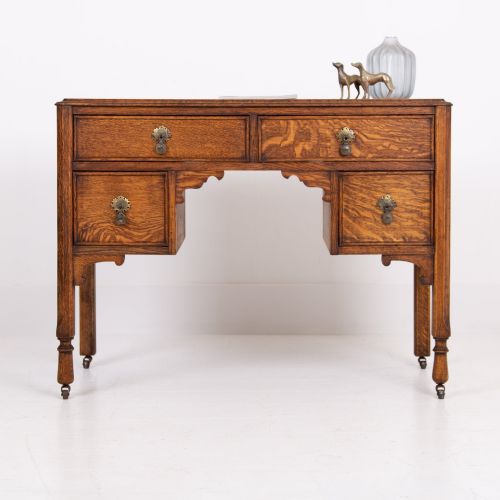
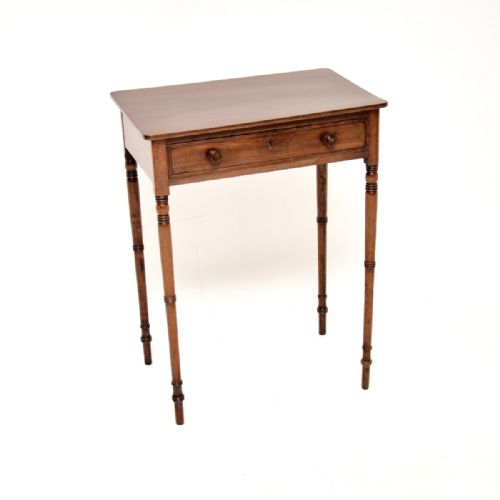
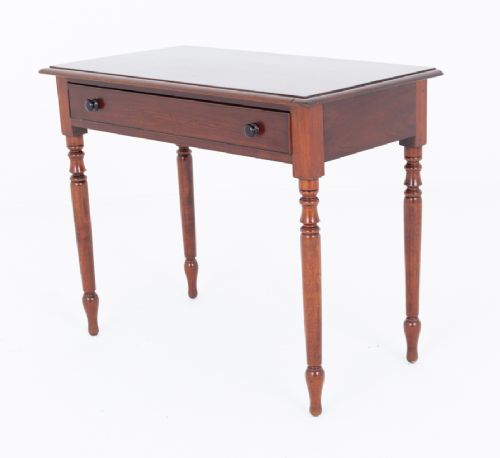
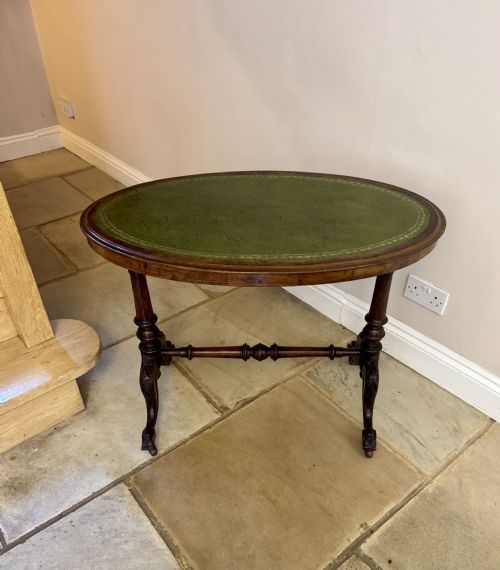
A turned leg work table serves as a functional small-scale surface, often equipped with drawers or drop leaves designed for needlework and domestic tasks. These pieces appear across periods such as the Georgian, Regency, and Victorian eras, reflecting the evolving domestic habits of past centuries.
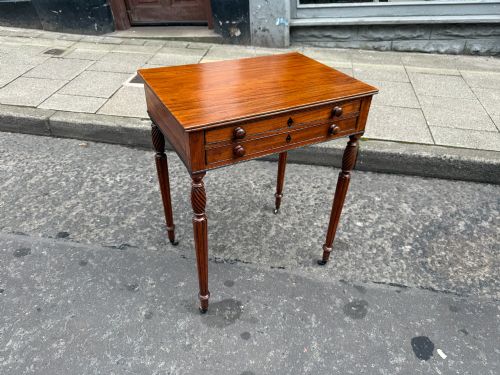
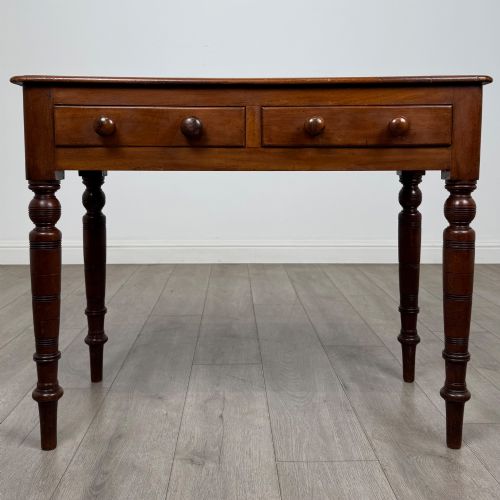
Buyers browsing this selection encounter various forms, with mahogany and rosewood versions appearing alongside practical pine kitchen and side tables. The turned leg construction provides structural support while introducing subtle decorative shaping to the lower framework.
How they were made
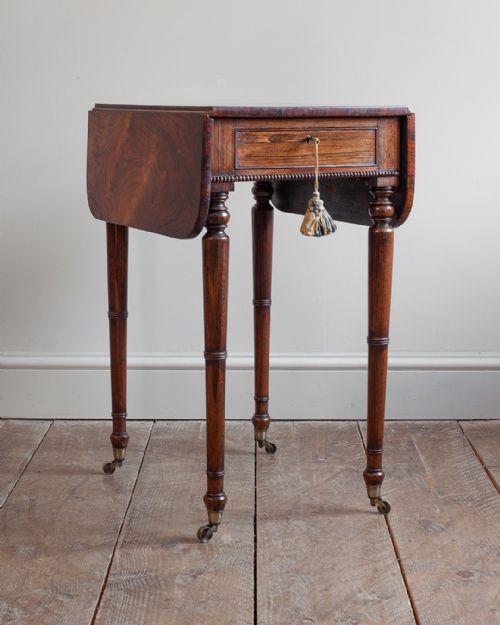
Cabinet makers utilised dense timbers like mahogany, walnut, and rosewood for formal reception rooms, turning the legs on a lathe to create symmetrical ring or baluster profiles. Secondary woods such as pine appear in utility pieces, paired occasionally with brass castors and fabric bags for sewing implements.
Joinery methods rely on mortise and tenon frames to support drawers and drop leaves. Surfaces often receive French polish or simple wax finishes that highlight the natural grain of the wood.
Many Victorian work tables still harbour stray pins and remnants of silk thread wedged deep inside their tiny mahogany compartments.
What varies in quality
Quality rests upon the crispness of the timber turning and the selection of figured veneers such as burr walnut or satinwood. Superior examples display thoughtful proportions where the turned legs complement the scale of the top.
The integration of internal drawer components and the retention of original brass hardware elevate an example above standard utility pieces. Finer workshops invested greater care in timber matching across table tops and drop leaves.
The Turned Leg Work Table Glossary
- Work table
- A small domestic table designed for sewing and needlework, typically fitted with a drawer or a hanging fabric bag below. These items were essential furnishings in nineteenth-century parlours.
- Turned leg
- A wooden support shaped on a lathe by rotating the timber against cutting tools. This technique produces symmetrical cylindrical or vase-shaped profiles.
- Pembroke table
- A small occasional table featuring two hinged drop leaves on opposing sides. It often includes a single drawer and stands on four legs.
- Drop leaf
- A hinged flap of wood attached to a table top that can be raised to increase surface area or lowered when space is limited. This mechanism provides flexibility in smaller rooms.
- Inlay
- A decorative technique where contrasting pieces of wood, brass, or shell are inserted into recessed portions of a timber surface. This creates flat ornamental patterns across table tops and drawers.
Turned Leg Work Table: Frequently Asked Questions
What is a turned leg work table?
A turned leg work table is a compact domestic table constructed with lathe-shaped wooden supports, traditionally used for sewing, writing, or general household tasks.
These pieces combine decorative turning with practical storage, such as small drawers or drop leaves.
How do I date a turned leg table?
Dating relies on identifying timber choices, construction methods, and stylistic details associated with periods like the Georgian or Victorian eras.
Earlier pieces often use solid mahogany with hand-cut dovetails, while later nineteenth-century examples may incorporate machine-turned components and different secondary woods.
Where should I place a work table?
These versatile tables fit well beside seating in a living room, as a bedside surface, or as a small writing desk in a study.
Their compact dimensions allow them to occupy awkward corners or narrow hallways without overwhelming the floor space.
What is the difference between a work table and a side table?
A work table specifically includes internal provisions for crafts or writing, such as fitted compartments, drawers, or drop leaves.
A standard side table offers a simple surface for display or general placement without the specific interior compartments found in sewing tables.