
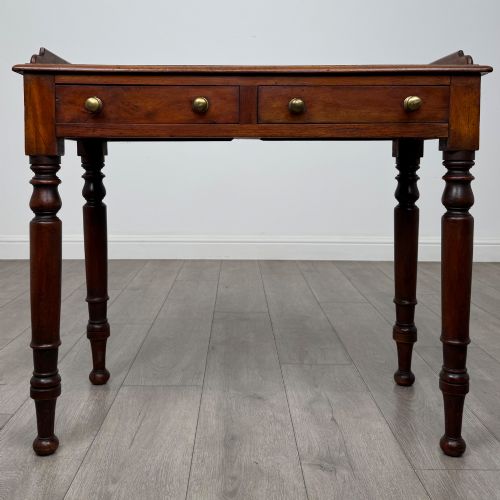
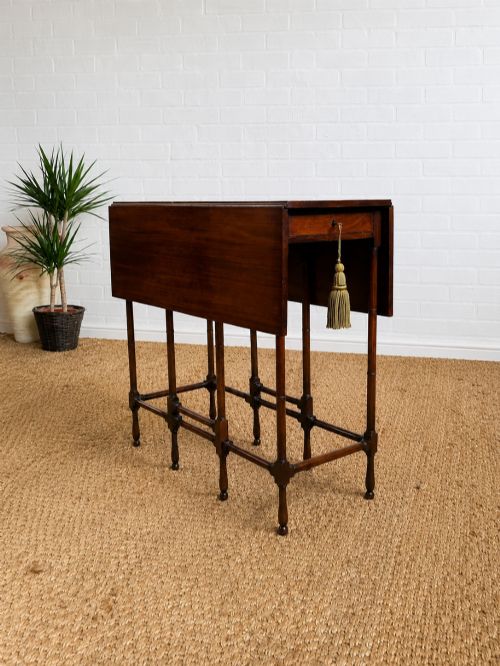
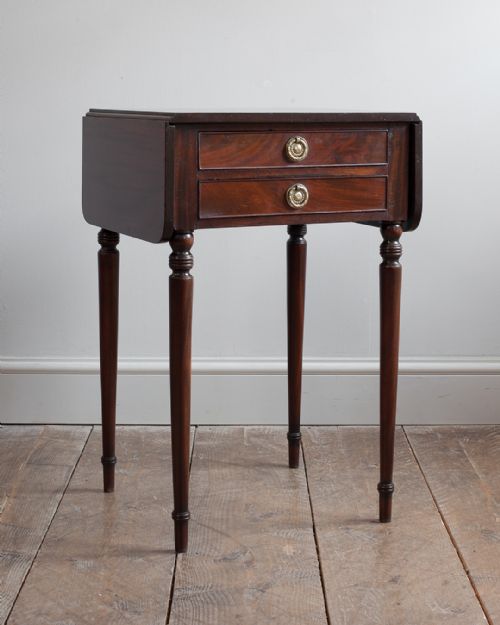
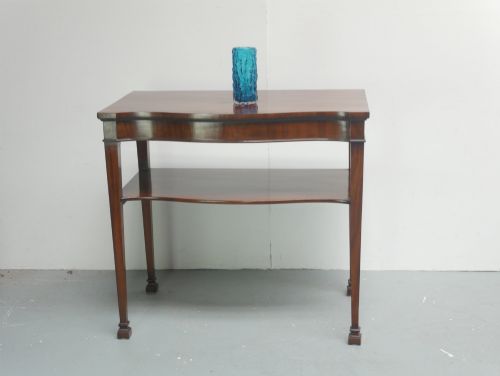
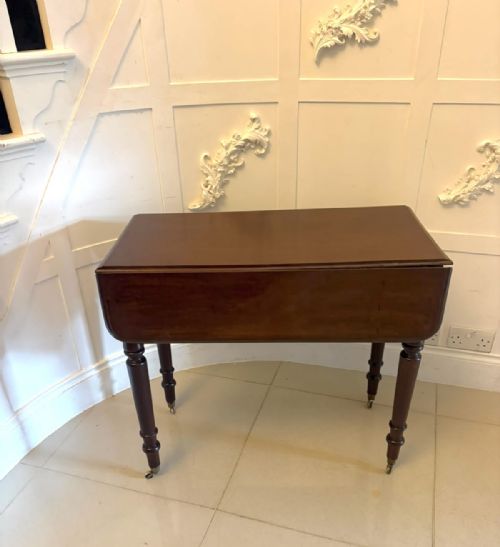
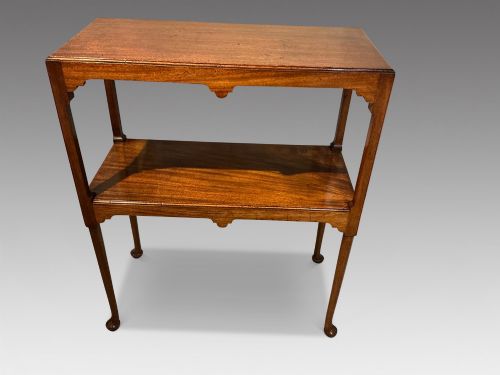
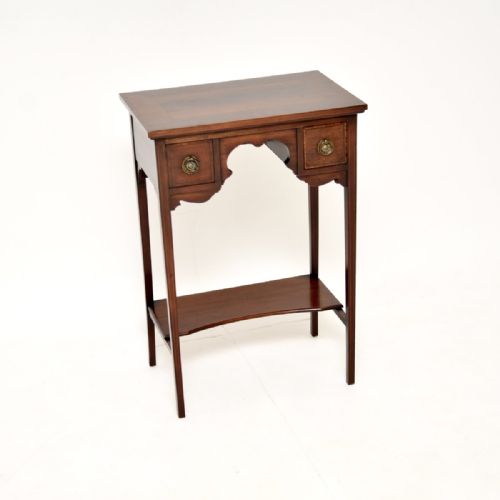
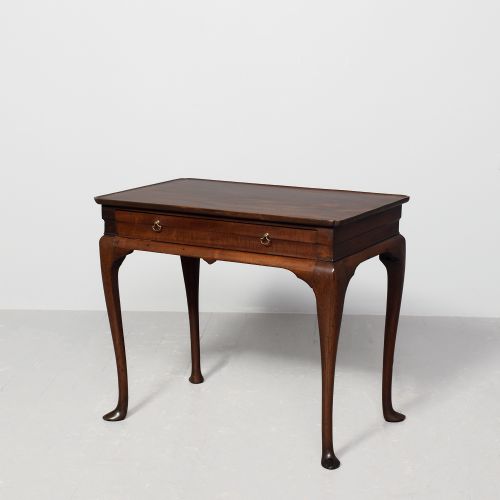

Small Mahogany Console
A small mahogany console brings compact warmth and architectural line to a hallway or drawing room.
Small Mahogany Console
When you search for a small mahogany console, you look for a narrow surface designed to stand against a wall without dominating a room. The pieces meeting this search range from George III demilune tables to Victorian and Edwardian examples featuring drawers or marble tops.
The origins span the eighteenth, nineteenth, and early twentieth centuries, drawing heavily on Georgian and Regency proportions. Side tables, lowboys, and pier tables frequently cross over into this category due to their restrained depth.
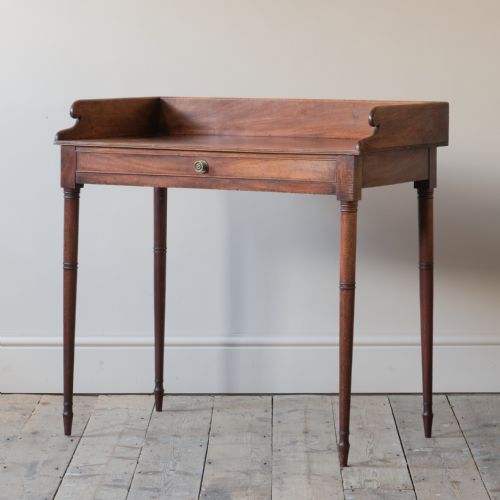
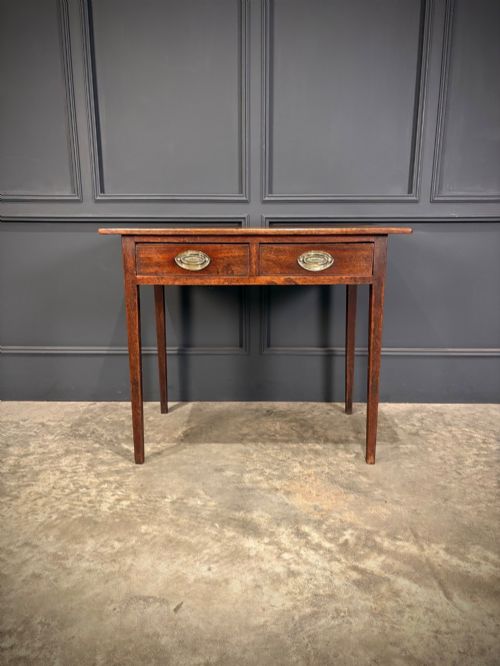
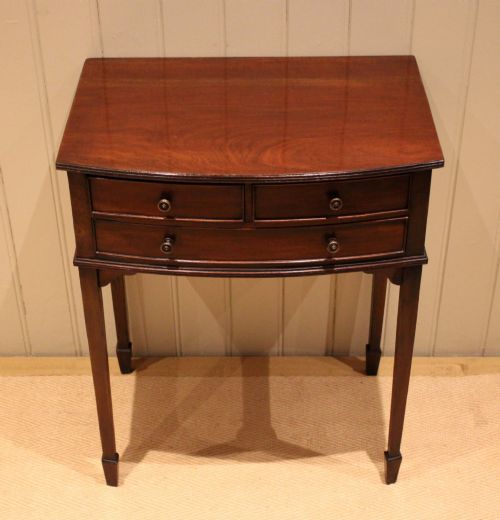
Buyers tend to find console tables with rectangular or half-moon shapes, often equipped with a single drawer or supported by slender legs. These forms serve entryways, living spaces, and narrow corridors where floor space is at a premium.
How They Were Made
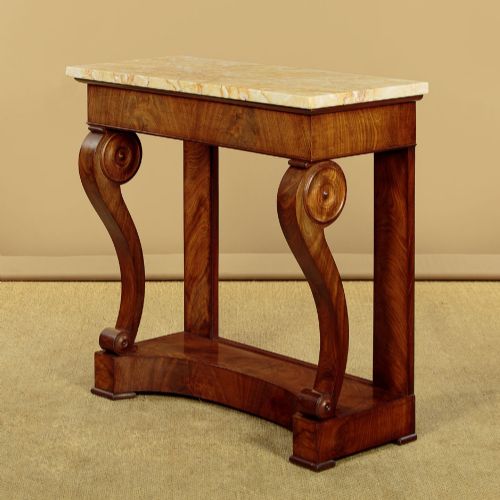
Cabinet makers utilised solid mahogany and rich veneers fixed to secondary woods, bringing out the deep grain through careful polishing. Marble tops appear on several pieces, providing a contrasting cool surface inset into the timber frame.
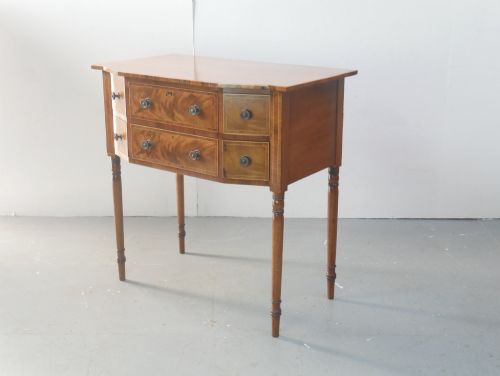
Inlay work involving boxwood and satinwood adds delicate linear contrast to drawer fronts and borders. Joinery relies on traditional methods such as dovetailing for drawers and mortise and tenon joints for the frame construction.
Listings feature mahogany, marble, satinwood, and boxwood inlay across pieces dated from the eighteenth to the twentieth century.
What Varies in Quality
The standard of a small mahogany console rests on the selection of the timber and the crispness of any carved detail. Highly figured flame mahogany or finely executed boxwood inlay distinguishes finer workshop output from simpler utilitarian pieces.
Proportion and structural harmony separate the better examples from ordinary ones. Well-balanced legs, neat dimensions, and original brass fittings elevate a piece beyond standard domestic furniture of the period.
Druce and Co
The Small Mahogany Console Glossary
- Console table
- A table designed to stand against a wall, frequently fixed or secured with brackets. These pieces usually feature a decorative front and sides since the back faces the wall.
- Demilune
- A half-moon shape characteristic of tables designed to sit flush against a wall. This profile became particularly popular during the Georgian and Regency periods.
- Lowboy
- A small kneehole dressing table or side table with one or more drawers, originating in the late seventeenth century. They typically stand on four slender legs.
- Satinwood
- A durable, lustrous timber native to India and the West Indies, used extensively for contrasting stringing and marquetry panels.
- Pembroke table
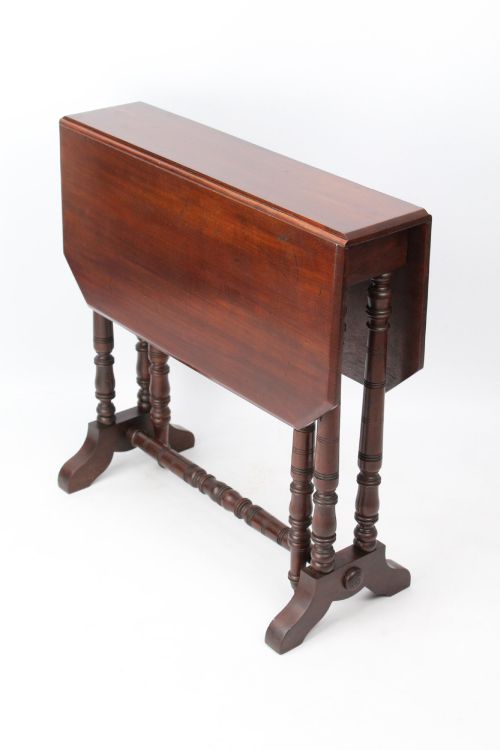
- A small table with hinged drop leaves on either side, often fitted with a single drawer. It offers flexible surface area in compact domestic settings.
Small Mahogany Console: Frequently Asked Questions
Where should I place a small mahogany console?
These tables suit narrow hallways, landings, and entrance spaces where depth is limited. Their shallow profiles allow them to sit flat against a wall without obstructing passageways.
They also function effectively beneath mirrors or windows in reception rooms to hold lamps or decorative objects.
How do I care for a mahogany console table?
Maintain the timber by dusting with a dry, soft cloth and occasionally applying natural beeswax to nourish the grain. Avoid placing the table in direct sunlight or near heat sources to prevent the wood from drying out.
Marble-topped variants require simple wiping with a damp cloth and mild soap to protect the stone surface from staining.
Did these tables always have drawers?
Many examples include a single narrow drawer for letters or small items, but numerous console and pier tables were built strictly as open stands. Drop-leaf and demilune variations frequently balance storage utility with purely decorative surfaces.
The presence of a drawer depends on the original intended use, whether for writing, hall storage, or display.
How can I tell a Georgian console from a Victorian one?
Georgian pieces typically display restrained classical lines, straight or tapering legs, and understated mahogany grain. Victorian iterations often incorporate heavier proportions, richer carved motifs, or contrasting inlay styles.
Examining the secondary woods and construction marks helps confirm the manufacturing period.