
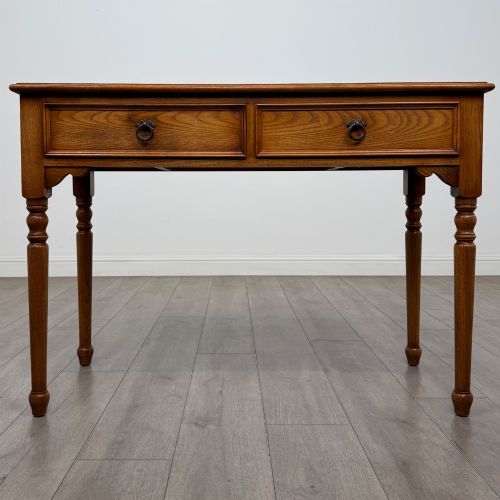
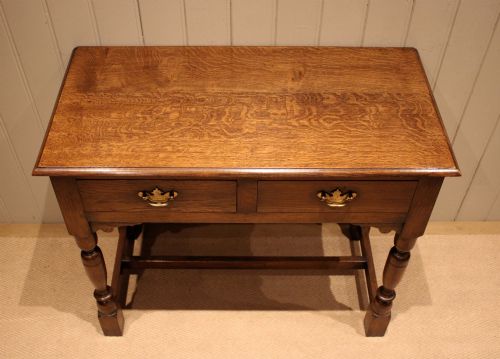
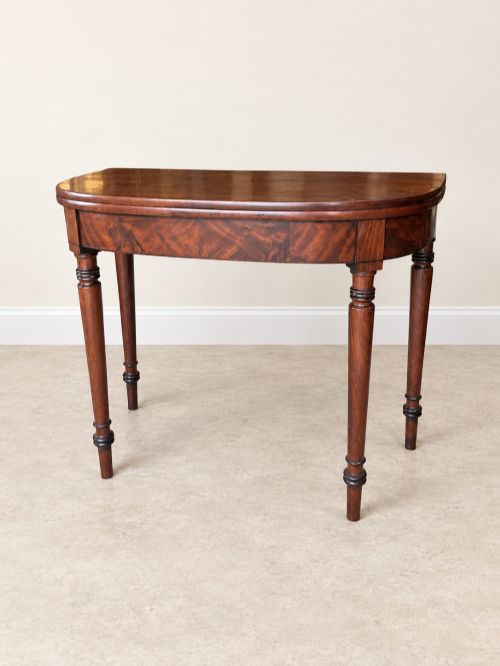

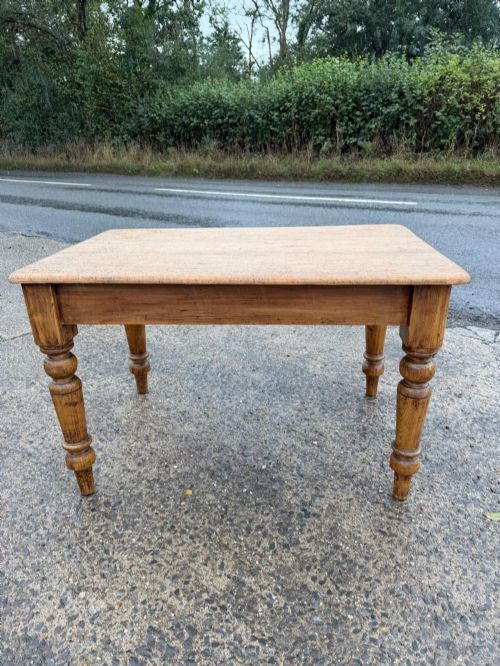
Turned Leg Console
Turned leg console tables bring architectural turning and steady lines to halls and living rooms, offering practical surfaces with distinct period character.
Turned Leg Console
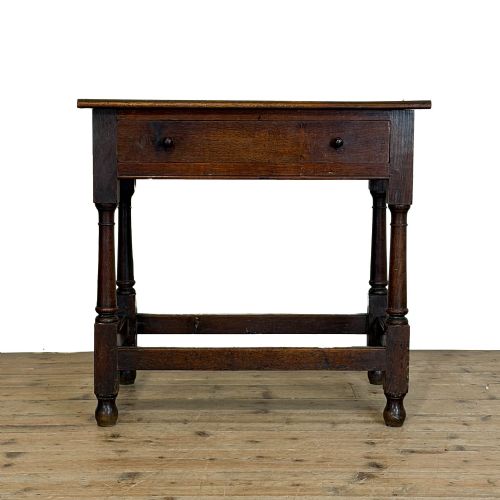
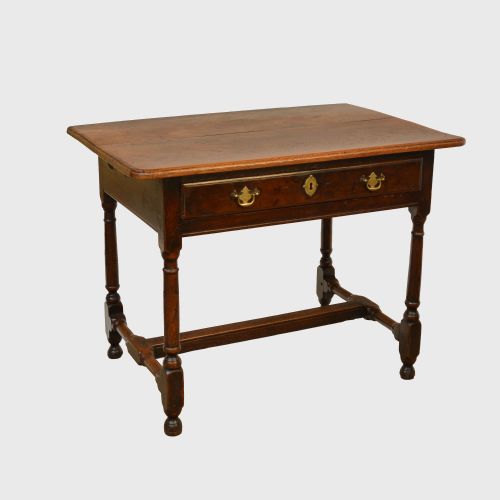
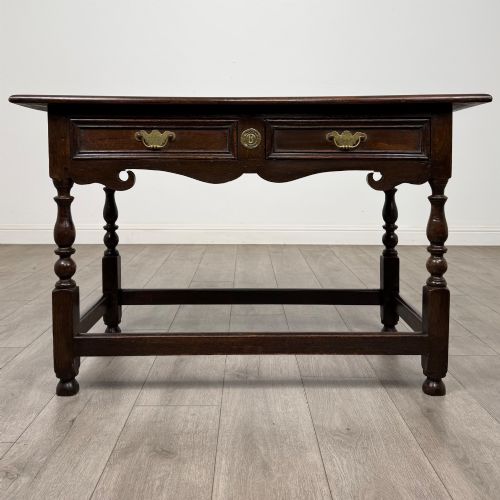
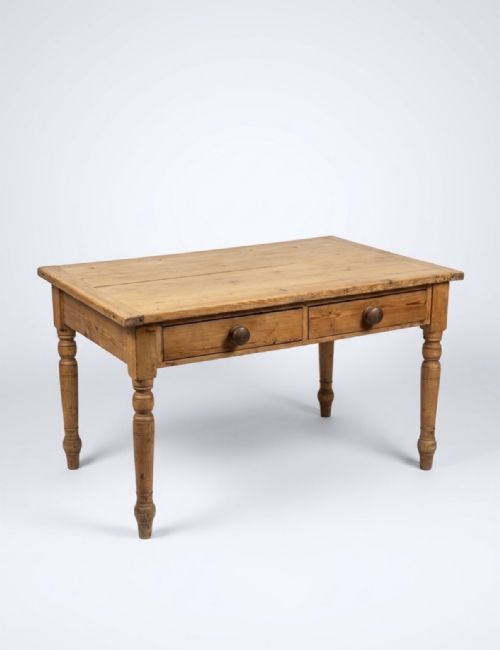
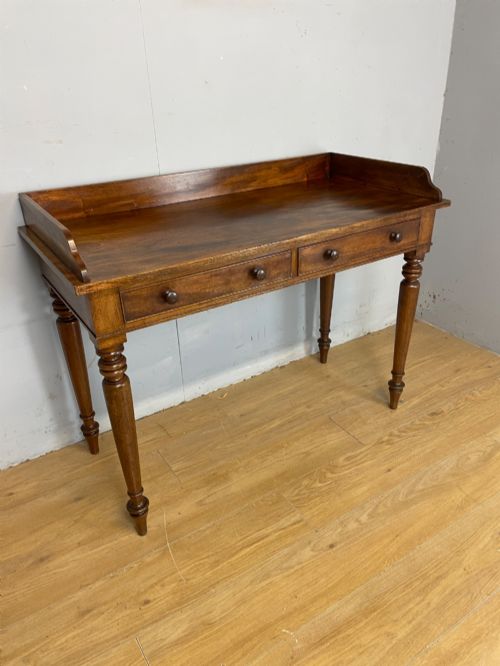
A turned leg console serves primarily as a slim surface for hallways and living spaces, drawing on side tables, washstands, and writing desks adapted for narrow footprints. These pieces emerge across the nineteenth, eighteenth, and early twentieth centuries, spanning Georgian, Victorian, and Edwardian periods.
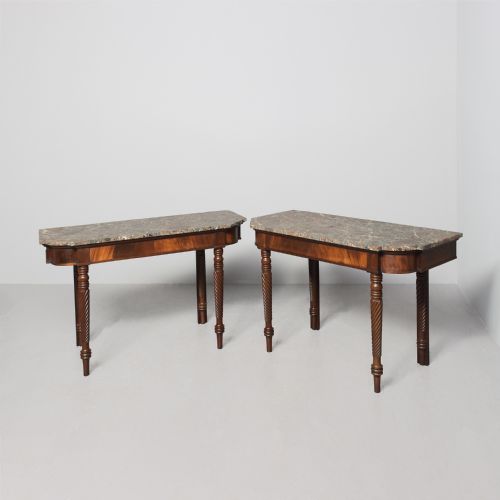
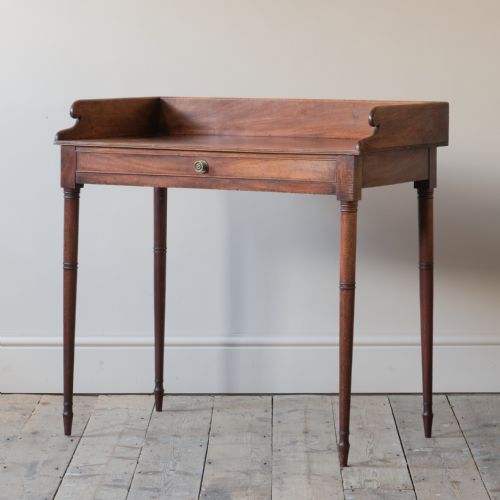
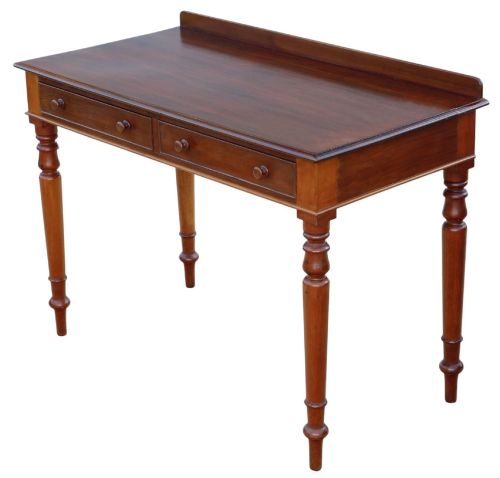
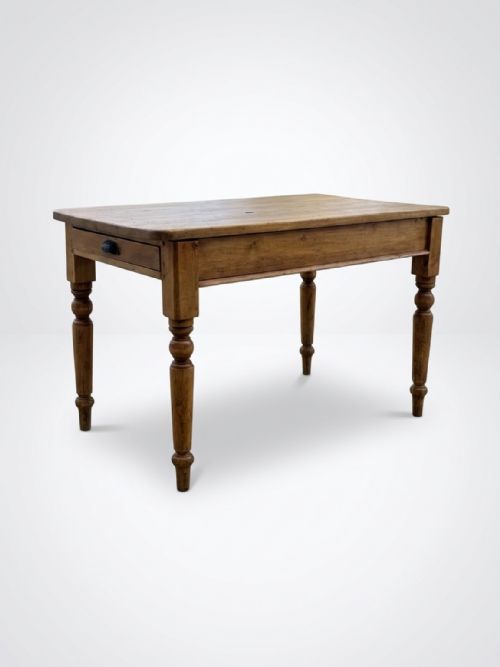
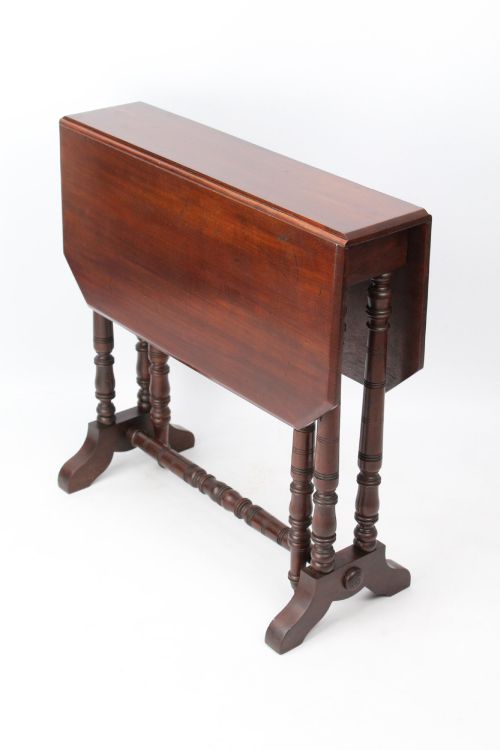
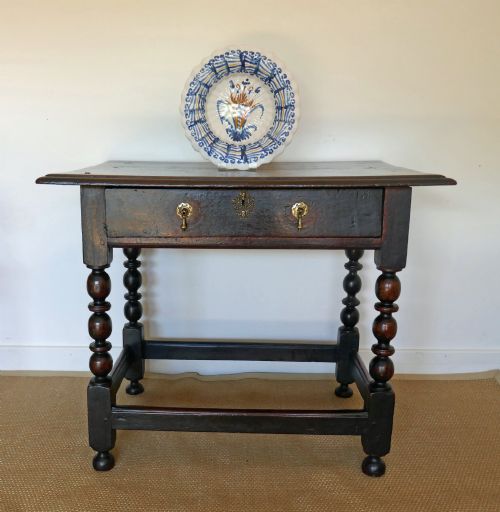
Most examples met on this page combine timber frames with characteristic spindle, bobbin, or bamboo-turned supports beneath rectangular tops. Forms range from simple single-drawer pine tables to elaborate mahogany fold-over console and card tables.
Originating as utilitarian washstands or serving surfaces, these items now function as display tables and writing desks. The turning on the legs provides the main decorative vocabulary, whether executed in heavy oak or lighter birch.
How they were made
Cabinet makers utilised solid hardwoods such as mahogany, oak, and walnut, alongside softer pine and pitch pine for regional or utility pieces. Flame mahogany veneer appears on finer surfaces, contrasting with simpler turned structural members.
Turning lathes shaped the legs into uniform cylindrical profiles, sometimes incorporating spiral twists or bamboo-style nodes. Joinery relied on mortise and tenon frames, ensuring stability for narrow tables intended to stand against walls.
Turned Leg Console Retail Price Guide 2026
Typical asking prices for turned leg console among the pieces listed under this phrase on Sellingantiques today, from the lower quarter to the upper quarter. They describe what is for sale here now, not the wider market.
Some Edwardian makers carved wooden table legs to mimic hollow bamboo stalks.
What varies in quality
The choice of timber dictates much of the distinction, shifting from utilitarian pine and mixed fruitwoods to figured mahogany, burr walnut, and golden English oak. Grain selection on top boards and veneer symmetry reveal the maker's intent.
Execution of the leg turning separates standard production from superior workshops. Crisp, deep cutting on the lathe and balanced proportions between the turned supports and the table top indicate higher craftsmanship.
Heal and Son·Gillows
The Turned Leg Console Glossary
- Turned leg
- A wooden support shaped on a lathe to create cylindrical, spiral, or bobbin-shaped profiles. This method gives the table its primary decorative structure.
- Console table
- A narrow table designed to stand flat against a wall, frequently used in entrance halls or principal reception rooms.
- Flame mahogany veneer
- A thin slice of wood cut from the branch junction of a mahogany tree to produce a dramatic, flickering grain pattern. It adorns the tops of superior nineteenth-century tables.
- Frieze
- The horizontal band running beneath the table top, often housing one or more small drawers.
- Fold-over table
- A dual-surface table featuring a hinged top that opens to double its surface area, common in card and console designs.
Turned Leg Console: Frequently Asked Questions
Where do I put a turned leg console?
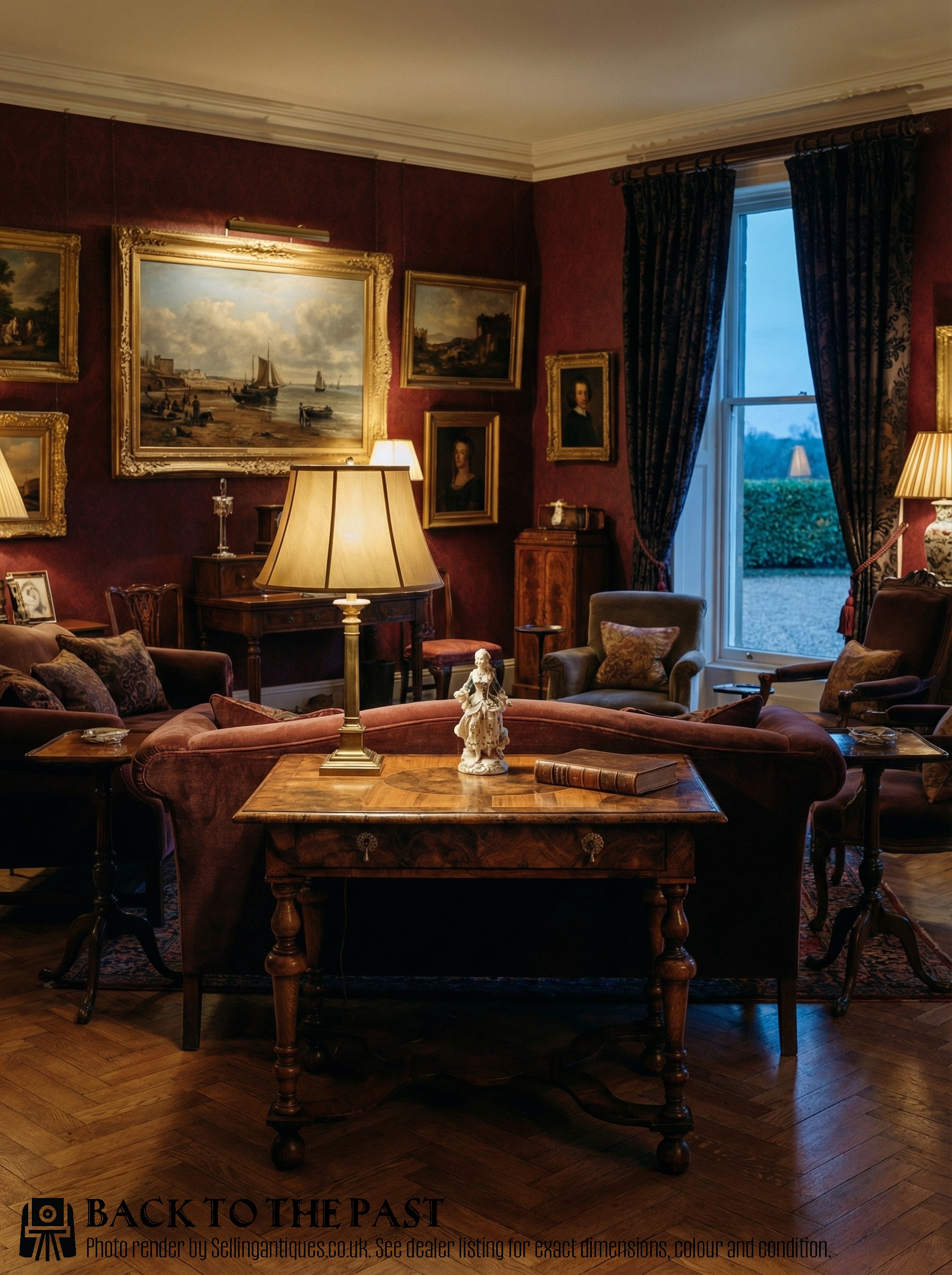
These narrow tables suit entrance halls, narrow corridors, and tight spaces behind sofas where deep furniture fails to fit. Their flat backs allow them to anchor securely against walls.
They also function effectively as impromptu writing desks or display surfaces for lamps and ceramics in sitting rooms.
How do I date a turned leg console?
Examination of timber species, drawer construction, and turning styles reveals the period. Early pieces from the seventeenth and eighteenth centuries typically employ heavy oak or walnut with hand-cut dovetails.
Victorian and Edwardian versions often feature machine-turned bamboo styles or mahogany frames with standardised internal fittings.
Are these tables sturdy enough for daily use?
Solid hardwood versions in oak or mahogany handle regular placement and surface weight with ease. Turned leg supports distribute vertical loads efficiently.
Lighter pine or bamboo-turned examples require careful placement away from heavy traffic to protect slender turned joints.
What is the difference between a console and a side table?
Console tables historically anchor directly against walls, sometimes relying on wall brackets or paired front legs for stability. Side tables stand independently on four legs anywhere in a room.
Many listings combine these terms because nineteenth-century cabinet makers adapted similar turned-leg frames for both functions.