



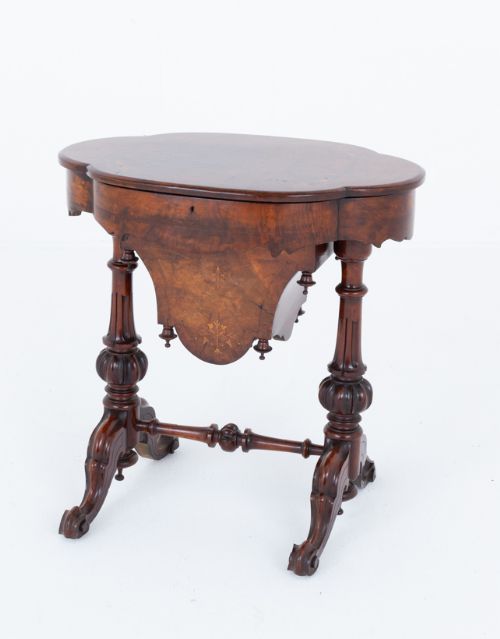


Fitted Victorian Work Table
A fitted victorian work table is a practical sewing and writing piece that brings warmth and clever storage to a modern room.
Fitted Victorian Work Table
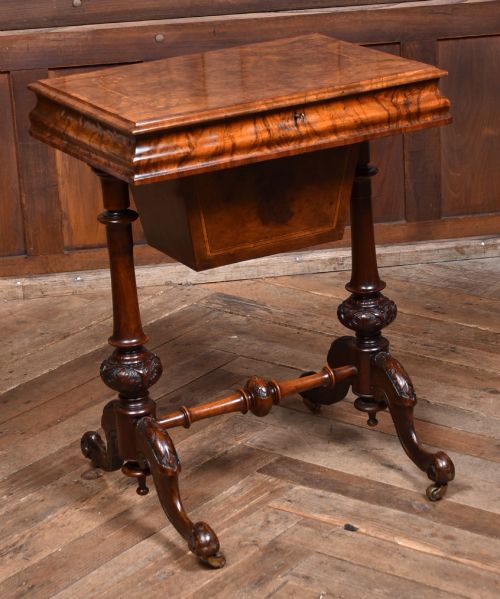
A fitted victorian work table is a versatile nineteenth-century item designed for sewing, needlework, and light correspondence, incorporating an internal compartment with various small wells and lidded sections. These tables typically date from the middle to the late decades of the nineteenth century, spanning periods around eighteen fifty to eighteen eighty.
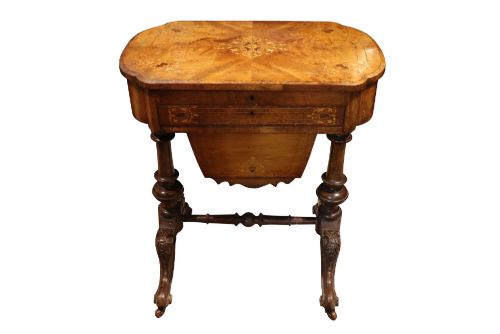
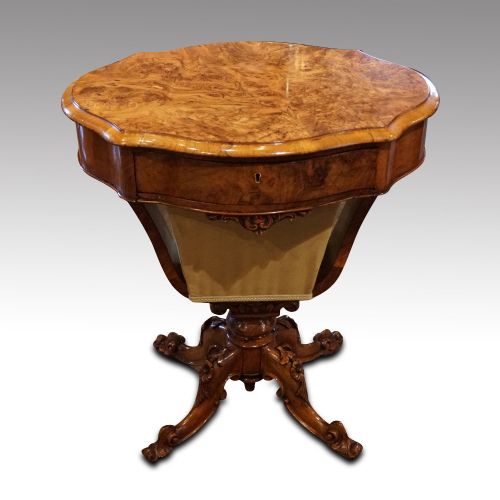
Buyers will encounter these pieces most frequently in burr walnut or plain walnut, often featuring inlaid boxwood details and supported by carved and turned pillars or cradle bases. While primarily classed as work tables, sewing tables, or occasional tables, the category also accommodates related domestic forms.
How they were made
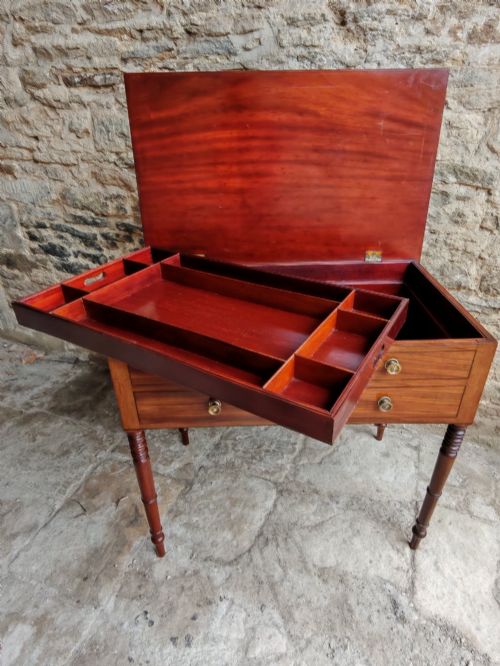
Cabinet makers utilised richly figured burr walnut veneers over solid timber carcases, applying meticulous marquetry and boxwood inlay to the top surfaces and friezes. Internal compartments required precise joinery to create miniature drawers, lidded wells, and divided trays tailored for cotton reels and sewing implements.
Structural supports relied on turned columns and carved wooden bases, occasionally incorporating brass elements or textile bags suspended beneath the table top to catch wool and fabrics.
Fitted Victorian Work Table Retail Price Guide 2026
Typical asking prices for fitted victorian work table among the pieces listed under this phrase on Sellingantiques today, from the lower quarter to the upper quarter. They describe what is for sale here now, not the wider market.
Listings feature items spanning the Victorian era from eighteen fifty to eighteen eighty, predominantly constructed in burr walnut with textile and brass elements.
What varies in quality
The visual appeal of the burr walnut veneer sets the standard for the exterior, with closely packed grain patterns and even polishing commanding greater attention. Finer examples display crisp, precise boxwood inlay and intricate marquetry work that remains intact across the top and sides.
Internal organisation dictates utility and craftsmanship, where complete, undamaged fitted interiors with original lidded compartments demonstrate superior original design compared to later alterations or stripped trays.
The Fitted Victorian Work Table Glossary
- Burr walnut
- A highly figured timber veneer taken from the warted growths of walnut trees. It yields swirling patterns prized by Victorian cabinet makers for table tops.
- Marquetry
- Decorative veneer work forming pictures or geometric patterns using various woods. Craftsmen cut thin pieces of material to fit precisely into a prepared background.
- Cradle base
- A supportive framework resting on feet or castors, holding the main body of the table with curved uprights. This design allows the table top to tilt or balance securely.
- Boxwood inlay
- Contrasting pale wood inserted into recesses within a darker wood surface. It creates sharp linear borders and geometric decoration on Victorian furniture.
Fitted Victorian Work Table: Frequently Asked Questions
What is inside a fitted work table?
These tables contain a shallow compartment beneath the lid, organised with small wooden partitions, lidded wells, and miniature compartments for needles, threads, and small tools.
Many retain original velvet or silk linings, alongside tiny knobs and fitted trays designed to lift out independently.
How do I date a Victorian work table?
Dating relies on timber choices, leg turning styles, and construction methods recorded across the middle and late nineteenth century. Pieces from eighteen fifty to eighteen eighty often showcase burr walnut veneers and specific turned pillar supports.
Examine the secondary woods inside the drawers and the style of any brass hardware for further chronological clues.
Where should I place a work table?
These compact pieces suit sitting rooms as lamp tables, occasional surfaces, or beside a favourite armchair as decorative storage. Their finished backs and freestanding designs allow placement in the centre of a room rather than strictly against a wall.
The internal compartments also make them useful on desks or in studies for holding small stationery items.
What is an Anglo-Indian work table?
An Anglo-Indian work table reflects nineteenth-century design exchange, combining British furniture forms with distinctive regional carving traditions from the Indian subcontinent. These examples often feature specific decorative motifs and construction details distinct from standard domestic output.