


Turned Leg Nesting Tables
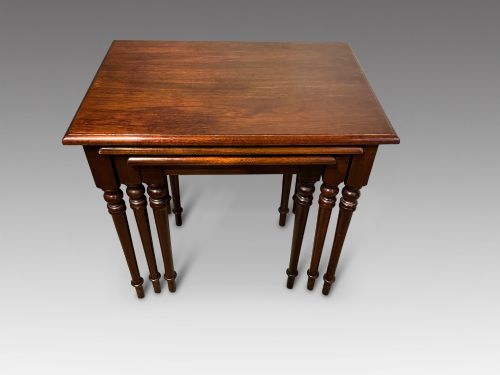
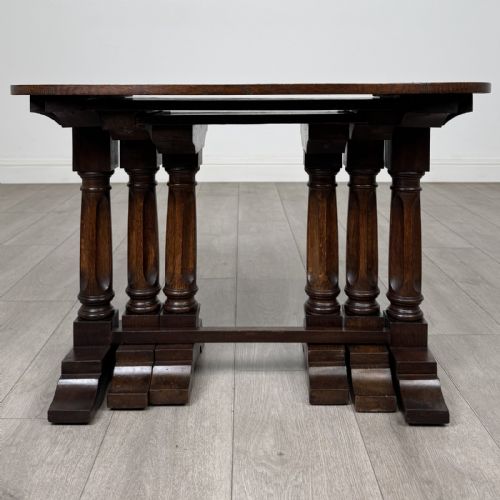
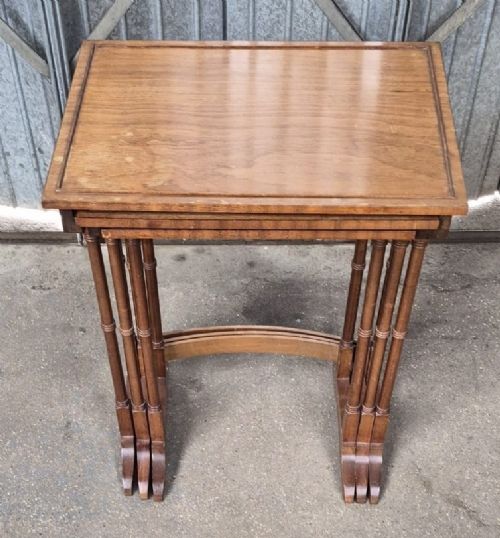
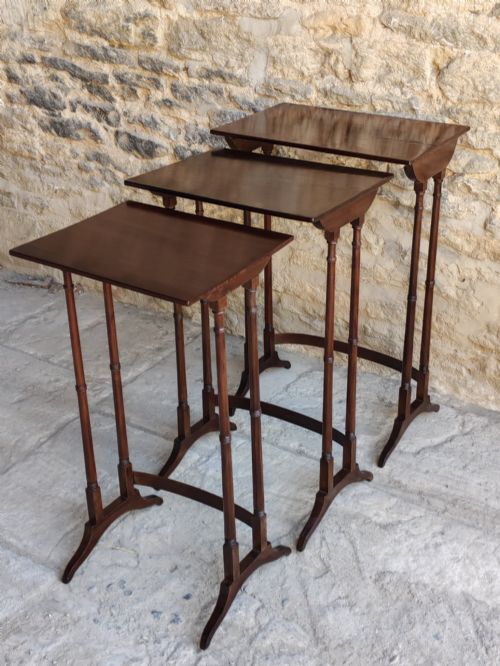
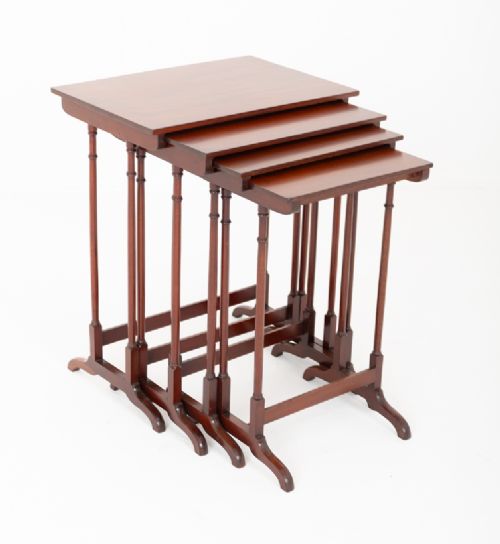
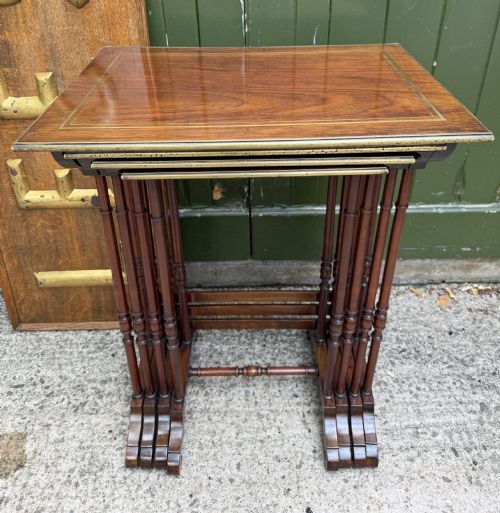
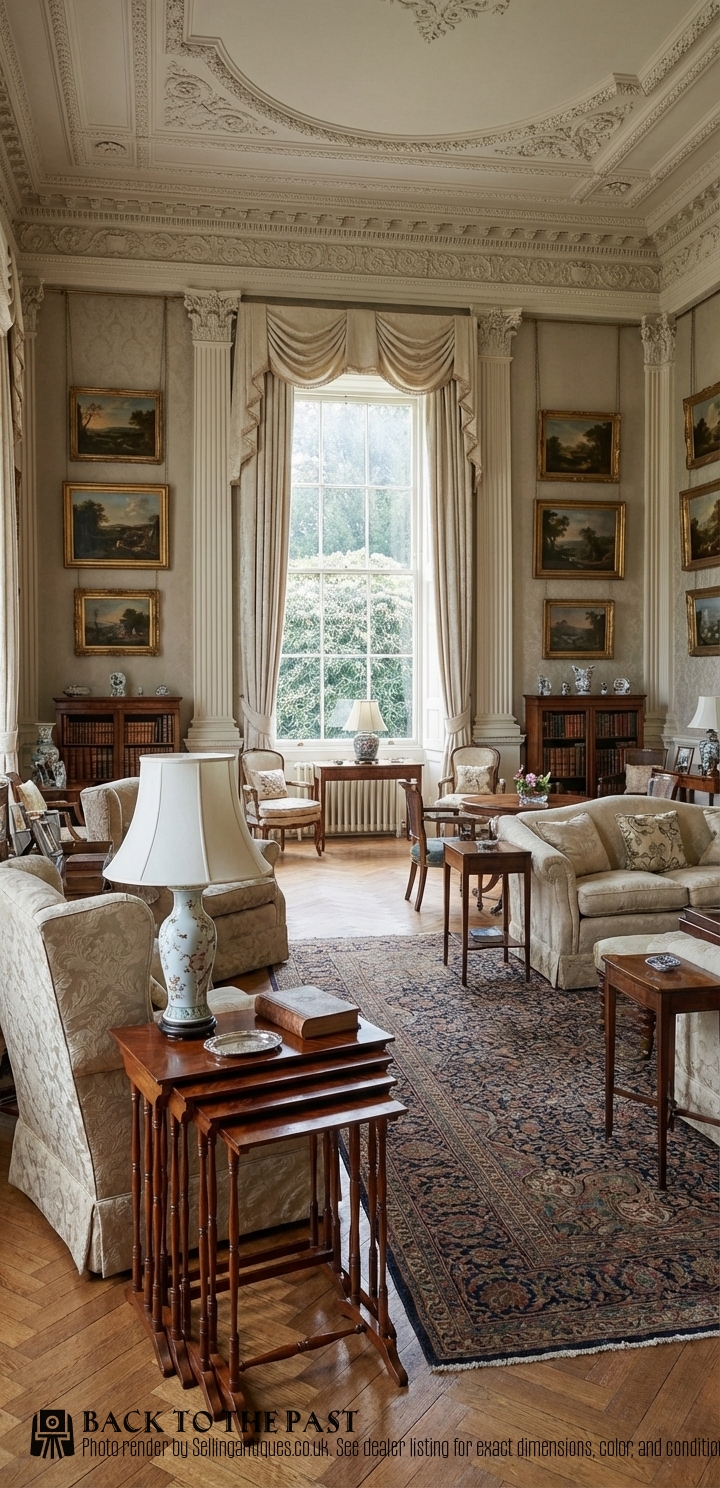
Turned leg nesting tables offer space-saving versatility, sliding together neatly when not in use while bringing rich timber grains to a room.
Turned Leg Nesting Tables
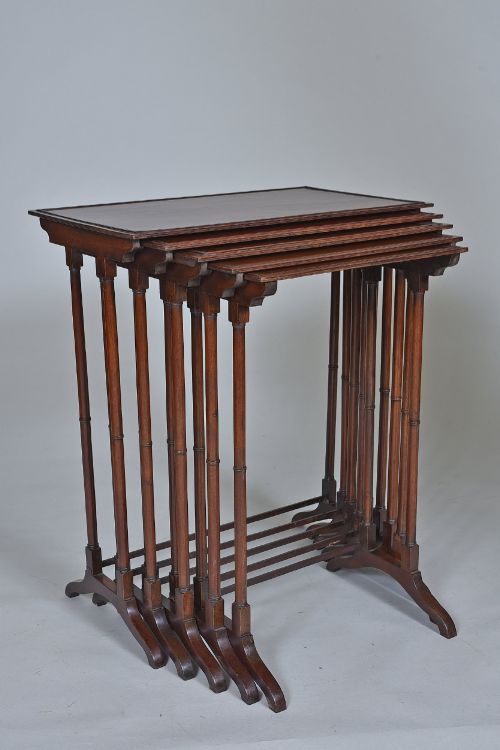
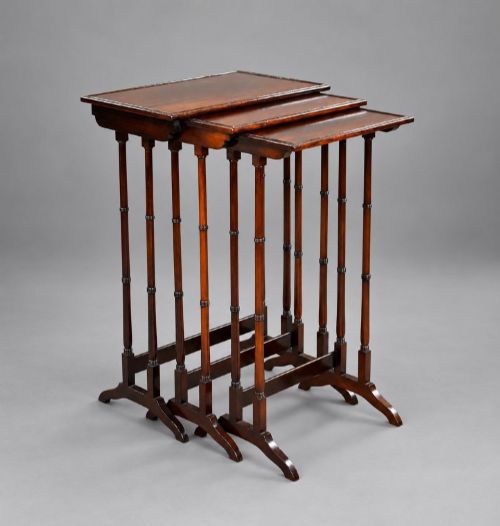
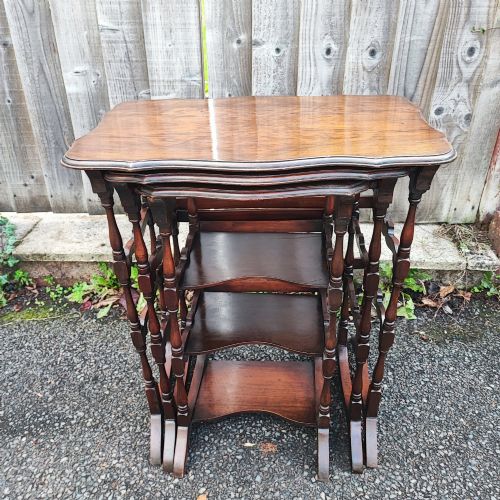
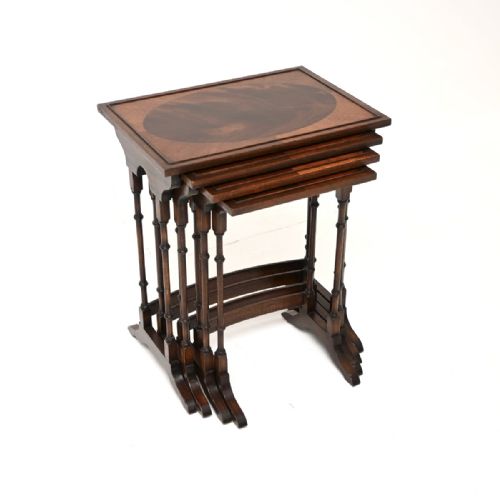
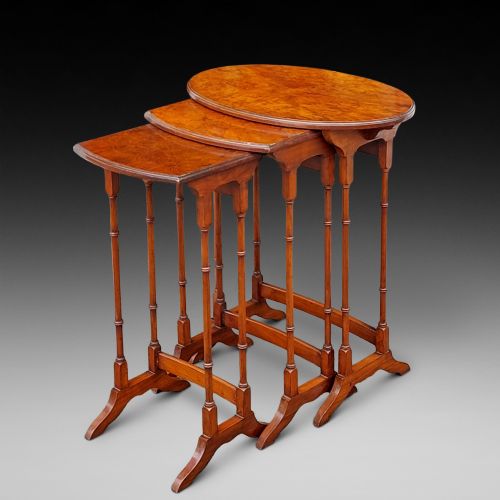
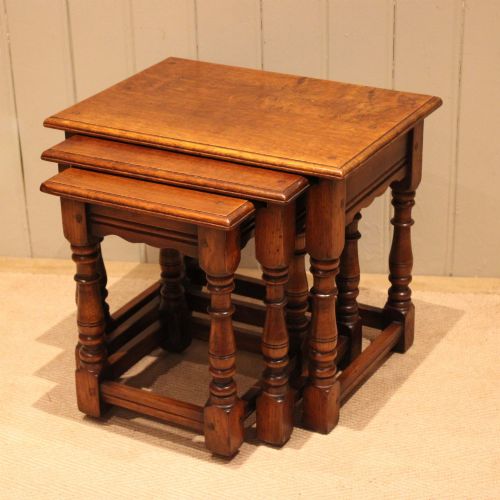
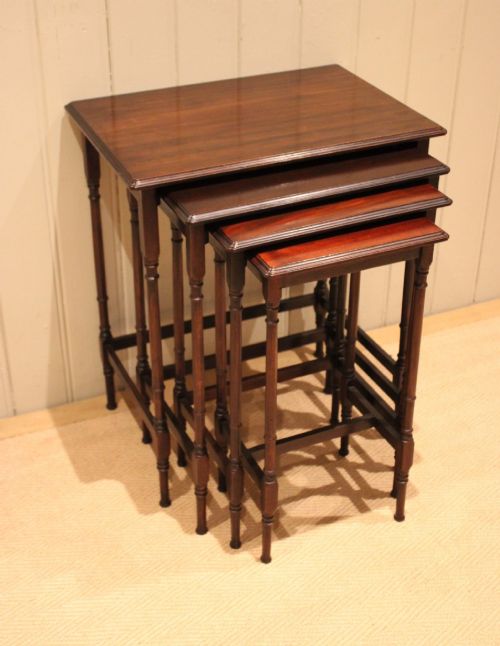
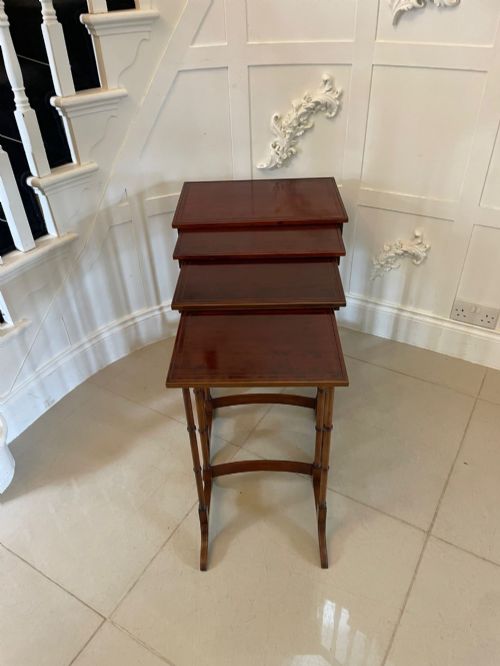
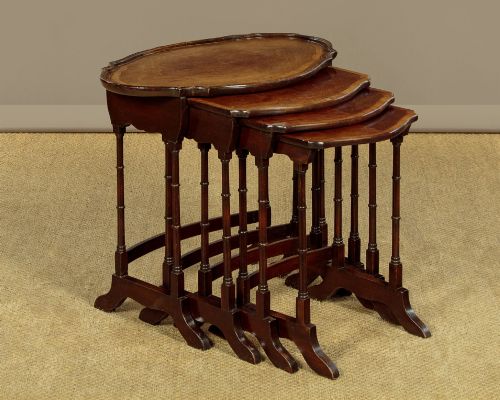
Turned leg nesting tables comprise graduated sets of occasional surfaces designed to slot beneath one another. Buyers search for these pieces to maximise compact spaces without sacrificing antique character. The selection here spans multiple eras, offering sets of three or four tables.
Edwardian and Victorian examples appear frequently alongside Georgian style and Regency pieces. Sets range from plain oak and mahogany formats to intricate lacquered finishes. Buyers meet everything from simple three-tier groupings to matching quartetto sets.
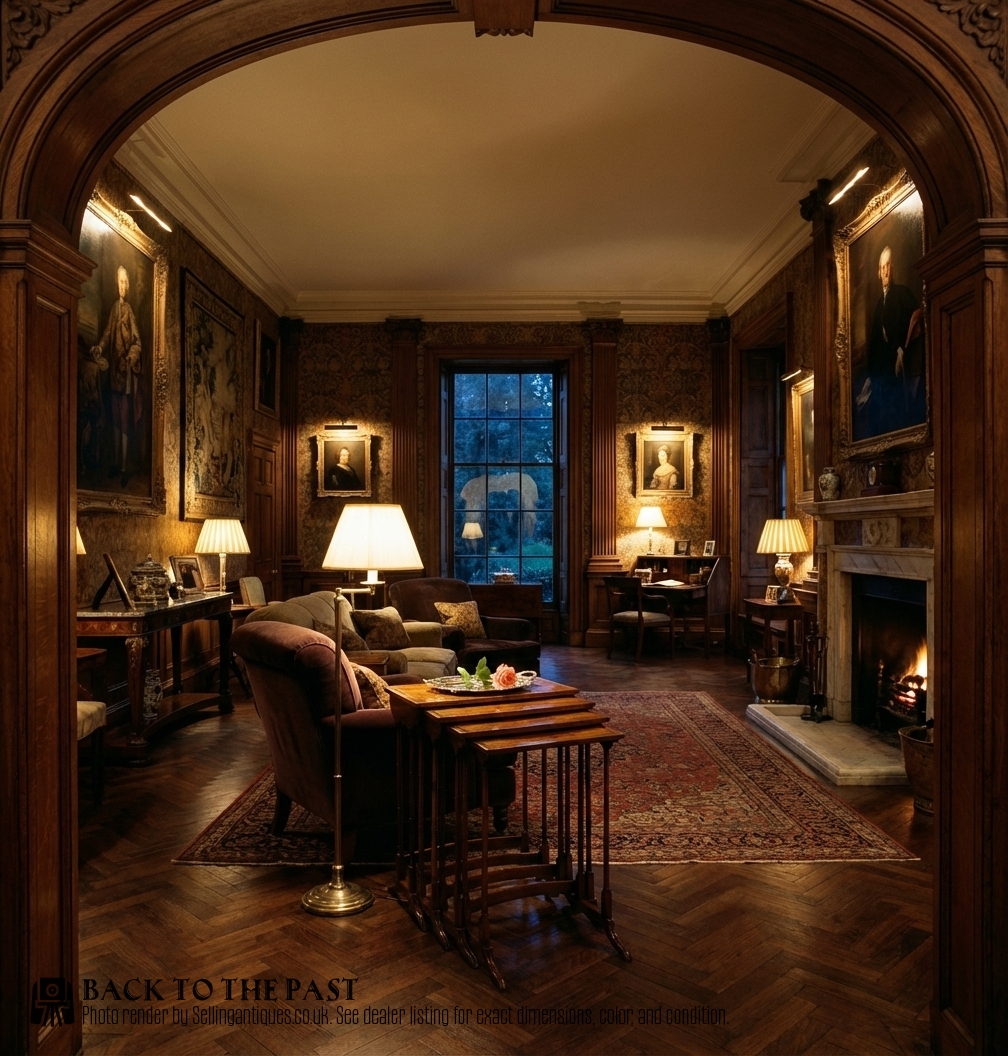
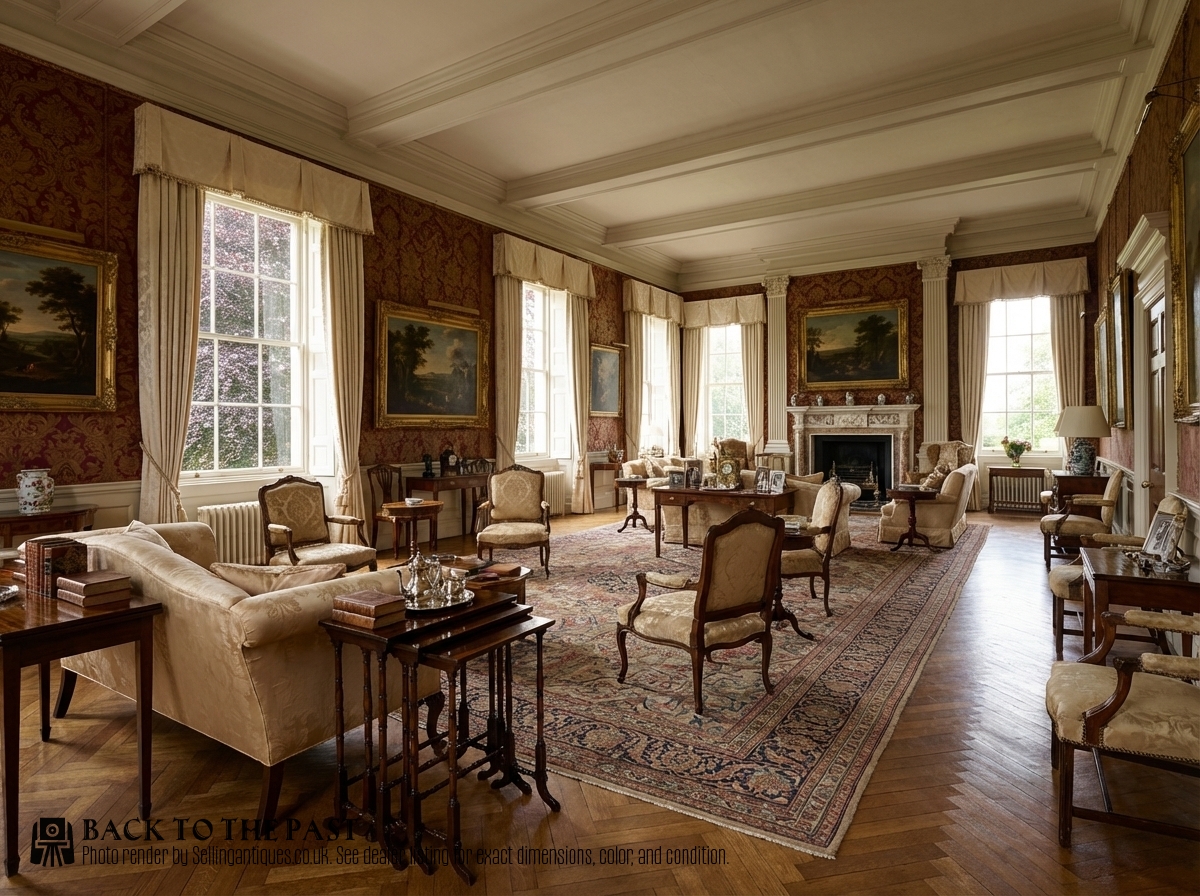
Originating primarily from British workshops, these tables served as functional tea or side tables in period drawing rooms. Their modular design allowed servants to deploy extra surface area rapidly during social gatherings.
Assessing quality
Quality rests in the precision of the graduating frame and the stability of the legs when fully extended. Superior sets maintain tight tolerances so each table slides smoothly without binding against its neighbour.
Material selection dictates the upper tier of the range, where figured veneers and crisp inlay work survive intact. Lesser examples rely on plain timber or suffer from loose joints caused by repeated friction.
Turned Leg Nesting Tables Retail Price Guide 2026
Typical asking prices for turned leg nesting tables among the pieces listed under this phrase on Sellingantiques today, from the lower quarter to the upper quarter. They describe what is for sale here now, not the wider market.
Some nineteenth-century makers concealed extra tables so cleverly that guests sat completely unaware a grand stack lurked in the corner.
Gillows
The Turned Leg Nesting Tables Glossary
- Quartetto
- A matching set of four graduated occasional tables designed to nest together. This term appears frequently in Regency and Edwardian listings.
- Inlay
- Contrasting woods or materials set flush into the surface timber to form decorative patterns. Satinwood is commonly used for this contrasting detail.
- Chinoiserie
- European decorative art employing Chinese motifs, often seen in lacquered finishes. These pieces feature painted Oriental scenes on dark backgrounds.
Turned Leg Nesting Tables: Frequently Asked Questions
How were nesting tables used originally?
These tables served primarily in period drawing rooms as mobile tea or writing surfaces. Servants deployed them around the room as needed and stacked them away afterward.
Their compact footprint made them ideal for entertaining guests without cluttering the floor space permanently.
What is a quartetto set?
A quartetto set consists of four graduated tables designed to slide neatly beneath one another. This term originates from the nineteenth century.
Such sets are frequently found in Regency and Edwardian mahogany or rosewood.
How do I date an Edwardian set?
Edwardian pieces often feature lighter mahogany frames combined with delicate satinwood inlay or burr walnut veneers. They reflect a revival of earlier eighteenth-century aesthetics.
Construction methods remain tidy, though machine-assisted woodworking tools became more common during this period.
Are rosewood nesting tables durable?
Rosewood is a dense and durable hardwood that resists heavy wear over generations. Tables built from this timber handle daily sliding without excessive surface degradation.
Proper maintenance involves treating the polished grain with traditional wax rather than modern silicones.