

Turn of Century Pedestal
These turn of century pedestal designs range from compact wine tables to towering torcheres, offering elevated display surfaces rooted in centuries of cabinetmaking tradition.
Turn of Century Pedestal
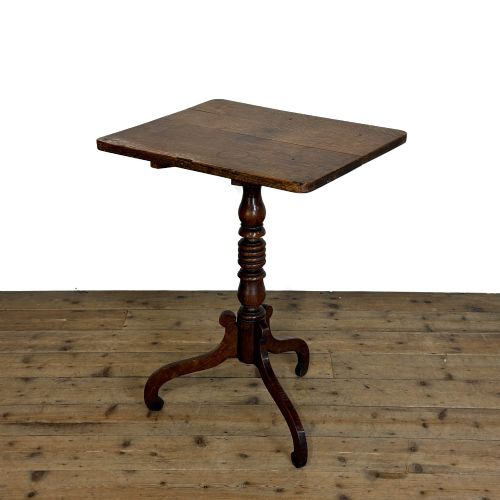
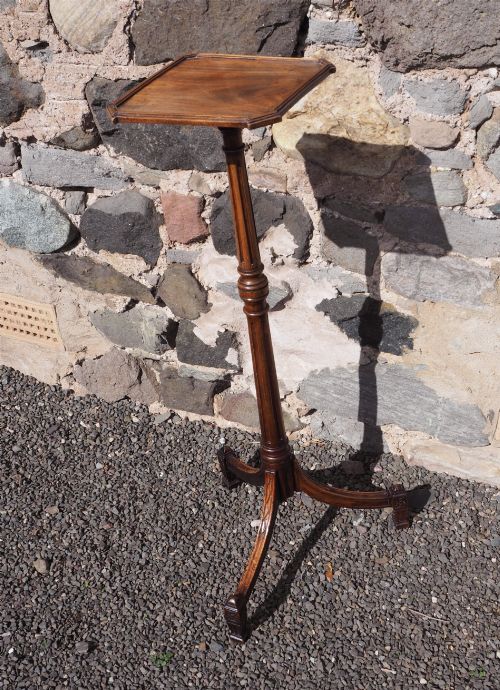
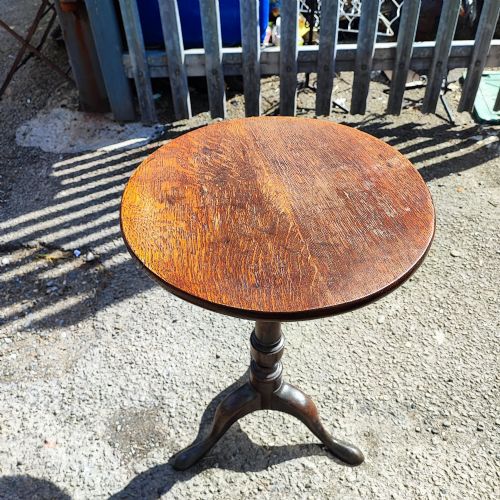
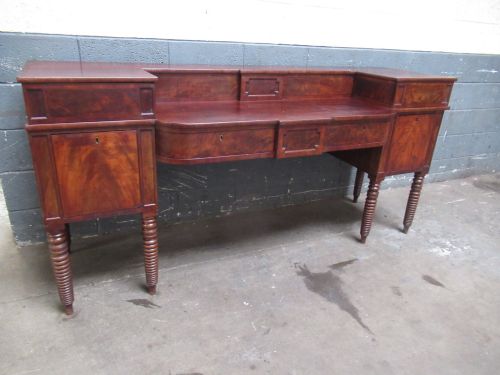
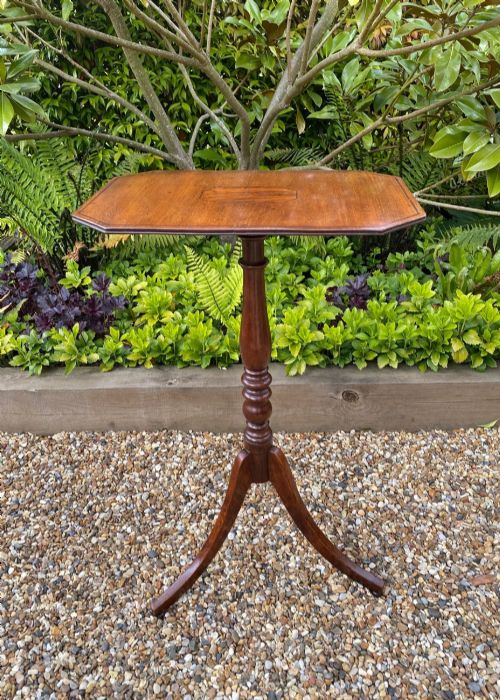
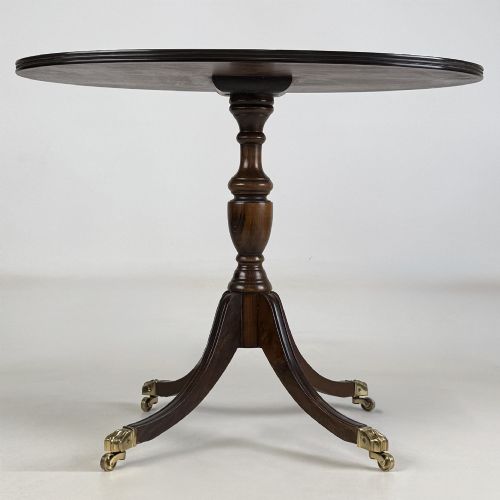
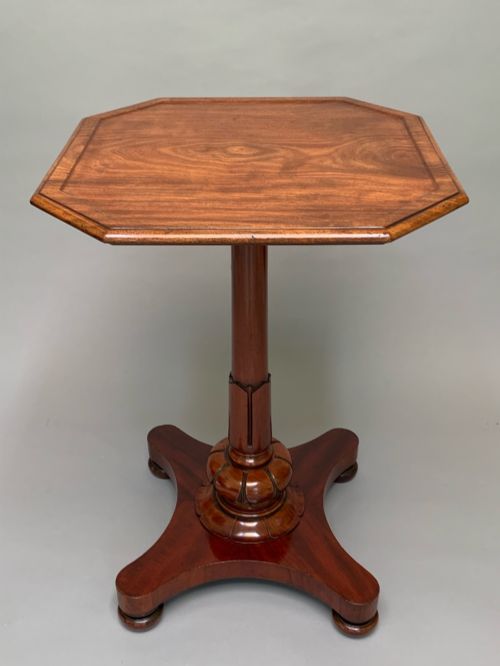
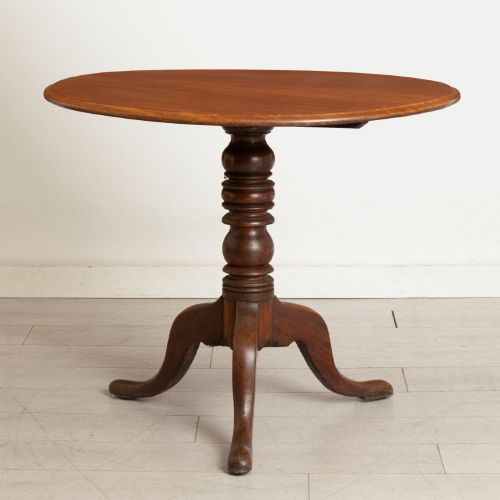
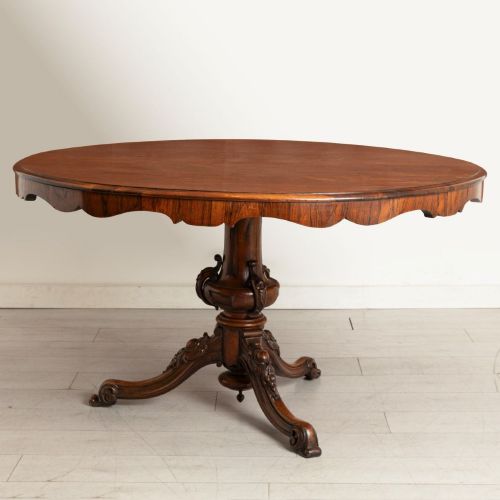
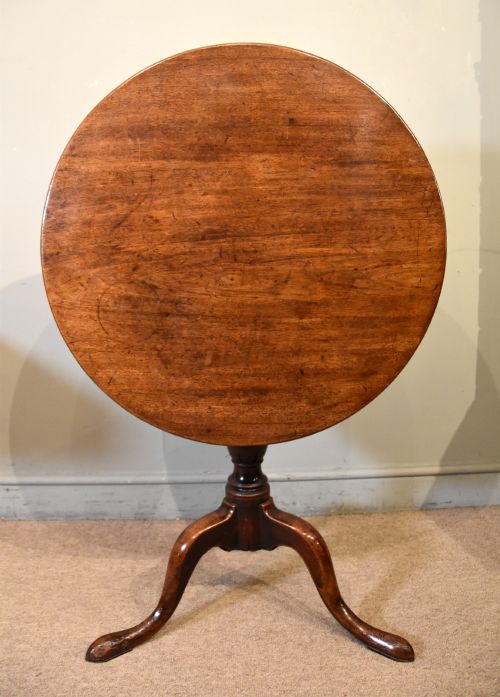
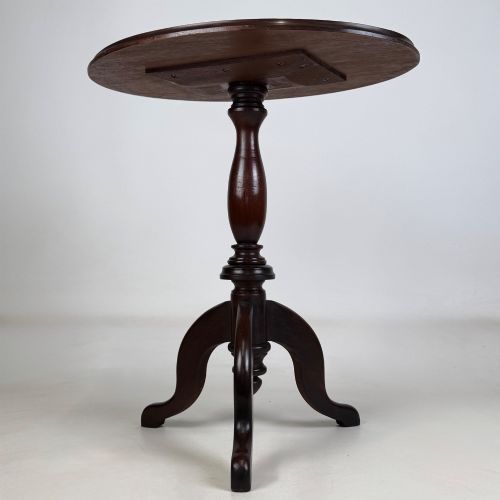
A turn of century pedestal search brings up a diverse selection of small tables, plant stands, and torcheres originating from the Georgian, Victorian, Edwardian, and Regency periods. You will most frequently encounter tripod wine tables, occasional tables, and display stands resting on central columns rather than standard four-legged frames.
The material palette of these pieces relies heavily on timbers such as mahogany, oak, walnut, rosewood, and yew wood, sometimes enhanced with boxwood or satinwood inlay. Makers utilised these dense hardwoods to ensure the central column and raised base could securely support a tilting top, a marble insert, or a raised lamp without tipping.
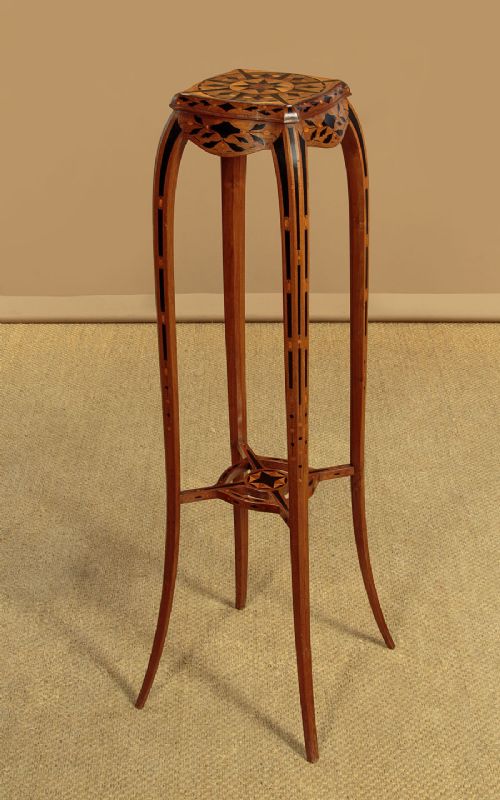
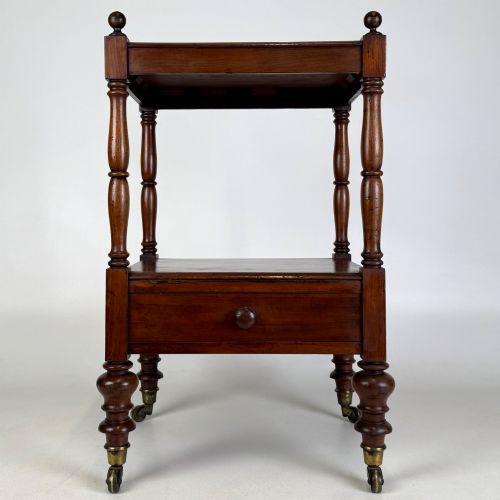
Beyond standard tables, the category encompasses specific forms including bobbin-turned sewing tables, birdcage action tables, and sculptural plant stands or torcheres. These items served functional roles in period interiors, functioning as moveable surfaces for tea, reading materials, or decorative lamps.
Materials and construction methods
Construction relies upon solid hardwoods and veneers, with mahogany, oak, and walnut dominating the inventory alongside exotic accents like rosewood, ebony, and satinwood. Cabinetmakers shaped central pillars on lathes, producing turned columns that joined stability with decorative profiling.
Tripod bases utilise pegged joints and dovetailing to secure the legs to the central shaft, allowing the structure to bear weight evenly across three contact points. Tilt-top mechanisms incorporate specific pivot blocks and brass catches, enabling tabletops to fold flat against the pedestal when not in use.
Surface finishing involves traditional polishing techniques applied to timber grains, while select examples integrate inset materials such as leather, grey marble, or blue John stone. Inlaid details employ contrasting stringing and boxwood to define geometric borders on tabletop surfaces.
Listings feature pedestal forms spanning from the 18th century through the Edwardian era, constructed in mahogany, oak, walnut, and rosewood.
Distinguishing quality in pedestal furniture
The calibre of a turn of century pedestal piece depends largely on the selection of timber and the precision of its turned elements. Solid mahogany and figured burr oak exhibit tighter grain patterns and richer natural tones compared to standard commercial timbers from the same eras.
Structural integrity at the convergence of the column and the tripod legs separates superior workshops from standard production. Finely resolved joinery ensures the central post remains plumb and the supporting feet sit level without wobble or excessive reinforcement.
Detailing such as hand-carved acanthus motifs, precise string inlay, or the inclusion of working tilt mechanisms with original brass hardware elevate the status of an object. Simpler vernacular pieces prioritise utilitarian sturdiness over ornamental flourishes, reflecting their original domestic function.
Gillows·Shoolbred
The Turn of Century Pedestal Glossary
- Tripod table
- A small freestanding table supported by a single central pillar resting on three legs. This configuration prevents rocking on uneven historical flooring.
- Tilt top
- A tabletop mounted on a hinged mechanism that allows the surface to swivel vertically for compact storage against a wall. This mechanism often includes a brass catch to secure the top in position.
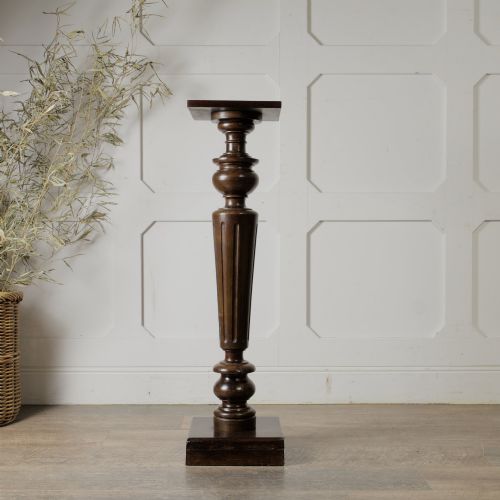
- Torchere
- A tall, slender stand designed to elevate a candle, lamp, or plant. These pieces frequently feature elaborate turning and carved elements on the central shaft.
- Birdcage
- A revolving wooden framework beneath a tabletop that permits the surface to both rotate and tilt. This construction is typical of finer Georgian pedestal examples.
- Treen
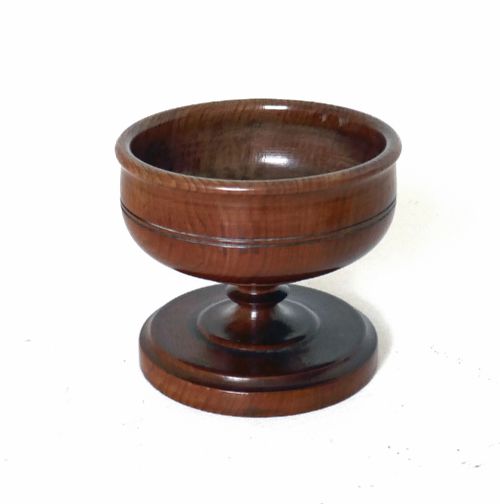
- Small handmade wooden domestic objects produced prior to the modern era. These items display simple turned forms and utilitarian functions.
Turn of Century Pedestal: Frequently Asked Questions
Where were torcheres used in a home?
Torcheres and plant stands were placed in corners, beside seating arrangements, or near windows to hold lighting or botanical displays. Their elevated platforms brought candles or lamps to a convenient height for illumination.
Because they occupy a minimal footprint on the floor, these slender stands fit easily into domestic spaces where a standard side table would prove too bulky.
How do I identify a Georgian pedestal table?
Georgian examples often feature solid mahogany or oak construction with tripod bases terminating in pad feet, spade feet, or carved claw-and-ball details. The proportions tend to be slender, reflecting the prevailing neoclassical or Chippendale influences of the eighteenth century.
Examine the underside for traditional joinery methods, such as hand-cut dovetails and pegged joints, which indicate period manufacturing techniques before mass production took over.
Can I use an antique wine table daily?
These tables handle everyday use well when treated with standard care for wooden antiques, such as avoiding excessive moisture and direct heat sources. Their original purpose as mobile surfaces for drinks or reading material translates directly to modern living.
Ensure that weight is distributed evenly across the surface, particularly on tilt-top variants, to protect the central pivot mechanism and maintain overall balance.