
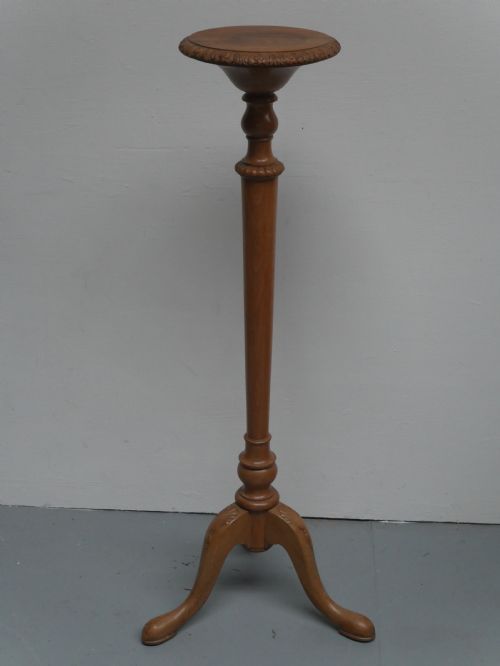


Tall Wooden Pot Stand
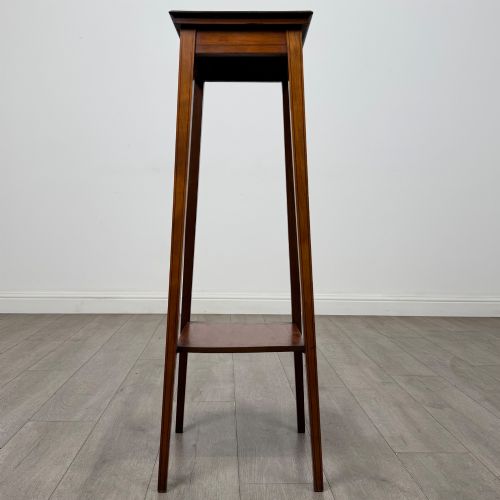
A tall wooden pot stand brings height and structure to a room, holding plants or jardinières with quiet utility.
Tall Wooden Pot Stand
When you search for a tall wooden pot stand, you encounter furniture designed specifically to elevate plants and jardinières within a room. These pieces take the form of slim plant stands and jardiniere stands, lifting greenery off the floor to catch the light.
The selections available span several distinct periods, including the Edwardian era and the late 19th century, alongside early 20th century examples. Forms range from simple turned shafts to coopered barrels and hand carved designs.
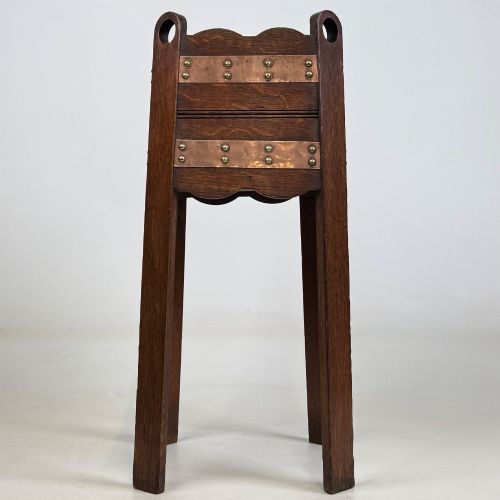
Makers and workshops of the Arts and Crafts movement also contributed to this category, utilising sturdy timber construction and honest joinery. You are most likely to meet mahogany and oak versions on this page, reflecting the dominant materials of the surviving pieces.
How they were made
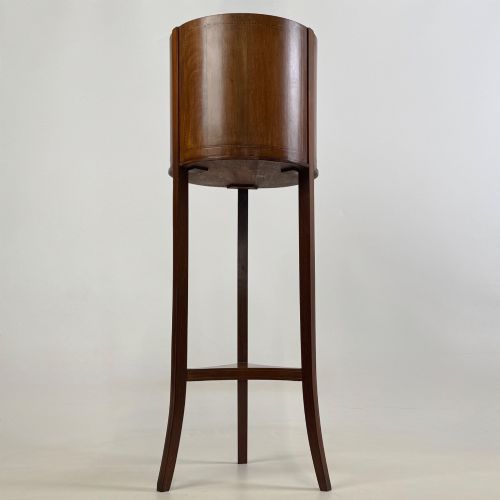
Makers constructed these stands using timber such as mahogany, oak, walnut, and satinwood, often selecting dense hardwoods capable of supporting heavy ceramic or metal bowls. Joinery techniques varied from traditional cabinet making to coopered stave construction secured with brass bands.
Surface ornamentation included hand carving, geometric inlay work, and polished finishes that highlighted the natural grain of the wood. Metal elements such as brass appeared in handles, liners, and structural bands, adding durability and contrast to the wooden frames.
Periods represented include the 19th century, Edwardian era, and the early 20th century.
What varies in quality
Quality rests upon the selection of timber and the precision of the joinery, distinguishing sturdy stands from lesser constructions. Grain alignment and the depth of hand carving separate standard production pieces from finer workshop outputs.
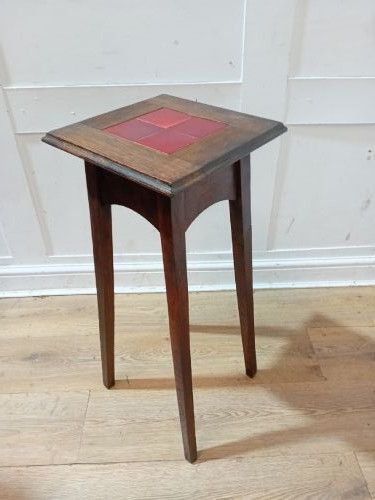
The integration of secondary materials, such as fitted brass hardware and ceramic elements, dictates the refinement of an object. Superior examples display thoughtful proportions and balanced weight distribution that ensure stability when supporting a heavy plant.
Liberty of London
The Tall Wooden Pot Stand Glossary
- Jardinière
- A large decorative pot or stand designed to hold a live plant or flower arrangement. These vessels often sit atop dedicated stands.
- Coopered
- Constructed from vertical wooden staves fitted together and bound with metal bands, similar to barrel making. This technique provided water-resistant strength.
- Satinwood
- A light-coloured, lustrous timber imported from tropical regions, utilised for fine inlay and decorative cabinet work. It creates a striking contrast against darker woods.
- Arts and Crafts
- A design movement valuing traditional craftsmanship, simple forms, and visible construction methods over mass-produced ornamentation. Oak was frequently utilised within this aesthetic.
Tall Wooden Pot Stand: Frequently Asked Questions
What is a tall wooden pot stand used for?
These stands serve to elevate potted plants, ferns, and jardinières, allowing greenery to sit at a deliberate height within a living space. They place decorative foliage in prominent positions where light is accessible.
Historically, they also protected interior flooring from moisture associated with watering indoor plants. Their slender profiles allowed them to occupy corners and tight spaces without obstructing movement.
How do I distinguish Edwardian stands from 19th century ones?
Edwardian pieces often feature lighter timbers such as satinwood or simplified Arts and Crafts oak designs dating around 1900. They lean towards cleaner lines and subtle inlay work.
Nineteenth-century examples tend to employ heavier mahogany or walnut constructions with darker patination. Examining the timber choice and joinery style usually clarifies the period of origin.
Are these stands suitable for heavy ceramic pots?
Sturdy examples constructed from solid oak or mahogany with robust leg structures safely support weighty ceramic planters. Coopered barrel designs offer particular stability due to their bound stave construction.
Lighter or more delicate tripod stands require caution regarding the weight of the top vessel. Checking the base footprint relative to the top platform helps determine load capacity.
Where should I place a jardiniere stand at home?
Jardiniere stands fit well in corners, beside windows, or flanking doorways where vertical interest is needed. Their compact footprints suit entrance halls and reception rooms.
Positioning them away from direct heat sources prevents the timber from drying out or splitting. Pairing them with trailing plants creates a balanced visual composition.