
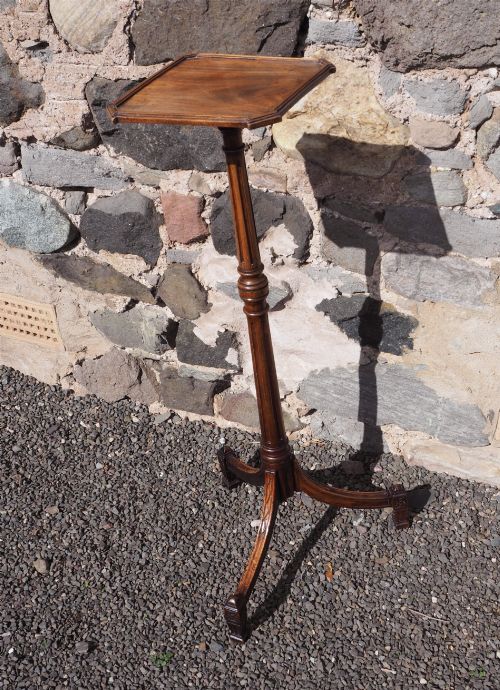
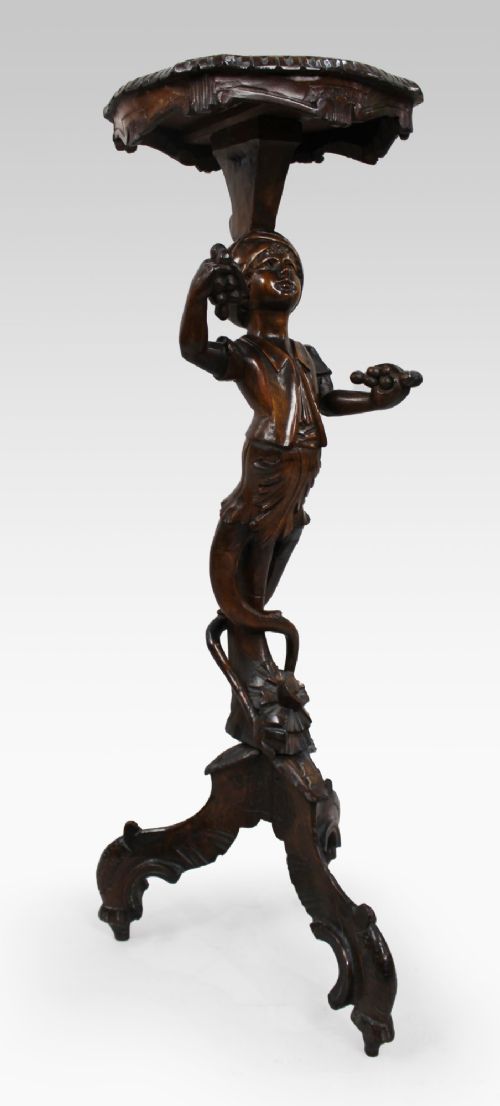
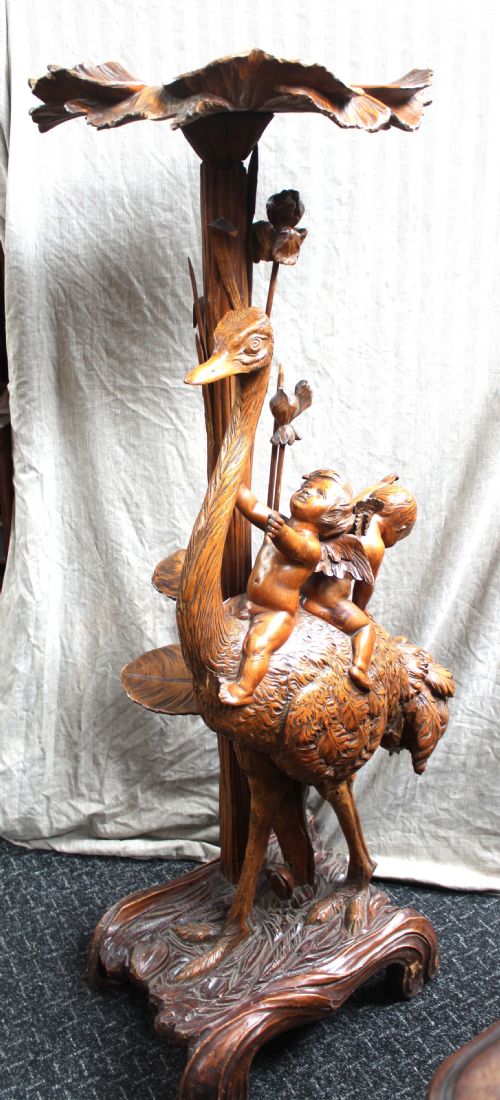

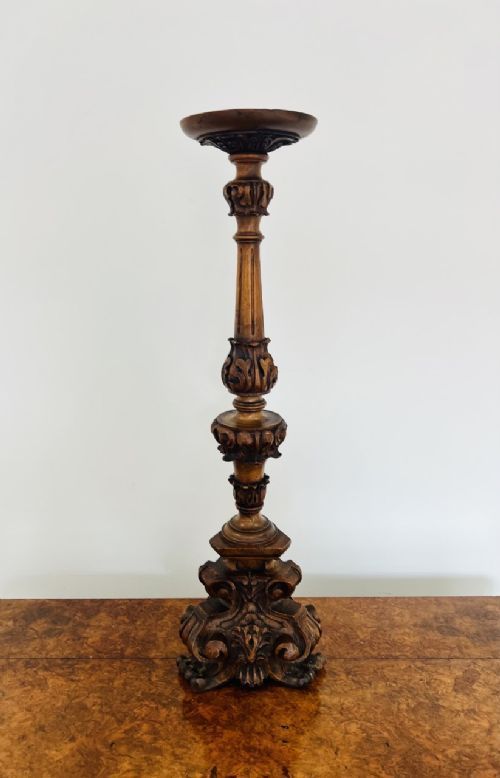
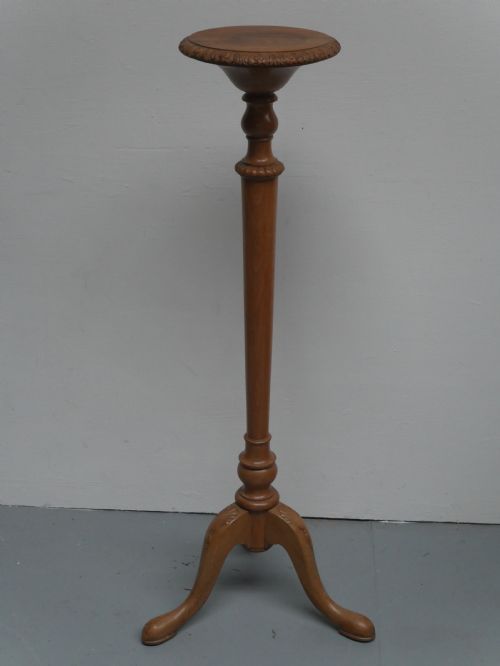


Carved Walnut Torchere
A carved walnut torchere brings monumental presence and sculptural display to a corner, lifting a lamp, urn or plant above the floor.
Carved Walnut Torchere
When you search for a carved walnut torchere, you are looking at tall, freestanding display stands designed to hold lamps, plants, and jardinieres. These pieces combine utility with dramatic vertical form, often taking the shape of classical columns, fluted pedestals, or elaborate figural supports.
The versions most likely to meet you on this page span the eighteenth, nineteenth, and early twentieth centuries. Continental European workshops dominate the selection, bringing ornate Baroque revival, Italian Renaissance revival, and Dutch carving traditions to British and international homes.
Forms range from simple turned shafts to highly decorative stands incorporating figures, cherubs, and scrolling foliage. They appear under various descriptions including plant stands, pedestal tables, and candle stands, yet all share the same elevated purpose.
Materials and construction
Walnut forms the primary structural and visual substance of these pieces, chosen for its rich grain, warm hue, and capacity for sharp, deep carving. Secondary woods appear occasionally in internal framing or secondary elements, while certain stands incorporate contrasting marble tops for added weight and waterproof display surfaces.
Cabinetmakers and carvers utilised seasoned timber, joining shafts to heavy bases through tenons and pegged joints to ensure stability at height. Skilled artisans worked the walnut by hand with gouges and chisels, creating high-relief swags, fluting, and figural elements directly from the solid medium.
Periods represented span from the eighteenth century through the Victorian era to the nineteen-twenties.
Distinctions in quality
Proportion and structural integrity dictate the long-term success of a tall stand. The finest examples maintain a wide, heavy base that secures the narrow vertical shaft, ensuring the piece stands plumb and steady without excessive wobble under a heavy marble urn or bronze figure.
The Carved Walnut Torchere Glossary
- Torchere
- A tall stand originally designed to carry a candle or torch, now used widely for displaying lamps, urns, and plants.
- Jardiniere
- An ornamental pot or stand for holding plants and flowers, frequently integrated into the top surface of nineteenth-century pedestals.
- Blackamoor
- A decorative art term from historical periods describing carved figures, often depicted in exoticised costume holding trays or lights.
- Baroque Revival
- A nineteenth-century style imitating the heavy, dramatic curves, dynamic movement, and rich ornamentation of the seventeenth-century Baroque period.
- William IV
- A British design period spanning the 1830s, characterised by robust classical proportions and heavy scrolling elements.
Carved Walnut Torchere: Frequently Asked Questions
What is a torchere used for?
A torchere serves as an elevated platform for displaying decorative objects, table lamps, or trailing plants in a room. They lift items to eye level, filling empty corners and adding vertical interest to an interior.
Historically, they held candles or oil lamps to illuminate dark spaces. Today, their primary role is architectural and decorative display.
How do I care for walnut furniture?
Keep walnut stands away from direct heat sources and strong sunlight to prevent the timber from drying out and splitting. Dust the carved surfaces regularly with a soft, dry cloth.
Apply a microcrystalline wax occasionally to nourish the walnut grain and protect the finish from moisture. Avoid placing dripping plants directly onto unsealed wood surfaces.
Are these stands stable enough for daily use?
Most stands are designed with weighted or wide bases to support heavy jardinieres, marble tops, and large figures safely. However, their height makes them vulnerable to tipping if placed in high-traffic pathways.
Positioning them firmly against a wall or in a protected corner ensures they remain secure. Check the joints where the shaft meets the base periodically to maintain structural firmness.
How can I tell the period of a stand?
Dating relies on stylistic clues, tool marks, and the specific character of the walnut timber. Eighteenth-century pieces often display hand-sawn surfaces and restrained classical carving, whereas Victorian and later revivals show heavier, more exuberant ornamentation.
Examine the construction methods underneath the base and around the platform for signs of period hand tools. Comparing the decorative motifs to known regional styles helps narrow down the decade of manufacture.