
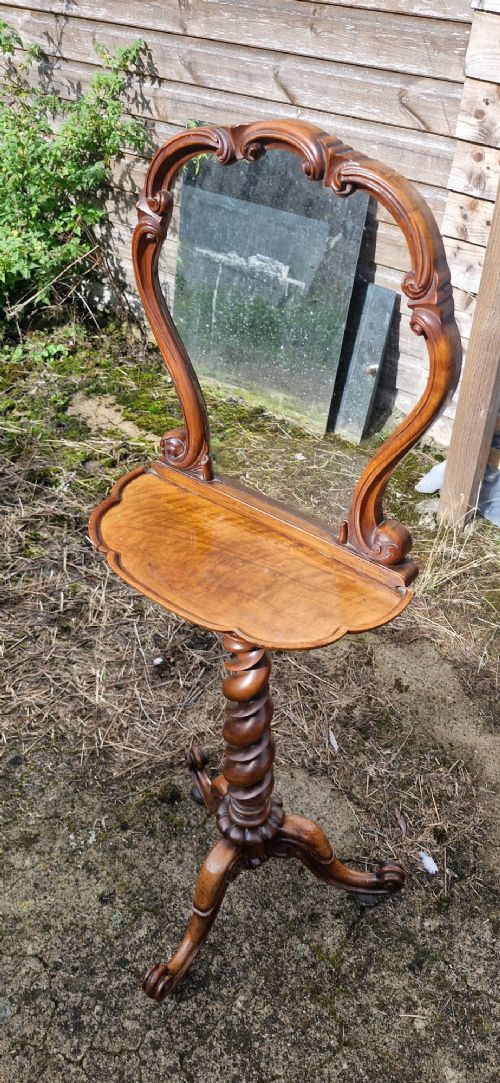
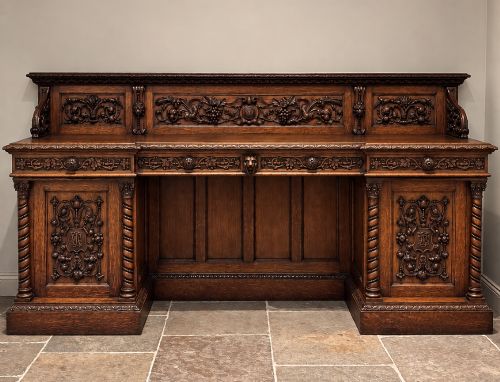
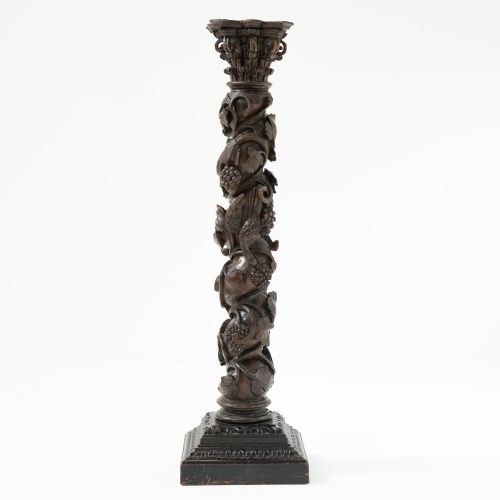
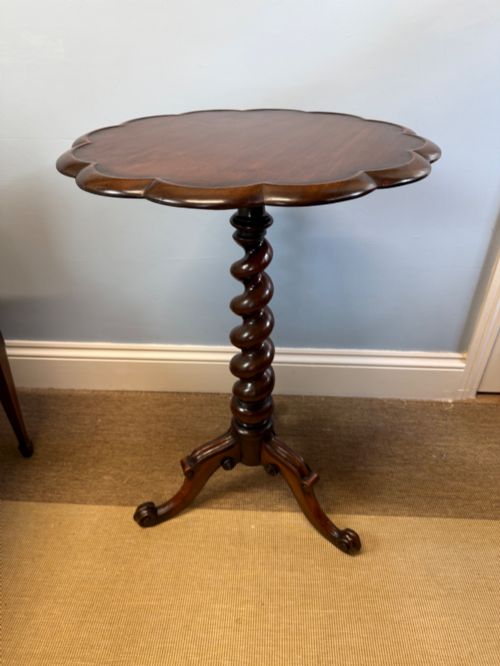
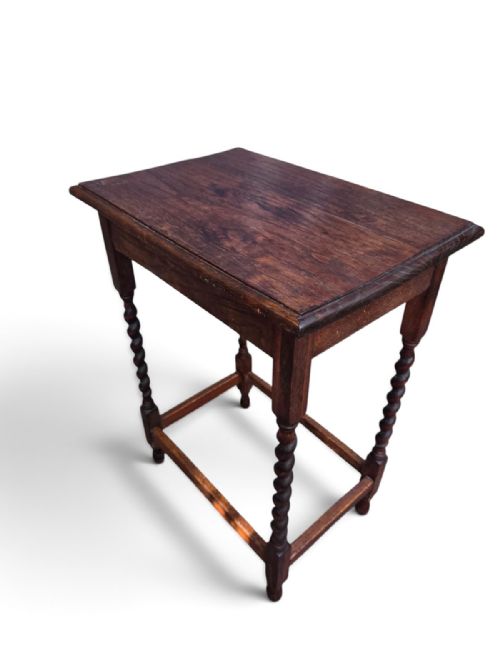
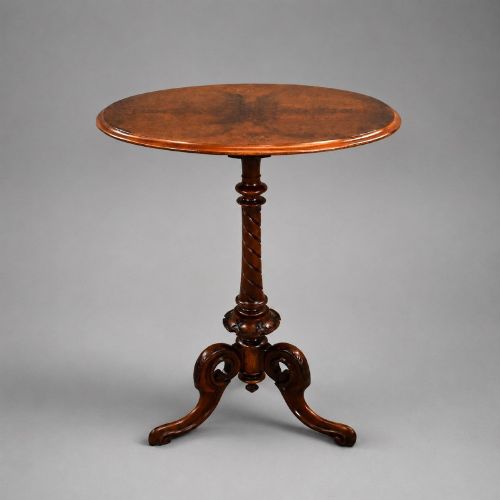
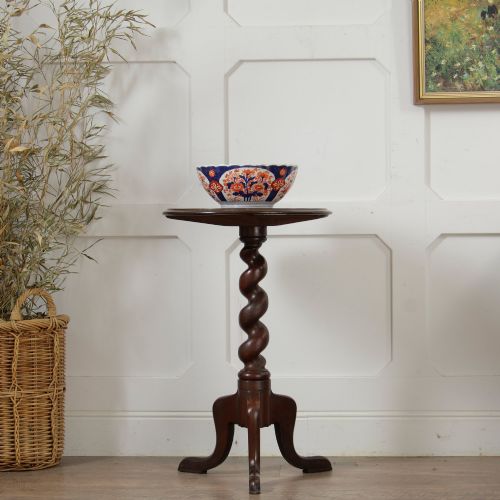
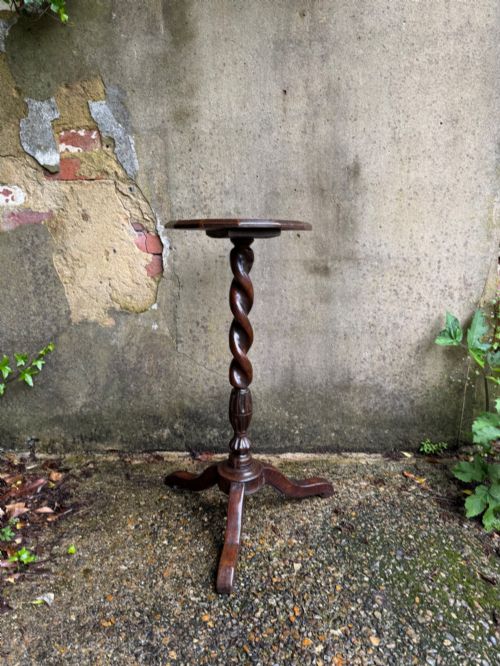


Barley Twist Pedestal
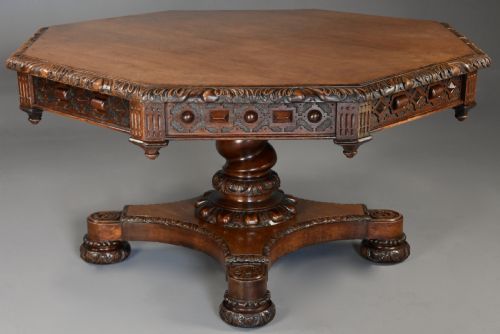
These barley twist pedestal examples provide robust support for display, uniting turned wooden spirals with classical column proportions.
What barley twist pedestal pieces are
When you search for a barley twist pedestal, you find turned wooden supports designed to elevate objects, plants, or figures. These pieces appear as torchere stands, plant stands, columns, and jardiniere stands across various historic periods.
The selections available on this page span the 19th century, Victorian era, Georgian period, and 1920. You encounter single columns alongside paired torchere stands intended for balanced room placement.
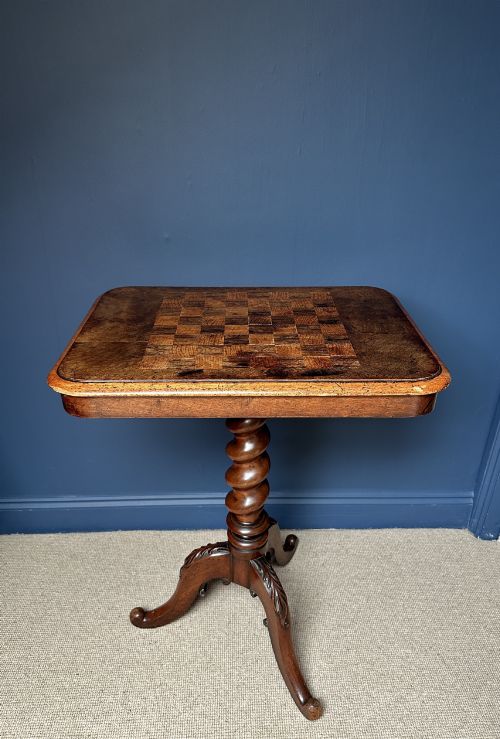
Forms range from tall mahogany and walnut plant stands to marble columns and specialised chess tables. The spiral turning defines the core aesthetic across all these functional display objects.
How they were made
Craftsmen utilised solid timbers such as mahogany, walnut, oak, ebonised wood, and rosewood to turn the characteristic helical shafts on lathes. These turned wooden stems frequently interface with contrasting materials like brass mounts and verde antico marble tops.
Surface treatments vary from polished wood finishes to ebonised detailing that mimics denser exotic hardwoods. Construction methods focus on stability at the base to safely support heavy weights overhead.
Retail Price Guide 2026
Typical UK retail prices for barley twist pedestal, calculated from the Sellingantiques database of over a million retail prices indexed since 2003. This retail price guide relies exclusively on Sellingantiques data; no external sources or auction records are used, so the figures do not describe the wider market.
Current listings feature materials ranging from traditional mahogany and walnut to verde antico marble and brass.
What varies in quality
Quality reveals itself in the crispness of the spiral twist and the selection of timber figures within the mahogany or walnut. Superior examples demonstrate precise joinery where the turned column meets stable base plates.
Material integration also separates standard items from finer works, such as the inclusion of genuine verde antico marble sections or cast brass elements. Proportion and balance dictate the visual success of taller columns and torchere stands.
The Barley Twist Pedestal Glossary
- Barley twist
- A spiral turning resembling the shape of a barley sugar stick, popular in furniture design.
- Torchere
- A tall stand designed to hold a light source, candle, or decorative display object.
- Verde antico
- A dark green serpentine marble historically utilised for classical columns and architectural decoration.
- Jardiniere
- A decorative pot or stand specifically made to hold plants and floral arrangements indoors.
- Ebonised
- Wood treated with a dark finish to imitate expensive ebony.
Frequently Asked Questions
What is a barley twist pedestal used for?
These stands serve primarily to elevate items such as busts, urns, plants, and decorative lamps within domestic interiors.
Historically, they also functioned as torchere supports for candles or as bases for specialised games tables.
How do I date a pedestal?
Dating relies on identifying the primary timber, construction methods, and characteristic turning styles associated with periods like the Georgian era or Victorian times.
Material combinations, such as ebonised wood paired with specific marbles, provide further chronological clues.
Are these stands sturdy enough for heavy plants?
Most examples utilise solid hardwoods like mahogany and walnut to ensure structural stability for heavy displays.
Wide bases and robust turning further contribute to the weight-bearing capacity of plant stands and columns.
How do I fit a pedestal into a modern room?
These architectural stands work effectively in corners or empty hallways to add vertical interest and display focal pieces.
Pairing a wooden column with contemporary sculptures or simple green plants creates a deliberate contrast of eras.