




Ormolu Mounted Column
An ormolu mounted column unites stately stone or timber shafts with crisply chased gilt metal mounts for a classic display.
Ormolu Mounted Column
When you examine an ormolu mounted column, you encounter structural supports and lighting forms built to elevate objects or illuminate rooms. These pieces function as architectural pedestals, torcheres, and tall table lamps designed with classical proportions.
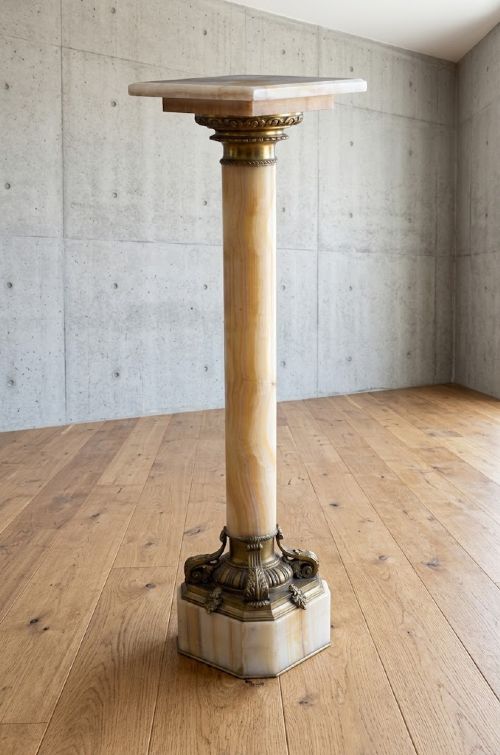
The versions you meet most frequently on this page span the nineteenth century, drawing heavily on French Empire, Neoclassical, and Victorian aesthetic vocabularies. Makers frequently paired slender shafts of marble, onyx, or mahogany with gilt bronze collars and capitals.
Materials and construction methods
Casting and fire-gilding bronze created the bright ormolu mounts that accent these pieces, offering a crisp contrast to natural stone and timber. Artisans chased the metal surfaces by hand to sharpen leaf, scroll, and fluted architectural details.
Turned shafts of white or coloured marble, onyx, and glass formed the core of many columns, whilst cabinetmakers utilised rosewood, kingwood, mahogany, and satinwood for timber variants. Parquetry and fine inlay work frequently adorned the wooden bases and pedestals.
Foundry workers and joiners secured the heavy metal collars and capitals directly onto the stone or wood bodies using concealed pins and screws. This combination of heavy mineral substrates and precision metalwork ensured stability for tall lighting and display stands.
Listings feature nineteen-century pieces predominantly, utilising materials such as ormolu, marble, onyx, mahogany, and glass in pillar and pedestal formats.
Distinguishing quality across the range
The standard of an ormolu mounted column rests largely upon the crispness of the bronze chasing and the depth of the mercury or fire gilt. Superior mounts display sharp undercuts and deliberate textural variation, whereas lesser examples appear flat and cast rather than finished by hand.
Material selection further divides the ordinary from the exceptional, particularly in the choice of flawless marble, richly figured onyx, or dense tropical hardwoods. Dense grain and harmonious veining in the stone shaft indicate careful selection by the maker.
Structural integrity and proportion dictate the overall success of the piece, ensuring the heavy stone or timber shaft remains perfectly plumb within its metal collar. Fine execution shows in the seamless integration of bronze capitals with the underlying column without awkward gaps.
The Ormolu Mounted Column Glossary
- Ormolu
- Gilt bronze produced by applying a gold and mercury amalgam to cast bronze before heating. This historic technique yields a warm, durable golden finish that resists tarnishing over centuries.
- Torchere
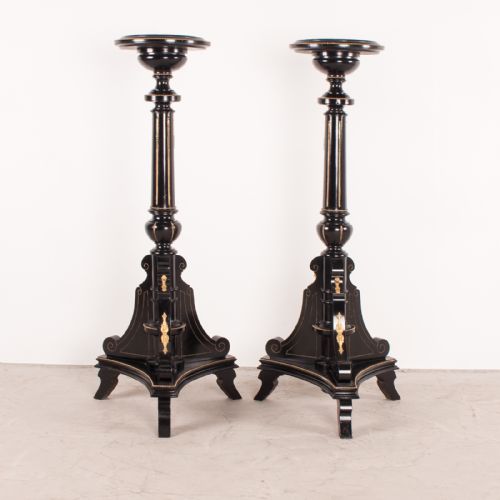
- A tall stand or floor lamp designed to hold a light source high above the floor. In nineteenth-century interiors, these often took the form of slender classical columns.
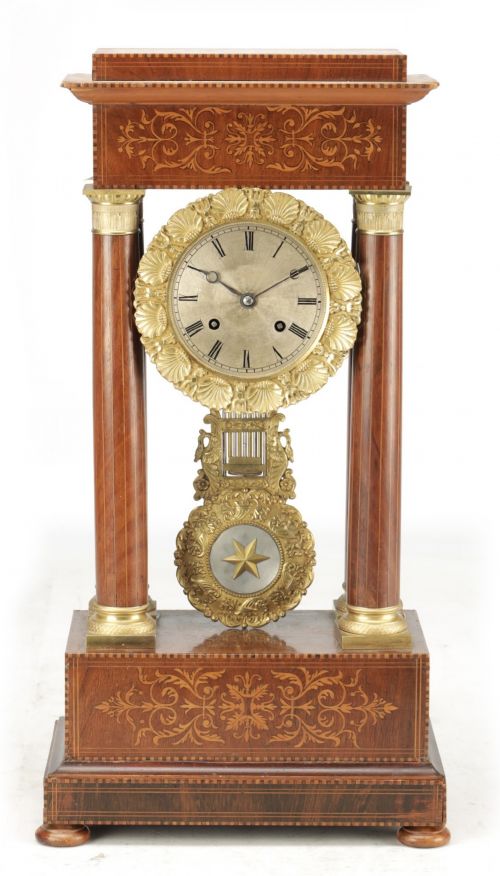
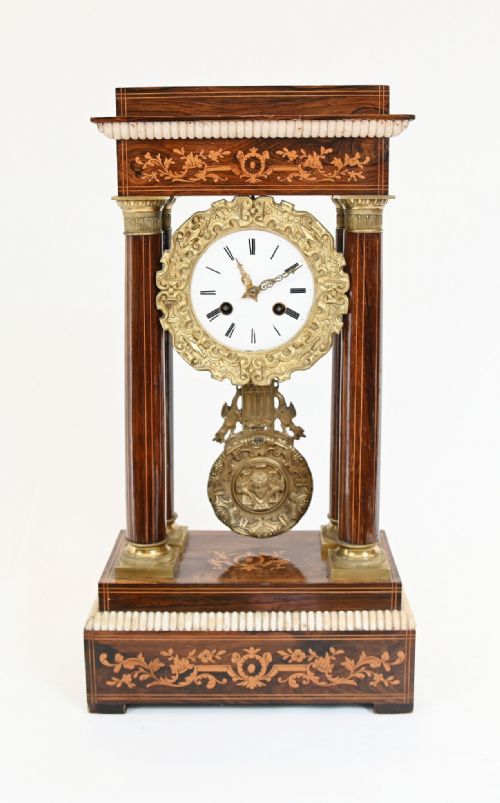
- Portico clock
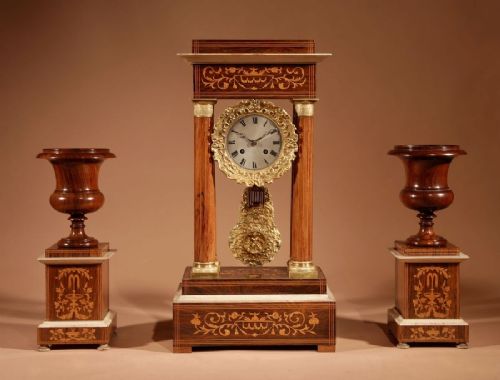
- A mantel clock constructed in the architectural form of a classical temple or portico. These pieces frequently incorporate columns flanking the central dial.
- Parquetry
- Geometric mosaic woodwork formed by small veneer pieces applied to a carcase. Makers used this technique to create intricate patterned surfaces on pedestal bases.
- Corinthian
- A classical architectural order identified by ornate capitals decorated with acanthus leaves. This motif appears frequently on the bronze collars of lamp columns.
Ormolu Mounted Column: Frequently Asked Questions
What were ormolu mounted columns used for originally?
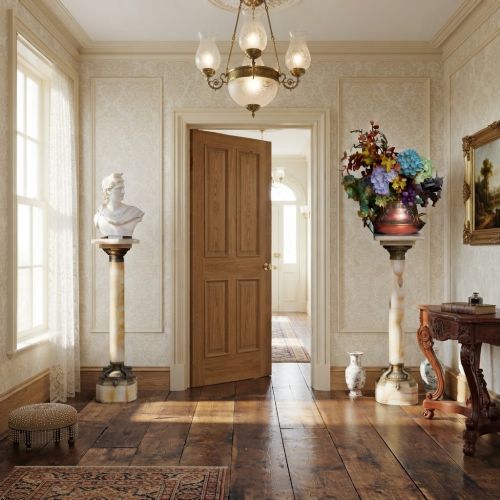
These pieces served primarily as architectural display stands for fine art, decorative urns, and portrait busts in grand nineteenth-century interiors. Many others functioned as sophisticated table lamps to illuminate drawing rooms and libraries.
Their substantial weight and classical proportions allowed them to anchor room corners or flank larger pieces of case furniture like credenzas and commodes.
How do I care for marble and ormolu?
Dust the gilt bronze mounts gently with a soft, dry brush and avoid harsh chemical cleaners that strip the historic finish. Marble and onyx shafts require only a damp microfibre cloth followed by immediate drying.
Keep these items away from direct heat sources and moisture to protect both the natural stone surfaces and the delicate joinery of the metal mounts.
Are these pieces stable enough to hold heavy items?
The stone and heavy timber columns possess considerable mass and remain exceptionally stable on level floors. Their wide bases are engineered to bear the weight of large bronze urns, marble busts, and heavy glass shades.
Ensure the column rests on an even surface and check that the upper ormolu collar remains tightly secured to the central shaft.
How can I distinguish a nineteenth-century column from a later reproduction?
Examine the construction of the bronze mounts, looking for hand-chased details and the warm, deep tone characteristic of nineteenth-century fire gilding. Older stone and timber shafts often exhibit subtle surface wear and patination consistent with age.
Inspect the internal fixings and screws, as older pieces typically employ hand-cut threads and traditional joinery rather than modern mass-produced hardware.