




Onyx Marble Plinth
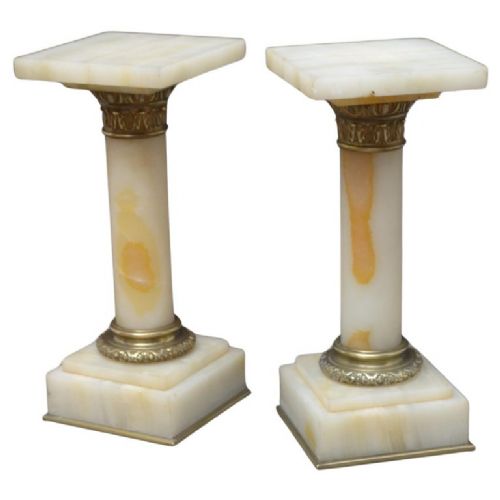
These onyx marble plinth examples combine rich mineral columns with gilt metal mounts, offering a solid elevation for sculpture and display.
Onyx Marble Plinth
An onyx marble plinth serves primarily as a columnar pedestal or a carved base for displaying sculptural figures. Buyers seeking an onyx marble plinth encounter sturdy architectural forms designed to elevate decorative arts within a room.
The inventory on this page consists predominantly of nineteenth-century Neoclassical columns and early twentieth-century display bases. These pieces frequently pair translucent stone shafts with contrasting metallic collars and bases.
Common regional origins span French workshops and Italian carvers, utilising stone alongside cast metal figures. Sculptural items mounted directly onto stone bases also appear under this heading alongside tall floor pedestals.
How They Were Made
The construction of an onyx marble plinth relies on turning and carving dense natural stone to form smooth cylindrical columns or solid rectangular blocks. Artisans selected banded onyx and white Carrara or dark Portoro marble for their varied natural veining.
Metal components such as ormolu, gilt bronze, brass, and spelter were cast and chased separately before being fitted as decorative collars, mounts, or figurative sculptures. These metal elements were then secured to the stone shafts using threaded rods or internal mounting pins.
Onyx Marble Plinth Retail Price Guide 2026
Typical asking prices for onyx marble plinth among the pieces listed under this phrase on Sellingantiques today, from the lower quarter to the upper quarter. They describe what is for sale here now, not the wider market.
Cyclists and pheasants occasionally share the stone stage, proving that even mineral plinths have a soft spot for sports and wildlife.
What Varies in Quality
Quality in an onyx marble plinth rests on the precision of the stone turning and the crispness of the metal casting. Superior pieces display harmonious natural banding in the stone paired with finely chased ormolu mounts rather than simpler cast brass.
The integration between the stone shaft and its metal collars determines structural integrity and aesthetic balance. Finer examples maintain tight joints and substantial weight, reflecting careful selection of raw materials by the maker.
The Onyx Marble Plinth Glossary
- Onyx
- A translucent form of chalcedony with parallel banding, prized for its decorative surface pattern. It provides the polished shaft material for many nineteenth-century display columns.
- Ormolu
- Gilt bronze produced by applying a mercury and gold amalgam to a bronze object and heating it. This technique creates a durable golden finish on decorative mounts.
- Spelter
- An alloy of zinc used as a cost-effective substitute for bronze in decorative figures. It is often painted or bronzed to resemble heavier metals.
- Neoclassical
- An artistic style drawing inspiration from classical antiquity, prominent in nineteenth-century architecture and decorative arts. It governs the symmetrical proportions and classical collar designs seen on many columns.
- Portoro
- A black Italian marble featuring prominent gold or yellow veins. It forms dark contrasting bases for sculptural groups.
Onyx Marble Plinth: Frequently Asked Questions
What is an onyx marble plinth used for?
These pieces serve as architectural pedestals for elevating busts, vases, and decorative sculptures above floor level. They function as both structural furniture and decorative display surfaces.
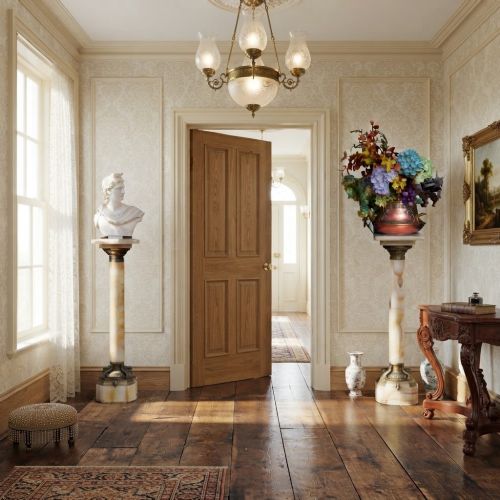
In domestic settings, they act as focal points in hallways or reception rooms to highlight specific works of art.
How do I date an onyx marble plinth?
Dating relies on stylistic clues such as Neoclassical bronze mounts or later Art Deco geometric figures. Material choices like spelter versus ormolu also indicate specific manufacturing decades.
Examining the turning techniques and internal assembly pins helps separate nineteenth-century work from later twentieth-century pieces.
Are these pieces made of solid stone?
Many pedestals use turned stone for the main column shaft while incorporating internal iron or steel rods for structural stability. Bases and capitals often combine stone sections with cast metal collars.
Sculptural elements mounted on top are typically cast in metal such as spelter or bronze and attached directly to the stone base.
How should I clean an onyx marble plinth?
Natural stone surfaces require gentle dusting with a soft, dry cloth to prevent scratching the polished finish. Avoid using acidic cleaners or household detergents that can etch marble and onyx.
Metal collars and gilt bronzes should be dusted carefully without harsh chemical polishes that might strip the original surface patination.