




Turkish Kilim Rug
When choosing a turkish kilim rug, you select a flatwoven textile carrying centuries of nomadic and village weaving traditions from Anatolia and the Balkans.
Turkish Kilim Rug
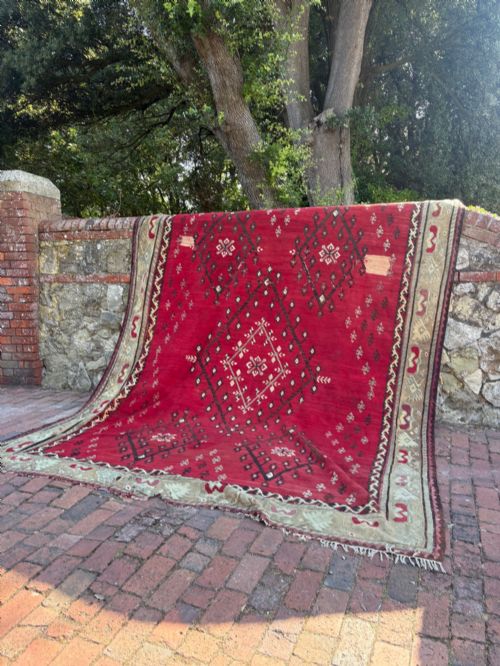
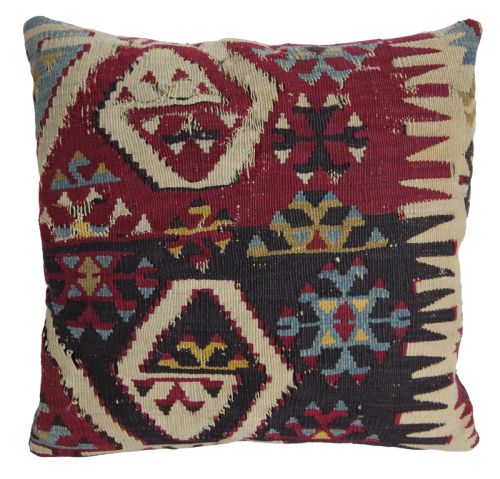
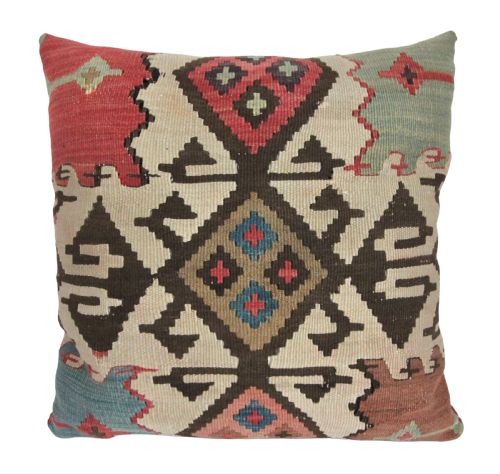
A turkish kilim rug encompasses flatwoven floor coverings, large room-sized carpets, runners, and smaller utility items like saddle bags and cushions. These pieces originate from regional centres such as Konya, Malatya, Ushak, and Sarkoy, reflecting diverse tribal and traditional local aesthetics.
The inventory ranges from grand room-scale pieces woven in two parts to narrow runners and utilitarian bag faces adapted into modern decorative cushions. Dating predominantly from the mid-nineteenth century through to the 1930s, these flatweaves display geometric motifs, medallion patterns, and traditional banded designs.
How They Were Made
Weavers construct these textiles using wool for the structural warps and wefts, occasionally incorporating cotton and leather elements for reinforcement or detail. The technique relies on a slit-weave method where the weft yarns return at the boundary of each colour block, creating characteristic small vertical splits along the pattern lines.
Certain regional types incorporate supplemental embroidery, cicim weave structures, or are produced in two separate panels joined together to achieve large room dimensions.
Listings feature wool, cotton, and leather materials spanning production dates from the mid-nineteenth century up to the 1930s.
What Varies in Quality
Quality rests upon the crispness of the geometric drawing, the balance of the regional design, and the integrity of the flatweave structure. Pieces with tight, even tension in the wool and well-preserved borders demonstrate superior initial craftsmanship.
The nuance of the palette, whether soft secondary tones or bold primary configurations, dictates visual success. Wear patterns, historical repairs, and the survival of original edge finishes also influence the standing of an individual textile.
The Turkish Kilim Rug Glossary
- Kilim
- A flatwoven carpet or rug produced without a pile by tightly interweaving warp and weft strands. This technique creates a smooth, reversible surface with sharp geometric pattern transitions.
- Slitweave
- A construction method in kilim production where the weft threads reverse direction around adjacent warps without interlocking. This leaves a small slit between different colour areas that defines the sharp outlines of tribal motifs.
- Cicim
- An embroidered supplementary weft technique applied to a foundation weave to create raised patterns on the surface. It appears frequently on panels and wall-hanging textiles from specific Anatolian regions.
- Juval
- A large storage bag face woven by nomadic groups for domestic transport and storage. These fragments survive as highly decorative tribal rugs.
- Prayer Kilim
- A devotional rug featuring a distinctive mihrab or arch design indicating the direction of prayer. These formats were woven for personal religious use in village households.
Turkish Kilim Rug: Frequently Asked Questions
How do I clean a flatweave carpet?
Gentle surface vacuuming without a beater bar removes dry dust from the wool fibres safely.
Professional specialist washing is necessary for deeper cleaning to prevent dye bleed or structural distortion.
Can I use these flatweaves on the floor?
Many large carpets and runners suit high-traffic residential areas when paired with an appropriate non-slip underlay.
Fragile pieces, small bag faces, and embroidered wall panels are better suited to low-traffic display or mounting.
What causes the splits in the weave?
The slit-weave technique inherently leaves small vertical openings where distinct colour fields meet in the pattern.
These structural gaps are characteristic of authentic flatweaves rather than damage.
How are regional styles identified?
Distinctive colour palettes, specific geometric vocabulary, and structural traits point to areas like Konya, Malatya, or Sarkoy.
Local weaving traditions dictated the specific layout, whether a banded design or a repeat medallion format.