
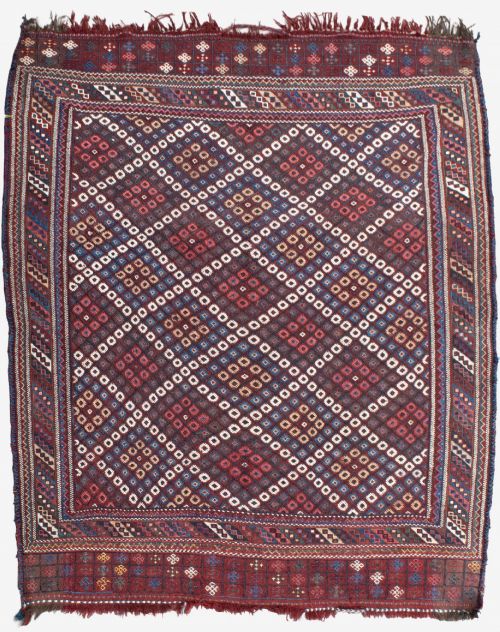


Traditional Kelim Rug
These traditional kelim rug examples bring flatweave texture and geometric wool design into an interior.
Traditional Kelim Rug
When you search for a traditional kelim rug, you encounter flatwoven carpets originating from Anatolia, Persia, Central Asia, and Eastern Europe. These floor coverings and runners span the late nineteenth century and the early decades of the twentieth century.
The selections available here include Anatolian tribal pieces, Persian tribal examples, Afghan and Uzbek productions, and Bessarabian flatweaves. Each regional group displays distinct weaving structures and patterns executed without a pile.
Buyers most frequently meet runner formats and large room-size carpets created by nomadic and village weavers. These textiles function effectively in contemporary and traditional spaces alike.
How they were made
The structure relies on interweaving warp and weft threads to create a completely flat textile without knotted pile. Weavers utilise wool for the primary design and structural elements, frequently combining it with cotton foundations.
Specific regional techniques include slit-weave construction where the weft threads return at the edge of a colour area, creating small vertical slits in the fabric. Certain pieces are constructed in two separate parts joined together down the centre.
Dyes applied to the wool yarn originate from natural botanical and mineral sources typical of the period. The resulting palette develops a soft patina over decades of light exposure and use.
The listings feature wool and cotton materials across pieces dated between 1890 and 1930, originating from Anatolia, Persia, Central Asia, and Eastern Europe.
What varies in quality
Quality in a traditional kelim rug rests upon the tightness of the weave and the precision of the geometric layout. Tighter packing of the weft threads produces a firmer, more durable textile that lies flat upon the floor.
The sophistication of the tribal design and the handling of the colour transitions distinguish standard village items from exceptional regional works. Strong graphic clarity in motifs such as finger patterns or bold central medallions elevates the piece.
The Traditional Kelim Rug Glossary
- Kelim
- A flatwoven textile produced without a pile by interlocking weft threads over a warp. This construction method creates a lightweight carpet suitable for floors or wall hanging.
- Warp
- The stationary vertical threads stretched onto the loom before weaving begins. These foundational threads support the entire structure of the carpet.
- Weft
- The horizontal threads passed through the warp to form the visible pattern and colour fields. In these flatweaves, the weft completely covers the warp.
- Slit-weave
- A specific technique used in flatweaves where the colour areas meet and the wefts return independently, leaving small vertical openings. This method defines sharp geometric outlines in the design.
- Sofreh
- A specialised woven cloth traditionally used for serving meals or processing flour. These textiles often feature striking tribal iconography.
- Firt
- An alternative term occasionally applied to specific regional flatweave structures. It denotes particular handling of the edge finishes and wool quality.
Traditional Kelim Rug: Frequently Asked Questions
How are traditional kelim rug pieces cleaned?
Maintenance requires gentle surface vacuuming without the rotating brush bar engaged to protect the flatweave structure. Professional specialist cleaning is recommended for deep care.
Water exposure should be managed carefully to prevent dye migration in older natural wool fibres.
Can I place furniture on a traditional kelim rug?
These flatwoven textiles withstand normal furniture placement provided an appropriate underlay is used beneath the fabric. The underlay prevents slipping and cushions the weave against hard floor surfaces.
Heavy items should be shifted periodically to distribute weight evenly across the wool foundation.
How do I identify a Bessarabian flatweave?
Bessarabian examples display distinct floral influences rather than purely geometric tribal motifs found in Anatolian or Persian productions. The colour palette often incorporates darker grounds with naturalistic botanical arrangements.
These European flatweaves originated in the region between the River Prut and the Dniester during the late nineteenth and early twentieth centuries.
Why are some kelims woven in two parts?
Narrow tribal looms restricted the maximum width a weaver could produce in a single operation. To create larger carpets or runners, weavers produced two matching panels and joined them down the centre.
This structural characteristic is common in larger nomadic tent carpets from Central Asia and Afghanistan.