
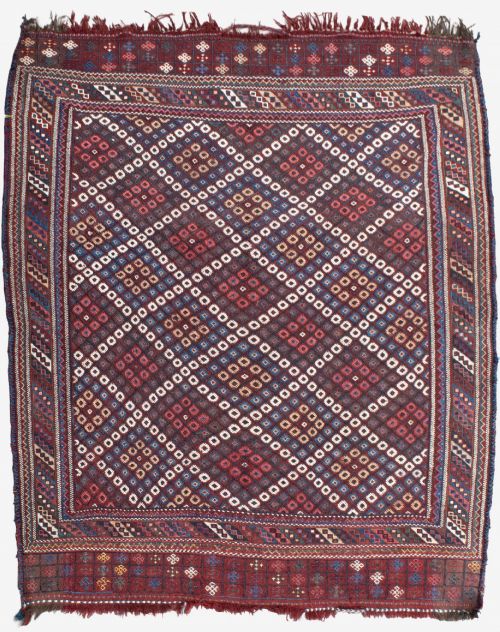


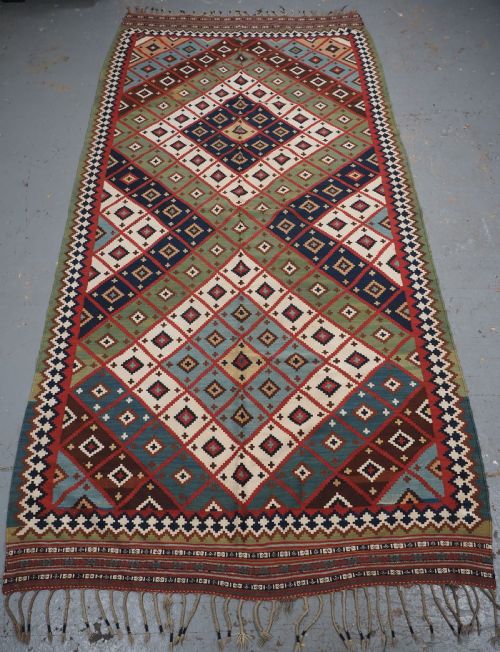


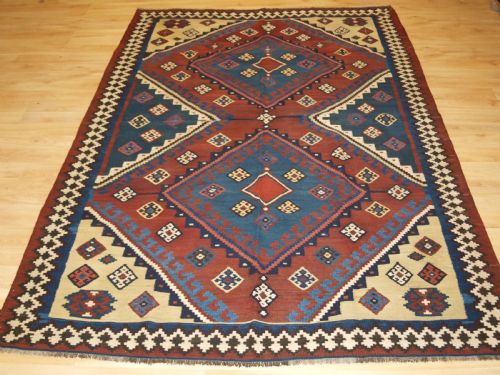
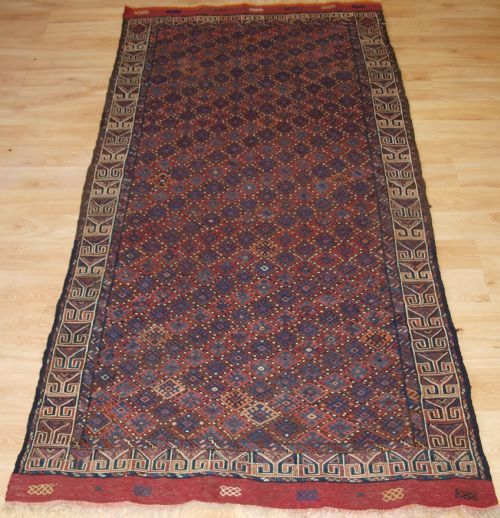


Geometric Diamond Kilim
These geometric diamond kilim flatweaves bring tribal character and bold pattern to any room.
Geometric Diamond Kilim
A geometric diamond kilim is a flatwoven textile created by tribal makers across Anatolia, Persia, Central Asia, and the Balkans. When searching for a geometric diamond kilim, buyers encounter flatweave rugs, kilim rugs, and covers produced from the late nineteenth century to the mid-twentieth century.
The visual focus centres on diamond medallions, large repeat patterns, and directional motifs integrated into the flatweave structure. Tribal traditions such as Qashqai, Yomut Turkmen, Afghan Firozkohi, and Sharkoy define the regional variations present in these textiles.
How they were made
These textiles rely on wool, cotton, and hand-spun wool manipulated through flatweaving techniques rather than pile knotting. Specific regional methods include soumak wrapping and palas construction, alongside embroidered kilim variations.
Weavers constructed certain larger formats in separate parts before joining them together. The reliance on natural materials and traditional hand-spun fibres produces varied surface textures across the weaving.
Some Afghan Firozkohi kilims were woven in two separate parts before being joined together to make a larger cover.
What varies in quality
The execution of the diamond design and the precision of the flatweave structure determine the refinement of an individual piece. Finer handling of wool and more complex repeat structures elevate the visual impact of the weaving.
The Geometric Diamond Kilim Glossary
- Kilim
- A flatwoven textile produced without a pile by tightly interweaving warp and weft threads. This technique creates a lightweight rug with a flat surface on both sides.
- Soumak
- A brocade-like flatweaving technique where weft threads are wrapped over and under the warp threads. This method adds structural weight and distinctive surface texture to the textile.
- Palas
- A term used for specific flatwoven rugs and covers from tribal traditions. These pieces often feature bold geometric arrangements.
- Sofreh
- A woven spread or cloth traditionally used for dining or food preparation in tribal households. These textiles frequently display strong geometric layouts.
- Warp
- The stationary vertical threads stretched on a loom before weaving begins. The weft threads pass horizontally through these structural cords.
Geometric Diamond Kilim: Frequently Asked Questions
What is a geometric diamond kilim?
A geometric diamond kilim is a flatwoven rug or cover featuring repeating diamond motifs and tribal designs. These textiles originate from regions including Persia, Anatolia, Afghanistan, and the Balkans.
Weavers produced them using traditional wool and hand-spun materials during the late nineteenth and early twentieth centuries. They function primarily as decorative floor coverings or wall hangings.
How do I care for a kilim rug?
Care for a flatwoven kilim by gently vacuuming without a rotating brush roll to protect the weave. Professional cleaning suited for antique wool textiles ensures the longevity of the fibres.
Keep the textile out of direct, prolonged sunlight to protect the natural colours. Using a suitable underlay prevents sliding and reduces friction on hard floors.
Where were these kilims made?
These kilims originate from tribal weaving groups across Anatolia, Central Asia, Persia, and the Balkans. Specific traditions include Qashqai, Yomut Turkmen, Afghan Firozkohi, and Sharkoy.
Each region utilised distinct colour palettes and weaving structures, such as soumak wrapping or palas construction.
How do I date a vintage kilim?
Dating relies on examining the materials, regional weaving structures, and dye types used in the construction. Pieces from the late nineteenth and early twentieth centuries often feature hand-spun wool and specific tribal design markers.
Comparing structural details against documented tribal examples helps narrow the period of origin between eighteen-ninety and nineteen-forty.