
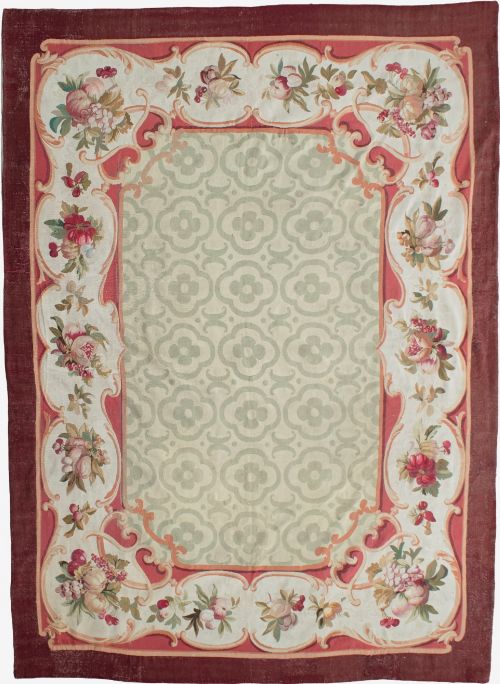


Flat Weave Area Rug
A flat weave area rug brings centuries of nomadic and village weaving traditions into modern interiors through vibrant geometric patterns and flat-surfaced textures.
Flat Weave Area Rug
A flat weave area rug encompasses traditional pileless floor coverings originating from diverse regions including Anatolia, the Caucasus, Persia, Central Asia, and Eastern Europe. These textiles include kilims, runners, and room-sized carpets created by tribal and village weavers for practical domestic use or ceremonial contexts.
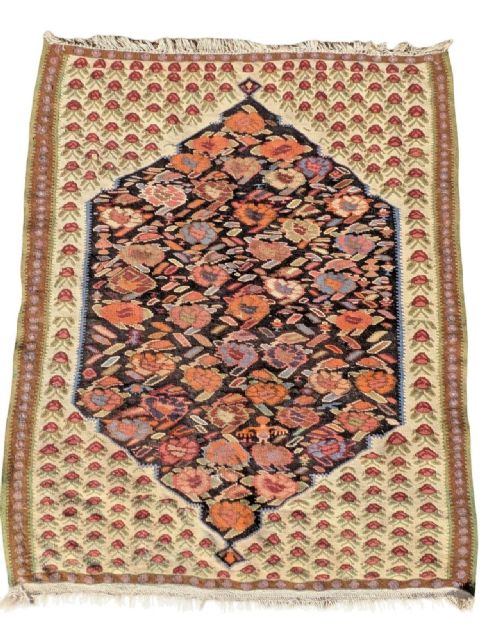
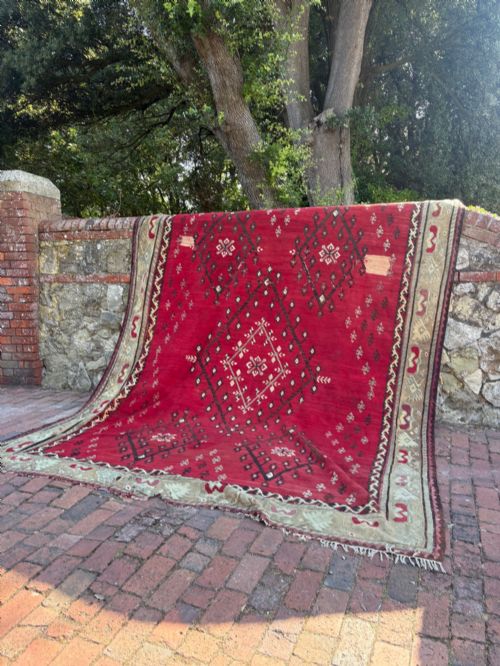
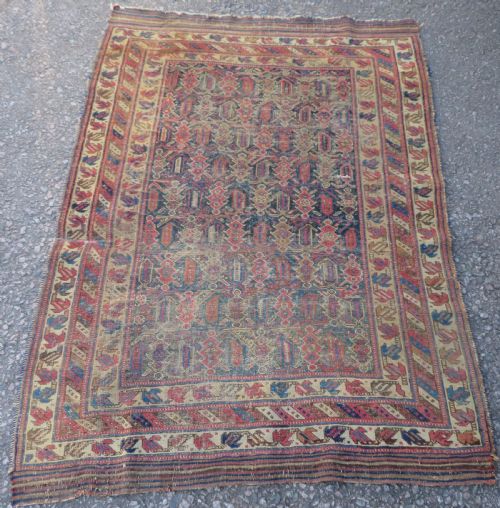
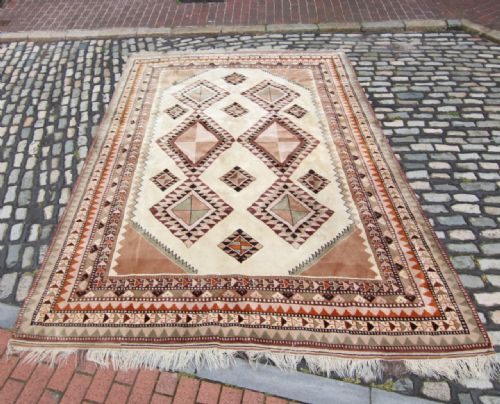
When browsing this selection, a buyer encounters numerous kilims and prayer rugs alongside European flat weaves such as Bessarabian and Aubusson examples. Dating primarily from the mid-nineteenth century through the 1930s, these pieces display regional motifs ranging from bold medallions and repeat patterns to pictorial designs and banded compositions.
Tribal pieces from groups such as the Qashqai, Yomut Turkmen, and Luri sit alongside structured village productions from Pirot, Senneh, and Bidjar. Their enduring appeal lies in the crisp graphic clarity made possible by the absence of a raised pile, allowing complex geometric arrangements to read sharply across the floor.
Materials and construction methods
These textiles rely on wool and cotton as primary structural elements, utilising wool for soft, resilient surface yarns and cotton for sturdy warp and weft foundations. Natural dyes impart the varied colour palettes seen across the inventory, producing rich tones that mellow gracefully over decades of exposure and use.
The defining technical feature is the absence of knotted pile, relying instead on interlocking weft threads or Soumac wrapping techniques to build the textile flat. This meticulous hand-weaving process requires precise tension control by the artisan to maintain structural integrity and sharp pattern edges without the support of a knotted foundation.
Listings feature traditional flat weaves spanning the nineteenth and early twentieth centuries, utilising wool and cotton dyed with natural pigments.
Assessing craftsmanship and visual impact
Quality in these textiles rests upon the precision of the weave and the complexity of the design layout, where tighter structures and deliberate colour placement elevate a piece above standard domestic output. Master weavers achieved exceptional graphic clarity and harmonious dye saturation that distinguish finer tribal and village works from everyday utility items.
The preservation of the original borders, structural edges, and authentic natural dye hues heavily influences the overall integrity of a textile. Examples that retain balanced proportions, crisp geometry, and minimal intervention demonstrate the high standard of regional weaving traditions.
The Flat Weave Area Rug Glossary
- Kilim
- A flat-woven carpet or rug produced by tightly interweaving the warp and weft strands to create a smooth surface without pile. This technique produces reversible textiles with sharp geometric boundaries.
- Soumac
- A flat-weaving technique where coloured weft threads are wrapped over and under the warp threads in a herringbone pattern. This method adds structural weight and durability compared to standard slit-tapestry weaving.
- Warp
- The stationary longitudinal threads stretched onto a loom that form the foundational skeleton of the rug. Weft threads are woven horizontally through these vertical strands.
- Weft
- The transverse threads passed across the warp strands during weaving to build up the pattern and colour of the textile. In flat weaves, these visible threads entirely comprise the surface design.
- Prayer rug
- A small carpet featuring a mihrab or arch design indicating the direction of Mecca, traditionally used for daily Islamic prayers. Village weavers adapted these architectural motifs into highly collectible portable formats.
Flat Weave Area Rug: Frequently Asked Questions
What is a flat weave rug?
A flat weave rug is a textile constructed without a knotted pile, created by interlacing warp and weft threads directly on a loom. This results in a lightweight, thin floor covering that lies completely flat.
These pieces include traditional kilims, runners, and tapestry-like carpets made across the Middle East, Central Asia, and Eastern Europe. Because they lack pile, they function well in high-traffic areas and under furniture.
How do I care for antique flat weaves?
Maintenance requires regular gentle vacuuming without a rotating brush roll to prevent catching loose threads or historic edges. Professional cleaning tailored to antique textiles preserves the natural wool fibres and organic dyes.
Using a quality rug pad underneath prevents slipping and cushions the thin fabric against hard flooring. Keeping the textile out of direct, harsh sunlight protects the natural dye colours from fading prematurely.
Where were these rugs made?
Production centres span traditional weaving regions including Anatolia, the Caucasus, Persia, Central Asia, and parts of Eastern Europe like Bessarabia and Pirot. Nomadic tribes, village communities, and specific workshops each developed distinct design vocabularies.
Geographic origins dictate the specific weave structures, wool types, and geometric motifs found in individual pieces. Tribal groups often utilised portable vertical looms, while village workshops produced larger standardised formats.
How do I distinguish regional styles?
Regional styles reveal themselves through distinct colour palettes, specific geometric symbols, and structural weaving techniques unique to particular tribal groups or towns. For instance, Caucasian pieces often feature bold, rectilinear medallions, while Persian Senneh rugs display intricate boteh motifs.
Examining the border arrangements, handling of the fringe, and fibre preparation helps attribute a textile to its place of origin. Comparing the weave density further separates nomadic productions from established workshop outputs.