




Banded Kilim Carpet
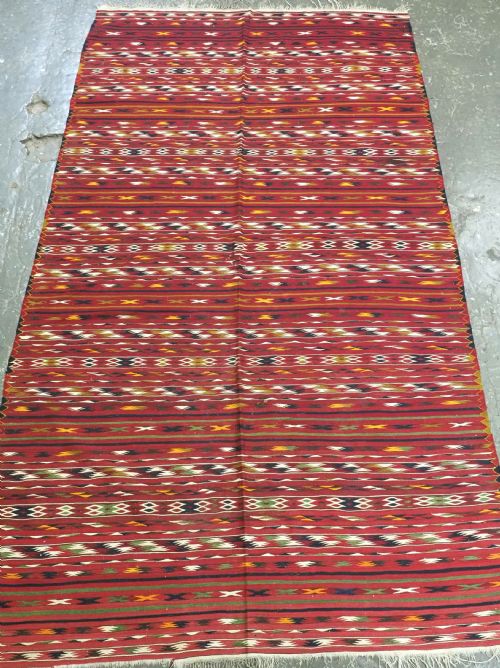
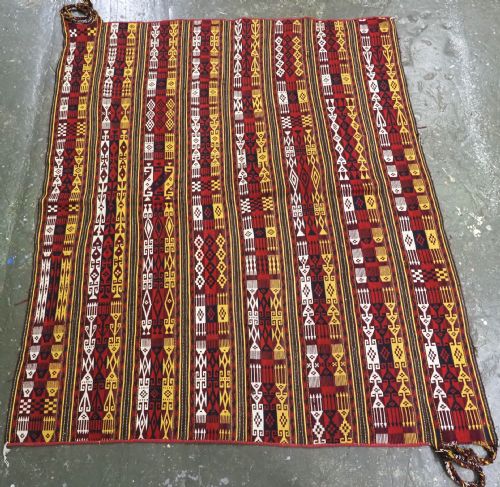
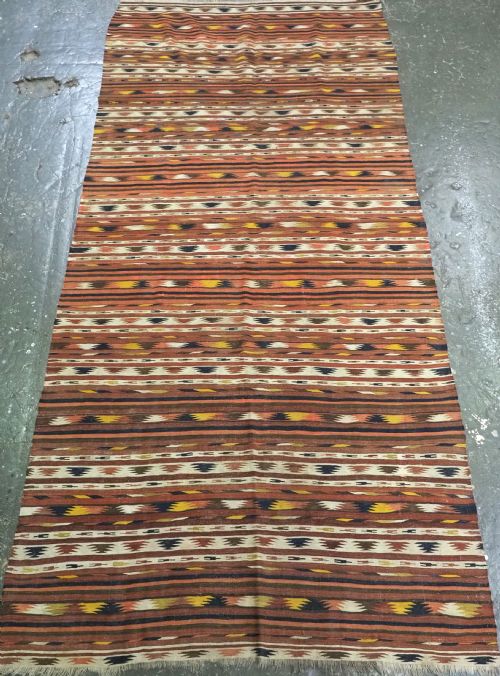
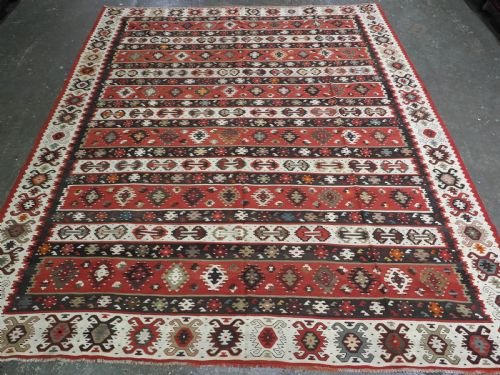
A banded kilim carpet is a flatweave textile defined by horizontal stripes, sought after for its geometric rigour and rich village palette.
Banded Kilim Carpet
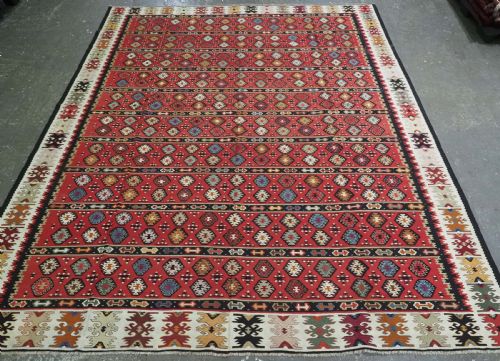
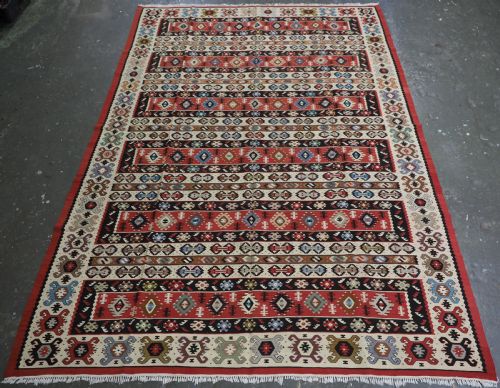
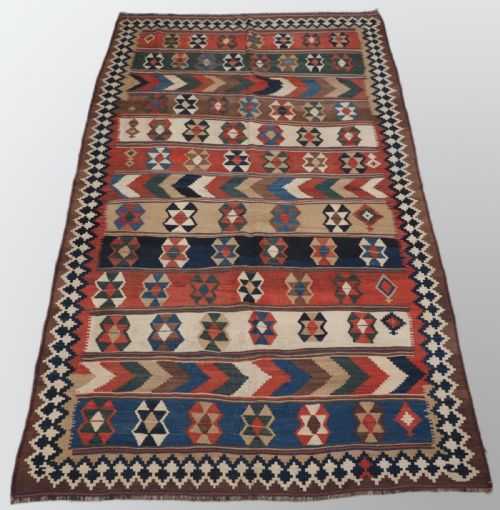
A banded kilim carpet brings together tribal flatweaves featuring distinct horizontal registers of pattern and colour. When you search for this phrase, you encounter pieces originating from Central Asian, Caucasian, Balkan, and Persian regions. These textiles span the late nineteenth century and the early decades of the twentieth century, with many examples dating from around nineteen hundred.
The most common forms on this page include room-sized flatweaves from Pirot and Sarkoy alongside smaller rugs and utility pieces such as tent bands, mafrash panels, and torbas. Regional groups like Yomut Turkmen, Uzbek Gajeri, and South Caucasian Shirvan appear frequently in the selection. Each piece displays the specific weaving traditions and chromatic preferences of its maker's community.
Nomadic and tribal workshops produced these floor coverings and hangings without pile, relying on interlocking wefts to create sharp geometric transitions. The banded layout organises complex motifs into orderly stripes that vary from narrow geometric lines to broad decorative fields. This disciplined arrangement creates strong visual rhythm across the textile surface.
Materials and construction
Weavers constructed these flatweaves using wool and cotton, frequently employing hand-spun wool for the primary warp and weft threads. This natural fibre provides durability and accepts dye with a variable absorption that gives the surface depth. Artisans utilised natural dyes to achieve the warm, soft colour palettes seen across the nineteenth and early twentieth-century examples.
The technique relies on slit-tapestry weave and related flatweave methods where colour areas meet along vertical boundaries without interlocking, or join cleanly via weft-substitution. This structural approach produces a reversible or near-reversible textile with flat surfaces on both sides. Fine weave variations in pieces like Dali kilims and Shirvan rugs demonstrate high technical skill among tribal and village weavers.
Some small rugs are clever second acts, born when a long nomadic tent band was cut down and neatly finished for domestic use.
Markers of quality and execution
Quality in these flatweaves rests upon the precision of the weave and the finesse of the yarn preparation. Tighter, finer weaves - such as those found on Dali kilims and specialised tent band fragments - require greater time and skill at the loom. Hand-spun wool and well-preserved natural dyes contribute significantly to the visual longevity and tactile appeal of a piece.
The handling of colour harmony within the horizontal bands separates standard utility pieces from exceptional works. Skilled weavers balanced soft tones and contrasting hues to create depth within rigid geometric layouts. Preserved structural integrity across large formats, particularly in Balkan and Caucasian kilims, indicates superior original materials and careful subsequent preservation.
The Banded Kilim Carpet Glossary
- Kilim
- A flatwoven carpet or rug produced without a pile by tightly interweaving warp and weft strands. This construction method results in a lightweight, durable textile suitable for floors or wall hanging.
- Band
- A horizontal stripe or register spanning the width of the textile, containing geometric motifs or plain colour. These stripes form the defining decorative structure of the pieces gathered here.
- Mafrash
- A storage bag face or side panel created by nomadic tribes, often repurposed or appreciated today as a compact flatweave. They display dense tribal patterning in a horizontal format.
- Torba
- A small storage bag produced by Turkmen and other Central Asian groups, traditionally hung inside a tent. Their surviving face panels frequently exhibit fine banded flatweave designs.
- Slit-tapestry
- A weaving technique where the weft threads loop back at the boundary of a colour area, leaving a small vertical slit. This method allows sharp geometric pattern boundaries to form across the carpet.
Banded Kilim Carpet: Frequently Asked Questions
What is a banded kilim carpet?
A banded kilim carpet is a pileless textile decorated with horizontal stripes of geometric patterns and diverse colours. These pieces were produced by nomadic and village weavers across the Caucasus, Central Asia, and the Balkans.
They function today as decorative floor coverings or wall hangings, prized for their graphic design and historical textile techniques.
How do I care for my kilim?
Protect your flatweave by vacuuming gently without a rotating brush head and using a quality underlay to prevent slipping. Keep the textile out of direct, continuous sunlight to preserve the natural dyes.
Professional cleaning tailored for antique wool rugs ensures the fibres remain stable and clean over time.
Where were these kilims made?
The pieces originate from tribal and village communities across Central Asia, the Caucasus, Persia, and the Balkans. Specific regional styles include Shirvan, Uzbek Gajeri, Pirot, and Yomut Turkmen.
Each area developed distinct spinning methods, dye palettes, and geometric repertoires passed down through generations.
How do I date an antique kilim?
Dating relies on assessing the materials, particularly the presence of hand-spun wool and early natural dye palettes. Structural characteristics, regional motifs, and comparative examples from the late nineteenth and early twentieth centuries help establish the period.
Examine the wear patterns and edge finishes for signs of traditional village or nomadic production methods.