


Brown Tribal Runner
When you search for a brown tribal runner, you are looking for a handwoven nomadic floor covering shaped by the wool and dyes of Afghanistan, Persia, and Central Asia.
Brown Tribal Runner
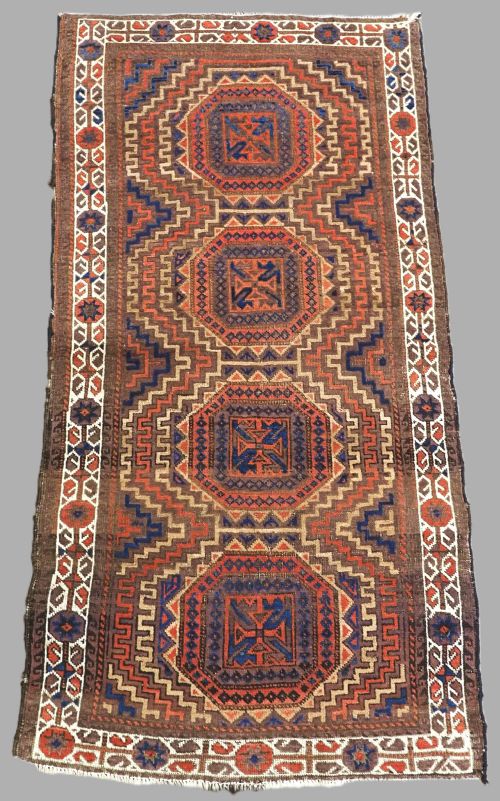
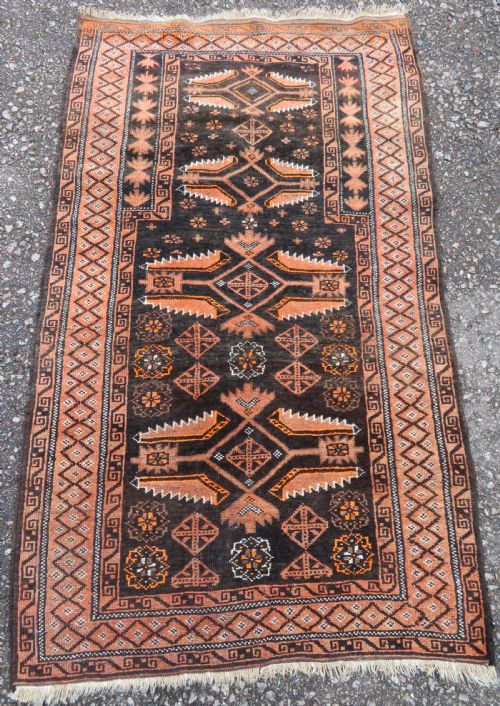
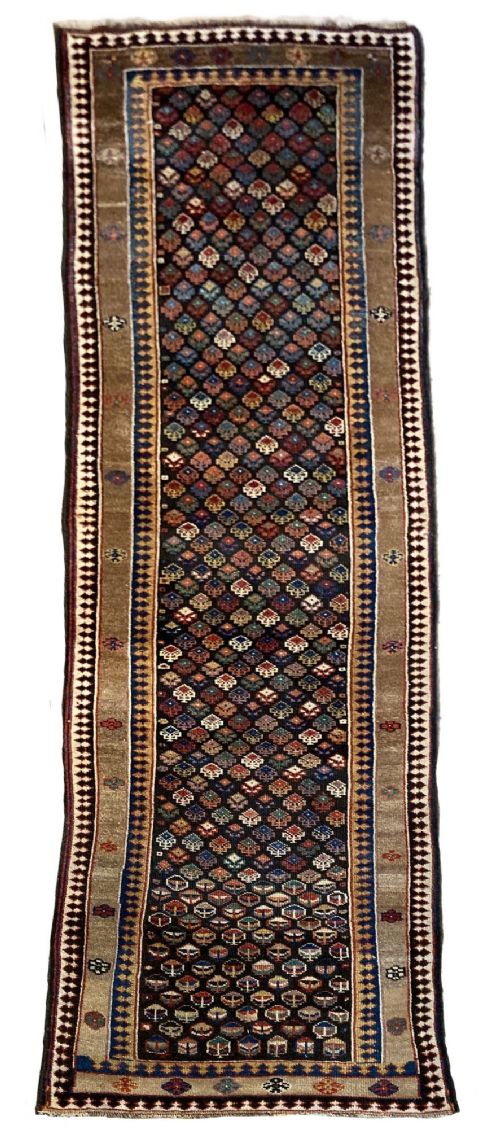
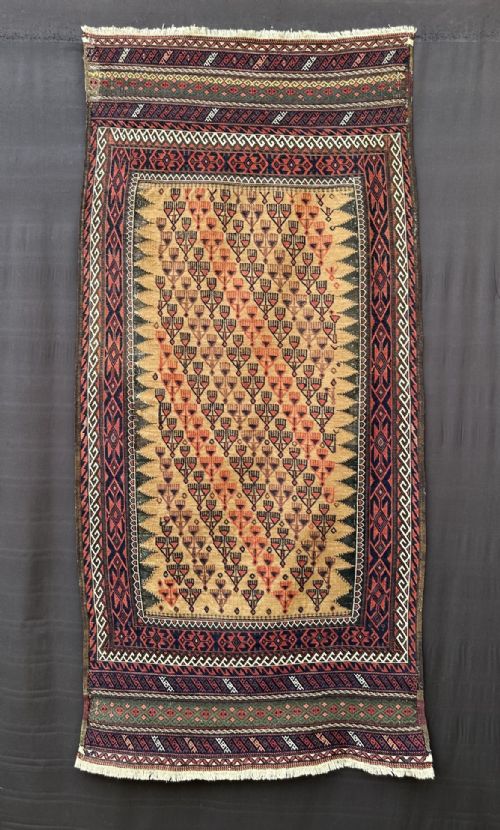
A brown tribal runner provides a narrow, elongated format designed for hallways, corridors, and narrow spaces by nomadic and village weavers. These pieces originate from regional groups such as the Baluch, Kurdish, Turkmen, and Afghan tribes working across the 19th and early 20th centuries.
The aesthetic relies on earthy palettes dominated by natural brown wools, deep madder reds, and dark indigo, often structured around repeating geometric guls, medallions, or prayer mihrabs. While many examples are woven as flatweaves or kilims, others employ pile techniques to create durable surfaces intended for heavy domestic use.
Materials and construction
Weavers relied primarily on hand-spun sheep wool, occasionally incorporating camel wool and goat hair for structural durability and textural contrast in the foundation or pile. Natural dyes derived from plants and minerals provided the foundational browns, reds, and dark tones that deepened in character over decades of exposure.
Construction techniques varied from traditional knotted pile to slit-tapestry flatweaves, sometimes utilising mixed techniques or multiple joined strips to achieve larger formats like long runners and tent bands.
Nomadic weavers occasionally stitched distinct woven panels together, turning old tent bags and storage fragments into functional daily floor coverings.
What separates the tiers
Quality in a brown tribal runner rests upon the integrity of the materials, the handle of the wool, and the crispness of the tribal motifs. Finer weaves and tightly packed foundations indicate greater artisanal skill, while inconsistent spinning or muddy dye saturation yields a softer, less defined visual impact.
The Brown Tribal Runner Glossary
- Gul
- A repeating medallion or octagonal design motif frequently found in Turkmen and Baluch weaving. It often acts as a tribal identifier for specific groups.
- Kilim
- A flatweave textile produced by tightly interweaving warp and weft strands without creating a pile. This technique results in a lightweight, reversible rug.
- Pushti
- A small scatter rug or mat traditionally used for kneeling or sitting. These compact pieces share the design vocabulary of larger runners and carpets.
- Sofreh
- A utilitarian spread or cloth used for sharing meals or processing dough. They display striking tribal iconography adapted for flatweave structures.
- Warp
- The stationary vertical threads stretched across a loom that form the structural foundation of the textile. Wefts are subsequently passed horizontally through these threads.
Brown Tribal Runner: Frequently Asked Questions
Where were these runners used?
Nomadic and village weavers produced these textiles for daily domestic life inside tents, yurts, and permanent dwellings across Central Asia and Persia. They served practical insulating functions on earthen floors and decorated narrow transitional spaces like corridors.
Over time, these utilitarian coverings found a secondary life in Western homes, where their long, narrow proportions suit modern hallways and galley kitchens.
How do I identify a Baluch piece?
Baluch attribution usually reveals itself through deep, sombre brown and dark indigo colorways combined with wool foundations and geometric motifs. Many incorporate goat hair in the outer selvedges for added durability against wear.
Closer inspection often shows distinctive minor guls, Tree of Life designs, or prayer mihrabs rooted in the traditions of weavers from the borderlands of Persia and Afghanistan.
Are these runners flatweaves or pile?
The inventory encompasses both knotted pile carpets and flatwoven kilims, alongside mixed technique pieces. Pile versions feature a dense wool nap that offers cushioning underfoot.
Flatweaves lack this pile entirely, relying instead on interlocking weft threads to create a smooth, durable surface suited to high-traffic zones.
How do I care for an old wool runner?
Maintenance requires gentle regular vacuuming without a rotating beater bar to protect the hand-spun wool fibres and original flatweave ends. Professional textile cleaning is recommended when deep washing becomes necessary.
Using a breathable underlay prevents slipping on hard floors and reduces friction between the wool foundation and the ground.