


Afghan Kilim Rug
An afghan kilim rug is a flatwoven textile bringing tribal geometric patterns and rich natural dyes to a floor.
Afghan Kilim Rug
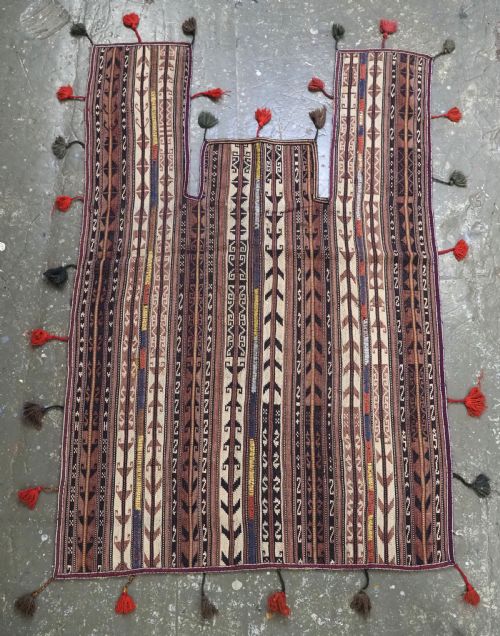
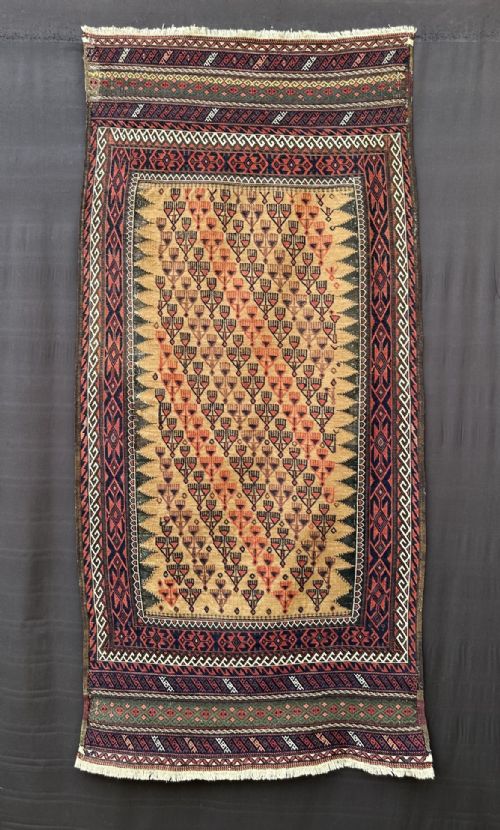
When you search for an afghan kilim rug, you are looking at flatwoven tribal textiles originating from Afghanistan and its borderlands. These pieces encompass utilitarian eating cloths known as sofreh, prayer rugs, ceremonial horse covers, and large carpets.
The version you are most likely to meet on this page is a flatweave created by tribal groups such as the Baluch, Timuri, Firozkohi, and Pashtun. These textiles date predominantly from the late nineteenth century through to the early decades of the twentieth century.
Many larger formats in this tradition are woven in two separate panels and subsequently joined down the centre. This structural method reflects the practical limitations of nomadic vertical looms.
How they were made
The weavers utilised wool and hand-spun wool for the main structural warps and wefts, occasionally incorporating cotton for specific foundations. Natural dyes provide the palette across these tribal textiles, yielding deep earthy tones and contrasting geometric bands.
Techniques range from basic slit-tapestry flatweaving to complex weftwork decoration and delicate embroidery. Certain pieces employ supplementary weft float patterns to build up tactile bands of geometric ornament across the field.
Afghan Kilim Rug Retail Price Guide 2026
Typical asking prices for afghan kilim rug among the pieces listed under this phrase on Sellingantiques today, from the lower quarter to the upper quarter. They describe what is for sale here now, not the wider market.
Nomads wove their dining cloths directly on the ground, leaving tiny embedded traces of daily camp life within the wool.
What varies in quality
The degree of fineness in the wool spin and the tightness of the weave set the baseline for an individual piece. Tighter packing of the weft threads creates a heavier, more resilient fabric that maintains its structural integrity over decades of use.
Colour saturation and the complexity of the tribal iconography distinguish standard examples from finer works. The visual rhythm within bands of weftwork and the precision of Chevron designs reveal the hand of a skilled weaver.
The Afghan Kilim Rug Glossary
- Kilim
- A flatwoven carpet or rug produced without a pile. These textiles are constructed by tightly interweaving warp and weft strands to create a flat surface.
- Sofreh
- A tribal dining cloth or eating cloth used traditionally for spreading meals on the ground. These textiles often feature specific borderland motifs and narrow rectangular proportions.
- Warp
- The stationary vertical threads stretched upon a loom before weaving begins. The weft threads are passed horizontally over and under these foundational cords.
- Weft
- The horizontal threads passed through the warps to form the pattern and fabric. In flatweaves, these coloured threads completely conceal the vertical warp foundation.
- Chevron
- A V-shaped pattern motif frequently utilised in bands across tribal flatweaves. This design element provides dynamic movement within traditional geometric compositions.
Afghan Kilim Rug: Frequently Asked Questions
How were these rugs used?
Nomadic and village groups utilised these flatweaves for multiple daily functions including floor coverings, dining cloths, and animal covers. Ceremonial pieces served specific cultural roles during community gatherings and transitions.
Over time, these textiles transitioned from purely utilitarian nomadic gear into decorative interior furnishings prized for their graphic geometry and authentic tribal character.
How do I live with one?
Place a quality underlay beneath the flatweave to prevent slipping on hard floors and to reduce friction on the wool fibres. Regular gentle vacuuming without a rotating brush roll helps keep dust from settling into the tight weave.
Position the textile away from prolonged direct sunlight to protect the natural dyes from fading unevenly over the years. Rotating the piece periodically ensures even wear in high-traffic areas.
How are two-part kilims joined?
Nomadic weavers often used portable vertical looms that were restricted in width by the encampment space available. To create a larger floor covering, they wove two separate long strips and stitched them together down the centre.
This construction method is a normal characteristic of large tribal flatweaves rather than a sign of alteration. The seam is typically worked by hand with durable wool cord to maintain flexibility across the rug.
What defines tribal weaving?
Tribal textiles are produced by distinct nomadic or village groups rather than urban commercial workshops. The makers draw upon inherited tribal iconography, memory, and local natural materials rather than pre-planned graph paper designs.
This results in spontaneous variations in border motifs and field geometry that reflect the individual weaver's aesthetic choices. Such autonomy gives each piece a distinct identity rooted in its specific regional heritage.