
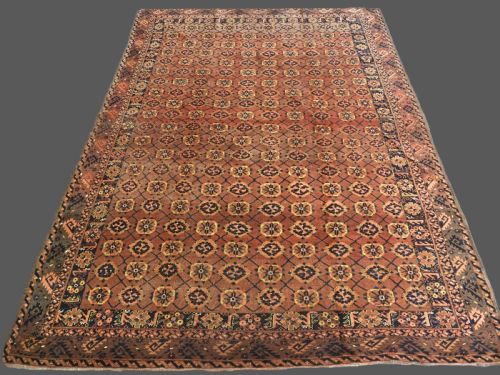
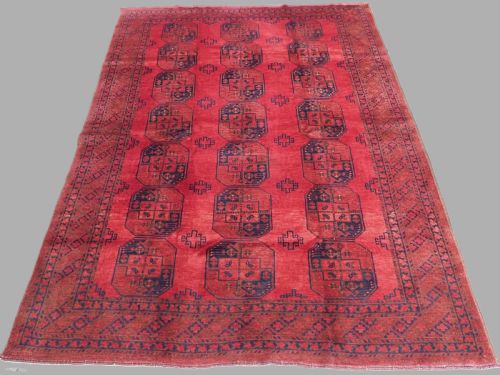


Afghan Village Rug
An afghan village rug brings deep reds, geometric tribal motifs and tactile wool into a room.
Afghan Village Rug
An afghan village rug is a woven textile originating from tribal and village communities in northern regions, often associated with nomadic traditions. When exploring this selection, buyers encounter pieces primarily dating from the early decades of the twentieth century, specifically around nineteen twenty and nineteen ten.
The inventory includes various formats ranging from compact prayer rugs with mihrab arches to larger area carpets. Design influences reflect regional tribal groups such as the Ersari, Kizil Ayak, Sulyman, and Pashtun peoples, displaying traditional guls, shrub motifs, and geometric field patterns.
These floor coverings serve functional roles in domestic settings while carrying distinct cultural iconography. Surviving examples demonstrate the enduring appeal of hand-knotted tribal work produced across Afghan weaving communities.
How They Were Made
The construction relies heavily on hand-spun wool selected for its tactile quality and durability. Weavers utilised natural dyes to achieve deep red, warm red, plum red, and old gold colour palettes.
Techniques involve traditional hand-knotting methods passed down through tribal generations. Many surviving pieces incorporate long kilim ends that secure the foundational structure of the rug.
Materials recorded across the archive consist entirely of wool, hand-spun wool, and natural dyes.
What Varies in Quality
Quality differences emerge in the handling of wool and the depth of the dye work. Softer, glossier wool combined with rich, saturated natural red tones distinguishes superior examples from standard production.
The fineness of the weave and the clarity of tribal design elements such as gul medallions or multiple mihrab arches indicate the weaver's level of skill. Condition also plays a role, with intact pile and well-preserved ends setting finer pieces apart.
The Afghan Village Rug Glossary
- Prayer rug
- A small format textile featuring a mihrab or arch design used traditionally for daily devotions. These pieces often incorporate rams horn or tree of life motifs.
- Gul
- A medallion pattern or octagonal motif characteristic of Turkmen and tribal weaving traditions. Variations include chuval guls and specific clan designs.
- Mihrab
- The arched niche design found on prayer rugs representing the direction of prayer. Examples range from single arches to complex triple mihrab layouts.
- Kilim end
- The flat-woven section extending beyond the knotted pile at the ends of the rug. This technique prevents fraying and finishes the textile.
Afghan Village Rug: Frequently Asked Questions
How do I identify a prayer rug?
Look for the characteristic arched niche or mihrab shape at one end of the textile. These designs often incorporate rams horn or star motifs.
Such rugs were traditionally utilised for personal devotion rather than general floor placement, though they function well as decorative wall hangings today.
What are tribal guls?
Guls are repeated octagonal medallion patterns woven into the field of the rug. Each tribal group utilised specific forms to signify identity.
Recognising these geometric markers helps collectors attribute pieces to specific weaving traditions like the Ersari or Kizil Ayak.
Where were these rugs made?
The pieces originate from village and tribal communities across northern regions. Weavers worked within local traditions using materials sourced locally.
Production methods remained tied to domestic household manufacturing rather than large urban workshop systems.
How should I care for antique wool?
Vacuum gently without using a rotating brush roll to protect the hand-spun pile. Keep the textile out of direct sunlight to prevent colour fading.
Professional cleaning suited for antique textiles maintains the natural lanolin in the wool over decades of domestic use.