






1920s Kilim
These 1920s antique kilim flatweave textiles offer a direct connection to traditional Balkan, Anatolian, and Persian tribal craftsmanship.
1920s Kilim
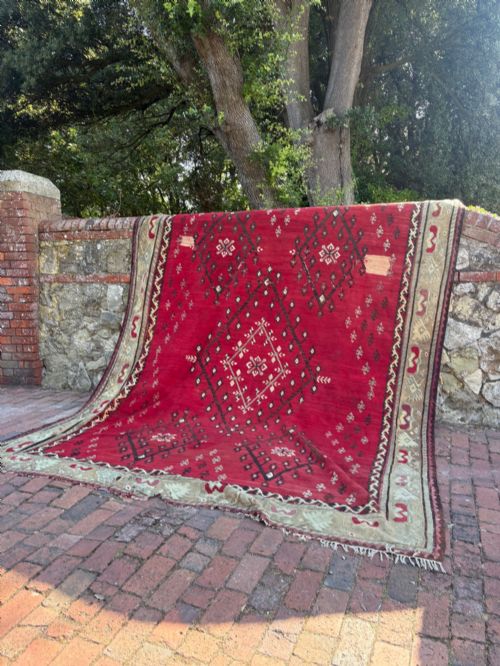
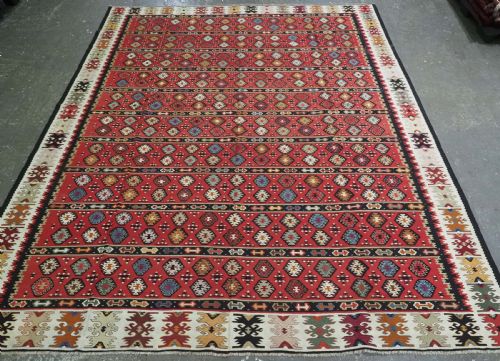
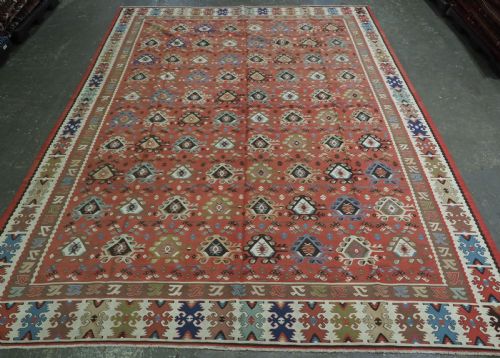
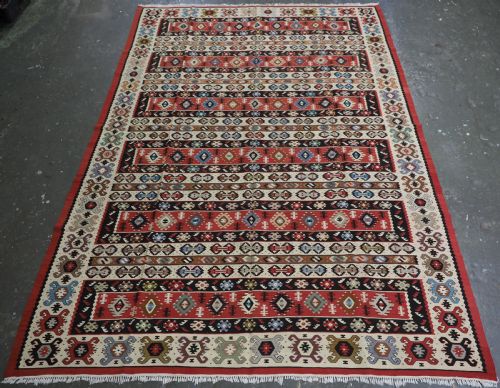
Buyers meet a range of formats, from small useful sizes to large room-size carpets and runner rugs. These pieces display distinct regional patterns including banded chevron designs, flowering trees, and repeat medallions.
The objects serve as functional floor textiles that bring traditional folk art and geometric motifs into domestic spaces. Each rug reflects the specific weaving heritage of its geographic origin.
How they were made
These flatweave textiles are produced primarily from wool and cotton materials, spun and dyed by hand. The weavers interlock the weft threads tightly over the warp to create smooth, pileless surfaces without knots.
Larger formats, such as certain Afghan and Turkish examples, are frequently woven in two separate parts and joined together down the centre. This technical approach allows makers to construct expansive room-size rugs on narrow village looms.
What varies in quality
The standard of a kilim depends largely on the precision of the geometric design work and the depth or softness of the colour palette. Pieces featuring classic repeat medallions or scarce lattice patterns demonstrate higher design complexity.
Condition and integrity dictate the standing of individual rugs, distinguishing examples with timeworn repairs from those preserved in excellent or superb state. The fineness of the flatweave execution also separates standard village pieces from finer tribal works.
The 1920s Kilim Glossary
- Kilim
- A flatwoven textile or rug produced without a pile. These pieces rely on interlocking weft techniques to form geometric and traditional patterns.
- Warp
- The stationary vertical threads stretched onto a loom before weaving begins. The weft threads pass over and under these foundational lines.
- Weft
- The horizontal threads passed through the warp to create the fabric and pattern of the rug. In kilims, these coloured wefts are tightly packed to conceal the warp.
- Runner
- A long, narrow carpet format suited for hallways or corridors. These pieces often display linear banded or medallion designs.
- Flatweave
- A textile technique that creates a smooth surface without raised pile knots. This method characterises all traditional kilims.
1920s Kilim: Frequently Asked Questions
What is a 1920s antique kilim?
It is a flatwoven rug produced during the 1920 period across regions including the Balkans, Anatolia, and Persia. These textiles are made without a pile using traditional village and tribal methods.
They display characteristic geometric patterns, chevron motifs, and repeat medallions. Each piece represents the specific cultural weaving style of its origin.
How were these rugs used?
Historically, these flatweaves served as functional floor coverings, blankets, wall hangings, and storage sacks in tribal and village households. Their durable wool construction made them suitable for daily domestic life.
Today, buyers utilise them primarily as decorative area rugs or runners in living spaces. They add warmth and historical texture to modern and traditional interiors alike.
Are large kilims woven differently?
Yes, many larger room-size kilims from this period are constructed in two separate parts. Weavers joined these sections together to achieve expansive widths beyond the capacity of standard village looms.
This technique appears in specific Turkish and Afghan pieces. The central seam is a standard structural feature of these larger formats rather than a defect.
How do Pirot and Sarkoy kilims differ?
Pirot and Sarkoy kilims originate from the Balkan region and are renowned for crisp geometric precision and classic floral or lattice designs. They often exhibit exceptional colour preservation and fine flatweave execution.
Other regional types, such as Baluch or Anatolian tribal pieces, tend to feature earthier tones and distinct nomadic motifs. Comparing the repeat medallion layouts helps identify these regional styles.