







Balkan Wool Kilim
A balkan wool kilim brings flatwoven folk tradition into a modern room through bold geometric motifs and rich vegetable dyes.
Balkan Wool Kilim
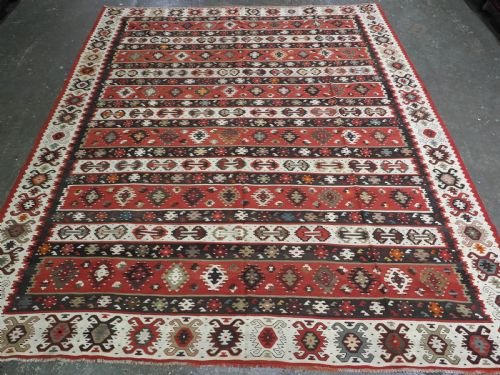
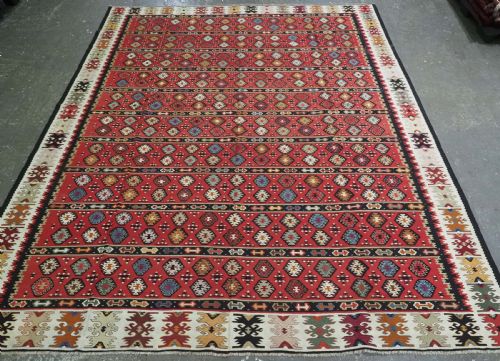
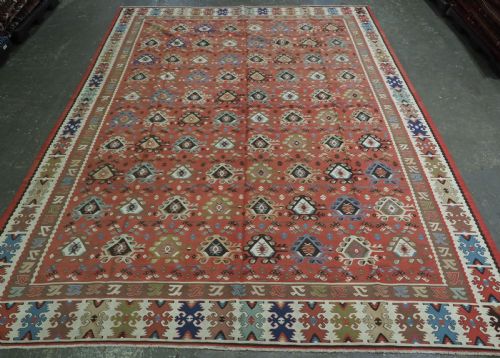
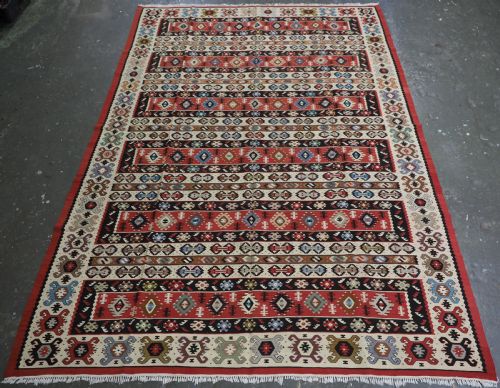
A balkan wool kilim is a flatwoven textile originating from southeastern Europe and Anatolia, encompassing regional traditions such as Pirot and Sarkoy weaving. These rugs serve primarily as floor coverings or decorative wall hangings, defined by slit-weave construction rather than pile. The pieces found here span from the mid nineteenth century through the early twentieth century, capturing distinct folk art expressions.
Buyers most frequently encounter large room-size examples and smaller area rugs bearing banded, flowering tree, lattice, and repeat medallion patterns. Styles range from Ottoman Balkan to traditional Anatolian and tribal formats, showcasing symmetrical layouts or all-over designs. These flatweaves reflect the heritage of nomadic and village workshops across the region.
What varies in quality
Quality in a balkan wool kilim rests on the crispness of the geometric design execution and the depth of the dye palette. Examples featuring scarce lattice patterns or well-balanced repeat medallions demonstrate superior weaving discipline compared to standard repeat layouts. The visual harmony between soft background shades and saturated motif colours elevates the standing of an individual piece.
The integrity of the flatweave structure and the fineness of the wool thread spinning further distinguish finer specimens. Large room-size formats that maintain structural symmetry across extensive fields require exceptional mastery from the weaver. The survival of soft, clear colours without muddy blending marks the distinction of top-tier examples.
Listings feature balkan wool kilim examples dated from the mid nineteenth century through the early twentieth century, spanning 1860 to 1930.
The Balkan Wool Kilim Glossary
- Kilim
- A flatwoven textile produced without a pile by tightly interweaving warp and weft threads. This technique creates a lightweight, reversible rug with characteristic vertical slits between colour changes.
- Pirot
- A specific weaving centre known for producing distinctive flatweaves with crisp geometric patterns. Pirot pieces often share stylistic traits with Sarkoy kilims from the broader Balkan region.
- Sarkoy
- A traditional styling and production attribution associated with flatweaves originating near the European Ottoman borderlands. These rugs frequently display banded or repeat medallion designs.
- Slit-weave
- A fundamental flatweaving method where discontinuous weft yarns return at the edge of a colour area, leaving a small vertical slit in the fabric. Weavers sometimes stitch these gaps closed or leave them as part of the structural design.
- Warp
- The stationary vertical threads stretched across a loom that hold the structural tension of the textile. In these pieces, warp threads commonly consist of cotton or wool.
Balkan Wool Kilim: Frequently Asked Questions
What is a balkan wool kilim?
A balkan wool kilim is a flatwoven textile created by village and nomadic weavers across southeastern Europe. These rugs utilise interlocking weft techniques to produce geometric and floral folk art designs without a pile.
Such textiles functioned as floor coverings, blankets, and decorative furnishings within traditional homes. Their flat structure makes them well suited for modern layering over hardwood floors.
How do I clean a flatweave rug?
Regular gentle vacuuming without a rotating brush roll helps remove embedded dust from the tight wool weave. Professional textile cleaning is recommended for deeper maintenance to protect natural dyes.
Avoiding excessive moisture and direct sunlight preserves the integrity of the wool and cotton fibres over time. Prompt spot treatment using mild, neutral solutions prevents staining without harming the textile.
Where were these kilims made?
These flatweaves originated in regions spanning modern-day Serbia, Bulgaria, and the wider Ottoman Balkan territories. Towns and districts like Pirot and Sarkoy became renowned centres for distinct weaving traditions.
Local artisans passed down specific banded, lattice, and medallion motifs through generations. This regional heritage creates the varied styles found within Balkan folk art.
How do I date an antique kilim?
Dating relies on examining the natural dye palette, wool characteristics, and structural weaving patterns typical of specific decades. Pieces from the nineteenth century often display softer, vegetable-dyed hues and hand-spun wool irregularities.
Early twentieth-century examples frequently incorporate larger room sizes and structured repeat designs. Comparing motif symmetry and regional attribution helps narrow the period of origin.