

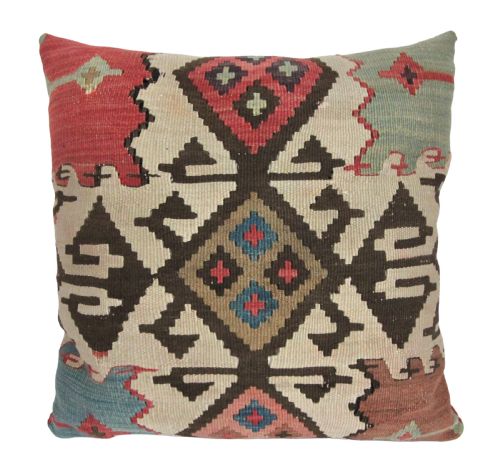


Multicoloured Turkish Kilim
These multicoloured turkish kilim pieces bring pattern and warmth into a room through flat woven textiles.
Multicoloured Turkish Kilim
A multicoloured turkish kilim brings flat woven textile tradition into a room through floor rugs and cushions. These pieces draw from Anatolian tribal and traditional styles, showing regional designs from areas such as Konya, Malatya, and Bergama.
Buyers frequently meet pieces created across the nineteenth and early twentieth centuries, including examples from the eighteen-eighties, eighteen-nineties, and nineteen-thirties. The selection includes full size carpets alongside smaller kelim rugs and scatter cushions.
Regional origins shape the character of each weave, from Sivrihisar prayer kilims to Esme and Afyon pieces. The flat weave construction creates a durable textile without a pile, suitable for heavy traffic areas or decorative placement.
How they were made
Weavers construct these flat weaves using wool and cotton yarns, interlocking the weft threads tightly over the warp to form geometric patterns. This technique produces a sturdy textile that lies flat on the floor.
Larger formats, such as Konya Reyhanli examples, sometimes require weaving in two separate parts and joining them down the centre. Traditional dyeing methods create the varied hues found across Anatolian tribal and nomadic pieces.
Some weavers solved the problem of limited loom width by simply weaving carpets in two halves and joining them.
What varies in quality
The visual strength of the design and the richness of the dye palette separate standard pieces from exceptional examples. Strong chromatic contrast and balanced geometric motifs elevate the impact of the textile.
Structural integrity depends on the tightness of the flat weave and the condition of the wool and cotton yarns. Larger formats require careful execution to maintain straight edges and uniform tension across the surface.
The Multicoloured Turkish Kilim Glossary
- Kilim
- A flat woven textile made without a pile, traditionally produced in Anatolia and surrounding regions. These pieces function as floor coverings, wall hangings, or cushions.
- Anatolian
- Pertaining to the historic region forming the Asian portion of Turkey. This geographic designation links pieces to specific weaving traditions.
- Warp
- The vertical threads held in tension on a loom before weaving begins. The weft passes over and under these foundational threads.
- Weft
- The horizontal threads passed through the warp to create the pattern and colour blocks of the textile. Tightly beaten wefts form the dense surface of a kilim.
- Prayer kilim
- A rug featuring a mihrab design indicating the direction of prayer. These pieces often serve devotional purposes or domestic decoration.
Multicoloured Turkish Kilim: Frequently Asked Questions
How do I clean a kilim?
Gentle surface brushing and careful vacuuming without a beater bar remove dust from the flat weave. Professional textile cleaning maintains the integrity of the wool and cotton fibres.
Water washing requires specialist knowledge to prevent dye migration across the multicoloured sections. Keeping the textile dry and well aired preserves the historical material.
Can I use these on the floor?
These flat woven carpets function well on floors when paired with an appropriate non slip underlay. The lack of a pile allows doors to clear the fabric easily.
Heavy traffic areas benefit from occasional rotation to distribute wear evenly across the surface. Smaller pieces and cushions suit decorative placement on furniture.
What is a flat weave?
A flat weave is constructed by interlacing warp and weft threads without knotting pile yarn into the foundation. This creates a lightweight and reversible textile.
The absence of pile produces a crisp graphic quality in the geometric patterns. This technique defines the traditional construction of Anatolian tribal rugs.
How do I date an antique kilim?
Examination of the wool quality, dye shades, and structural wear helps determine the period of manufacture. Regional weaving characteristics provide further clues to the age of the textile.
Stylistic conventions and materials from the nineteenth and early twentieth centuries offer reliable reference points. Comparing construction methods builds familiarity with different production eras.