
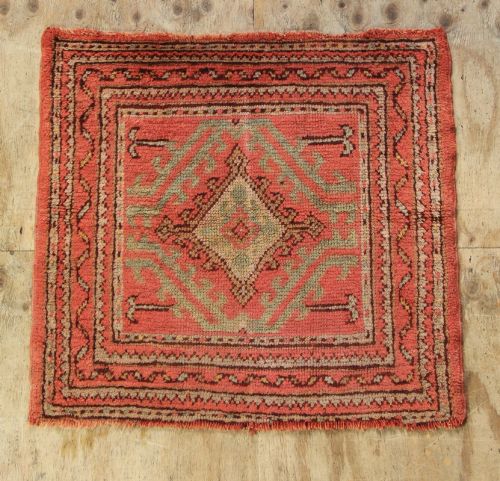


Small Turkish Rug
Every small turkish rug carries the woven identity of Anatolian village weavers from centuries past.
Small Turkish Rug
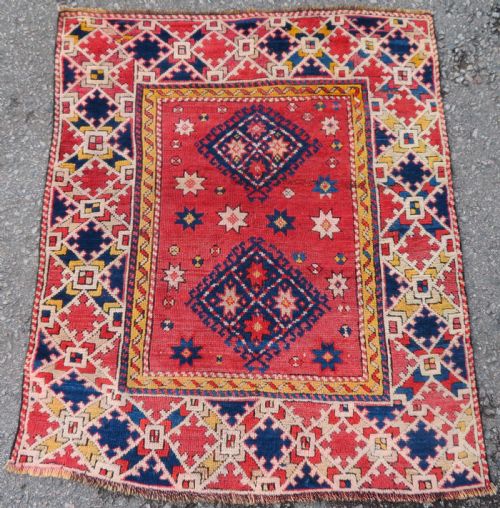
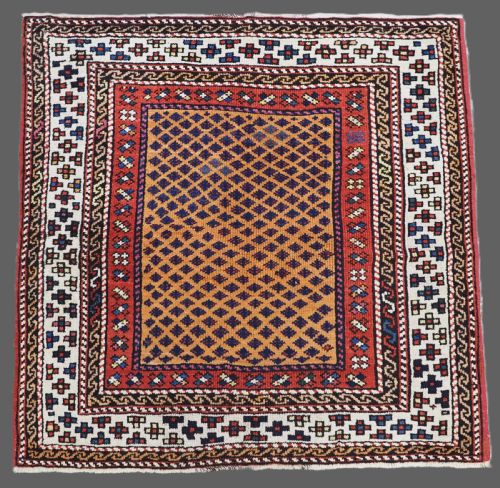
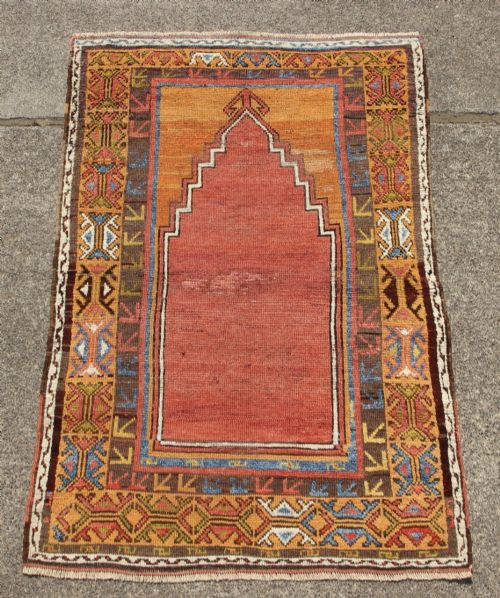
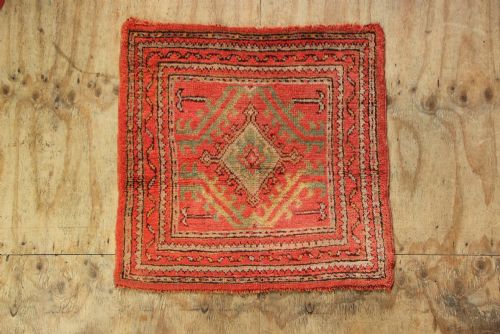
A small turkish rug represents centuries of regional weaving traditions originating from towns and villages across Anatolia, including Bergama, Konya, Oushak, and Milas. Buyers seeking these pieces encounter formats ranging from compact square mats and village prayer rugs to narrow runners.
The selection encompasses works produced across the nineteenth and early twentieth centuries, reflecting traditional designs such as central medallions, lattice patterns, and mihrab arches. These textiles served practical and devotional purposes within domestic interiors before finding a place in modern collections.
How they were made
Weavers constructed these textiles primarily using wool, hand-spun wool, and cotton foundations, occasionally incorporating silk for specific prayer formats. Natural dye traditions provided the characteristic palette found across village workshops.
Manual knotting techniques executed on upright looms allowed artisans to build dense pile structures alongside flatweave kelim formats. The structural integrity of each piece depends directly on the quality of the spinning and the tightness of the knotting.
Small Turkish Rug Retail Price Guide 2026
Typical asking prices for small turkish rug among the pieces listed under this phrase on Sellingantiques today, from the lower quarter to the upper quarter. They describe what is for sale here now, not the wider market.
Listings feature pieces spanning the nineteenth century through the nineteen-thirties, utilising wool, cotton, hand-spun wool, and silk materials.
What varies in quality
Quality rests upon the fineness of the knot count and the stability of the wool foundation, which dictate how well the textile holds its form over decades. Superior examples display precise geometry within traditional motifs and harmonious dye saturation.
The distinction between standard village production and finer regional pieces often lies in the crispness of the drawing and the depth of the palette. Pieces retaining their original edge finishes and pile depth command greater appreciation among collectors.
The Small Turkish Rug Glossary
- Prayer rug
- A small format textile featuring a mihrab or arch design indicating the direction of prayer. These pieces were utilised for daily devotion in domestic spaces.
- Kelim
- A flatwoven textile produced without a pile by tightly interweaving warp and weft threads. These items offer lighter structures than piled carpets.
- Medallion
- A central decorative motif placed in the field of the rug. It often anchors the surrounding geometric or floral patterns.
- Mihrab
- The arched niche design characteristic of prayer rugs, symbolising the gateway to paradise. Its orientation guides the visual reading of the piece.
- Warp
- The vertical threads stretched tightly on the loom that form the structural skeleton of the rug. Fringe ends typically originate from these foundational threads.
Small Turkish Rug: Frequently Asked Questions
Where were these rugs made?
Production centred on various Anatolian towns and rural districts, including Bergama, Konya, Kirsehir, and Oushak. Each region developed distinct colour palettes and geometric or floral motifs.
Village weavers passed these traditional designs through generations, resulting in recognisable local styles associated with specific provinces.
How do I care for a vintage rug?
Gentle vacuuming without a rotating brush helps remove embedded dust without pulling the wool pile. Professional cleaning suited to antique textiles preserves the natural dyes and fibres.
Keeping the piece out of direct sunlight prevents fading of the natural wool and silk tones over years of display.
What is a prayer rug?
A prayer rug is a portable textile featuring an architectural arch or mihrab design at one end. Historically, worshippers laid these mats on the floor during daily devotions.
The directional pattern distinguishes them from standard decorative floor coverings intended for central room placement.
How can I tell the age of a piece?
Age assessment relies on examining the type of wool spinning, the chemical composition of the dyes, and the wear patterns on the foundation. Hand-spun wool and specific village colour combinations point toward nineteenth or early twentieth-century production.
Structural details such as selvedge construction and natural irregularities further help differentiate older village work from later manufactory output.