


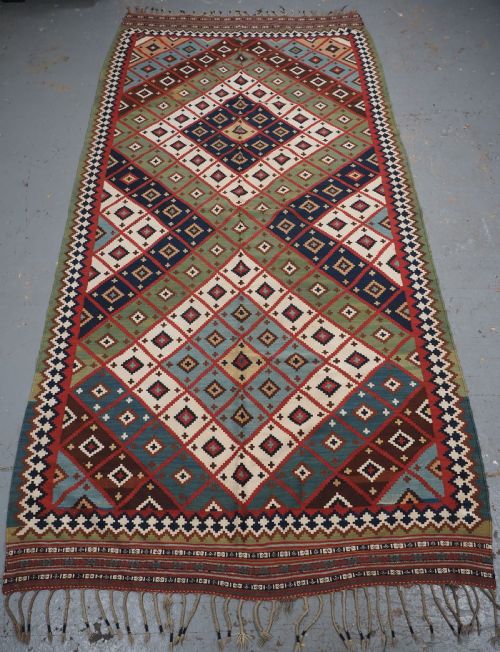
Lattice Pattern Rug
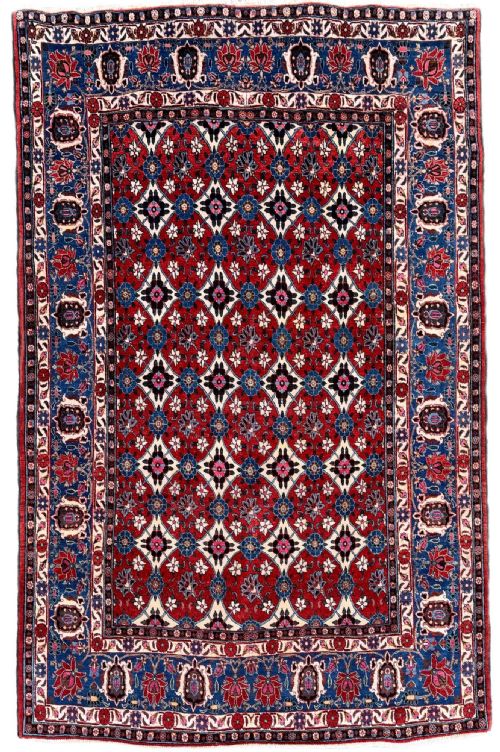
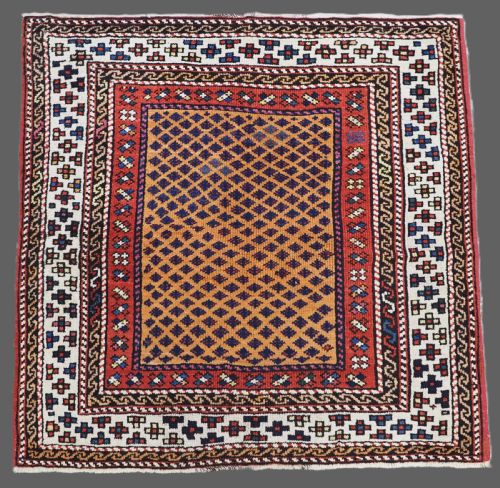
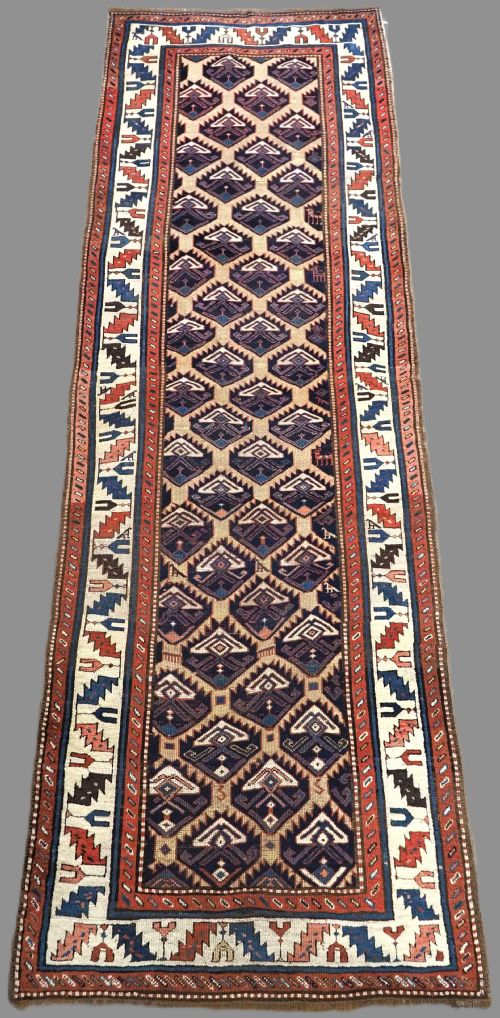
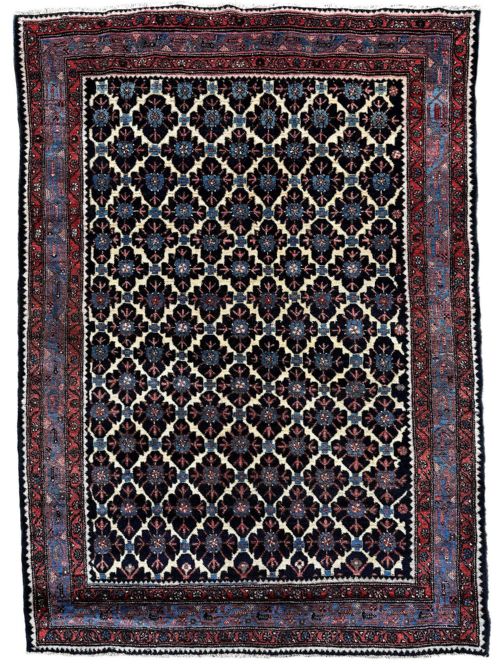
These lattice pattern rug examples bring geometric discipline and deep tribal character into an interior.
Lattice Pattern Rug
A lattice pattern rug brings together structured geometric grids and rich regional weaving traditions. When searching for a lattice pattern rug, buyers encounter pieces originating from Persian, Caucasian, and Turkmen workshops as well as Anatolian tribal sources. These floor coverings span dates from the late nineteenth century into the early twentieth century.
The format ranges from small square proportions to runner and carpet dimensions. Common stylistic variants include Turkmen Yomut pieces, Baluch examples, and floral Caucasian Shirvan or Seichur weaves. Each piece relies on a repeating network of lines to divide the field into distinct compartments.
Malay and Mahal formats also appear, offering traditional Persian interpretations of the grid motif. These rugs suit rooms requiring a strong linear anchor beneath furniture. The geometric framework organises the visual field while allowing diverse motifs to sit within the cells.
Materials and construction
These textiles rely on wool and hand-spun wool for the pile, providing resilience and a textured surface underfoot. Cotton foundations appear alongside wool structures, giving the pieces stability and crisp structural lines. Weavers knotted these materials by hand, securing each strand to withstand daily use.
The application of natural dyes creates subtle tonal variations across the wool pile over decades of wear. Hand-spun wool absorbs colour unevenly, adding depth to the lattice compartments. Foundation threads remain hidden beneath dense knotting while maintaining the overall tension of the textile.
Lattice Pattern Rug Retail Price Guide 2026
Typical asking prices for lattice pattern rug among the pieces listed under this phrase on Sellingantiques today, from the lower quarter to the upper quarter. They describe what is for sale here now, not the wider market.
Some tribal weavers tucked tiny protective amulets directly into the wool knotting to ward off the evil eye.
Evaluating quality
Quality rests in the precision of the grid geometry and the consistency of the hand-spun wool. Finer knot density allows intricate star and floral lattice details to remain sharp rather than blurred. The integrity of the foundational cotton and wool determines how well the textile holds its shape.
Dye consistency and the vitality of the palette separate standard examples from finer specimens. A well-balanced composition maintains rhythm across the entire field without crowding the individual lattice cells. The handling of the border design provides another indicator of overall execution.
The Lattice Pattern Rug Glossary
- Lattice design
- A repeating geometric framework of intersecting lines that divides the field of a rug into compartments. This layout organises secondary motifs such as stars or florals within each cell.
- Pile
- The vertical or upright surface of a rug formed by the cut ends of knots. Hand-spun wool creates a textured pile that softens in tone with age.
- Foundation
- The underlying structure of warp and weft threads that supports the knotted pile. Cotton and wool are typical foundation materials in these regional weaves.
- Border
- The decorative band framing the central field of a rug. It encloses the lattice pattern and provides a visual boundary for the composition.
Lattice Pattern Rug: Frequently Asked Questions
Where were lattice pattern rugs made?
These rugs originate from regions including the Caucasus, Persia, Anatolia, and Turkmenistan. Weavers in tribal and village workshops produced them using local wool and traditional knotting methods.
Production spanned several distinct cultural traditions, resulting in varied geometric expressions within the same overarching design family.
How do I care for an old rug?
Protect the textile by placing it in low-traffic areas away from direct sunlight to preserve the wool and dyes. Vacuum gently without using a rotating brush roll to avoid pulling the hand-spun pile.
Professional cleaning tailored for antique wool rugs ensures the foundation remains undamaged over time.
What is a Yomut rug?
Yomut rugs are tribal textiles woven by Turkmen groups known for distinct geometric layouts. They frequently incorporate repeat lattice structures alongside deep red and brown tones.
These pieces reflect the nomadic heritage and precise weaving techniques of their makers.
How do I identify a Seichur rug?
Seichur rugs originate from the eastern Caucasus and often feature specific star motifs integrated into a lattice grid. The drawing tends to be bold and graphic with contrasting border work.
These characteristics separate them from Persian or Anatolian counterparts of a similar date.