
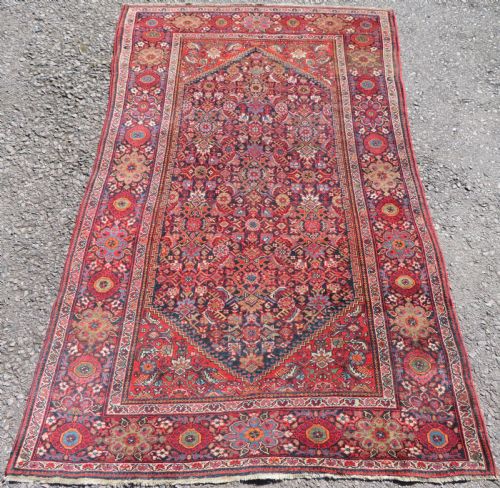


Antique Malayer Carpet
An antique malayer carpet brings the rich village traditions of West Persia directly to your floors through durable wool and cotton construction.
Antique Malayer Carpet
When you search for an antique malayer carpet, you are looking at Persian village and tribal weaving originating from the nineteenth and early twentieth centuries. These pieces appear primarily as rugs and carpets, alongside narrow hallway runners and larger kelleh formats. The examples seen here span periods from the 1880s through to the 1930s, reflecting the traditional output of West Persian looms.
The most common formats on this page are standard room-sized rugs and elongated runners, often showcasing classic motifs such as the boteh, herati, lattice, and shield designs. Village weavers produced these items using traditional methods, resulting in distinctive regional variations including Mishan Malayer and specific pictorial elements like birds, butterflies, and lions. Each piece represents the practical domestic artistry of Persian village life during this extended period.
What varies in quality
The fineness of the weave dictates much of the distinction between individual pieces, with tighter knot counts allowing for sharper execution of complex motifs like the herati and boteh patterns. Higher quality items demonstrate superior control over the symmetry of the design and the precision of the village or tribal iconography.
The handling of the wool and the depth of the dye palette also separate standard examples from finer ones. Superior pieces retain supple foundations and balanced colour harmony across the cream grounds and patterned fields, showing deliberate skill in the preparation of the natural materials.
Antique Malayer Carpet Retail Price Guide 2026
Typical asking prices for malayer carpet among the pieces listed under this phrase on Sellingantiques today, from the lower quarter to the upper quarter. They describe what is for sale here now, not the wider market.
Materials seen across these listings consist entirely of wool and cotton, utilised across periods spanning from 1880 to 1930.
The Antique Malayer Carpet Glossary
- Boteh
- A traditional almond-shaped or paisley motif representing a floral spray, cypress tree, or flame. This symbol appears frequently in village carpets and can depict various stylized forms including mother and child pairings.
- Herati
- A repeating botanical pattern composed of a central rosette enclosed by a rectangle of leaves, flanked by curved acanthus leaves. It forms a dense, all-over textile field.
- Kelleh
- A medium-to-large rectangular carpet format, generally longer than it is wide, used traditionally in Persian domestic interiors as a central room rug.
- Runner
- A long, narrow carpet format designed specifically for corridors, hallways, and staircases. These pieces stretch significantly in length while maintaining a restricted width.
- Warp
- The vertical foundation threads stretched tightly on the loom before knotting begins. Cotton supplies the primary strength for this underlying framework.
Antique Malayer Carpet: Frequently Asked Questions
Where were antique malayer carpets made?
These pieces originated in the town and surrounding villages of Malayer within the West Persia region. Local weavers produced them as part of a rich village and tribal weaving tradition.
The output reflects distinct regional characteristics that bridge urban Persian workshops and nomadic output, utilising traditional methods passed through generations.
What motifs appear on these rugs?
Designs often incorporate the classic boteh pattern, sometimes arranged with pictorial elements like birds, butterflies, or lions. Other frequent choices include the herati pattern and geometric lattice layouts.
Village weavers also utilised shield motifs reminiscent of neighbouring Afshar traditions, set against cream or ivory grounds.
How do I date an antique malayer carpet?
Dating relies upon examining the materials, colour palettes, and structural characteristics visible in the weave and foundation. Pieces on this page span the period from the 1880s through to the 1930s.
Natural dyes, softer colour combinations, and specific wool preparation point toward the earlier nineteenth-century examples, while later pieces show shifts in chemical dye usage and design execution.
Where should I place a runner?
Runners suit narrow spaces such as hallways, corridors, and entryways where their elongated rectangular format fits the floor plan. Very long pairs can span extensive passageways.
Placing them in low-to-moderate traffic areas helps preserve the hand-knotted wool pile and cotton foundation over decades of domestic use.
How do I care for my carpet?
Maintain the wool pile through regular gentle vacuuming without the beater bar engaged, preventing the vacuum head from catching the side selvages or foundation. Professional cleaning suited for antique textiles preserves the natural dyes.
Keep the piece out of direct, prolonged sunlight to prevent the soft colour palette and ivory grounds from fading unevenly.