
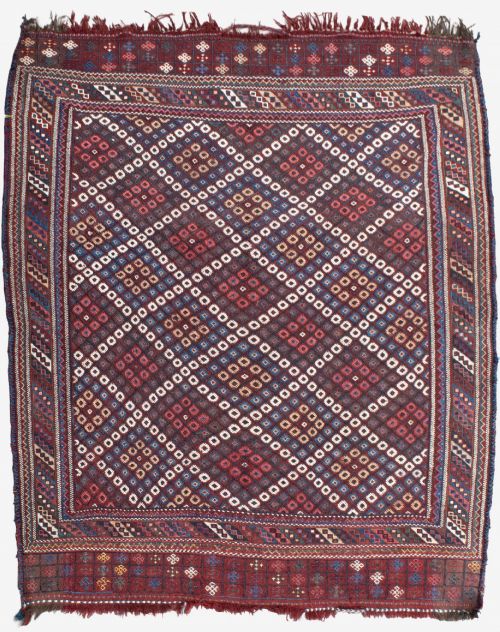


Handwoven Wool Kelim
A handwoven wool kelim brings honest tribal geometry and flat-weave tradition straight to your floors.
Handwoven Wool Kelim
A handwoven wool kelim is a flat-woven textile produced by nomadic and tribal weavers across Anatolia, Persia, Central Asia, and Eastern Europe. These pieces serve primarily as functional floor coverings, runners, and carpets, distinguished by their lack of a pile.
Buyers searching for a handwoven wool kelim encounter regional styles spanning the late nineteenth and early twentieth centuries, including Anatolian tribal works, Persian tribal pieces, and Central Asian examples. Forms range from compact rugs to substantial carpets and long runner rugs.
The aesthetic centres on bold graphic designs, geometric motifs, and traditional village patterns handed down through generations of weavers. Each piece reflects the specific cultural lexicon and knotless weaving techniques of its origin.
How they were made
Makers construct a handwoven wool kelim by tightly interweaving warp and weft threads on a vertical or horizontal loom, utilising wool for both structure and pattern. Cotton occasionally appears in the foundational structure of specific regional weaves.
The slit-tapestry technique creates the characteristic clean edges between distinct colour blocks, where the weft turns back at the boundary of each motif. This method produces a reversible textile with identical or near-identical clarity on both sides.
Certain antique runners incorporate purposeful irregularities in the border geometry, reflecting the weaver's traditional belief in averting evil spirits.
What varies in quality
Quality in a handwoven wool kelim rests upon the tightness of the weave and the precision of the geometric lines. Finer, denser packing of the wool weft yields a more durable textile that holds its structural integrity underfoot.
The vibrancy and depth of the wool yarns define the visual tier of the piece. Master weavers achieve harmonious colour transitions and balanced proportions that elevate standard utility items into compelling textile art.
The Handwoven Wool Kelim Glossary
- Kelim
- A flat-woven carpet or rug produced without a pile across various regions of the Near East and Central Asia. These textiles are known for their geometric designs and lightweight versatility.
- Warp
- The stationary vertical threads stretched onto a loom that form the foundational skeleton of the textile. Weft threads are passed over and under these structural strands.
- Weft
- The horizontal threads threaded through the warp to create the visible pattern and colour fields of the flat-weave. In kelims, these yarns completely conceal the warp.
- Sofreh
- A specialised woven cloth traditionally used for serving meals or processing dough within nomadic households. These textiles often feature distinctive tribal iconography.
- Runner
- A long, narrow carpet format designed specifically for hallways, corridors, or staircases. They accommodate confined linear spaces while displaying repeating village motifs.
Handwoven Wool Kelim: Frequently Asked Questions
Where should I place a kelim?
A handwoven wool kelim suits low-traffic or moderate-traffic areas like studies, bedrooms, and quiet hallways where its flat weave remains visible. Because these textiles lack a pile, they lie exceptionally flat against wooden or stone floors.
For larger rooms, a generous carpet anchors seating arrangements while keeping the floor profile slim. In narrow spaces, runner formats draw the eye along corridors without obstructing doors.
How do I clean a wool kelim?
Regular gentle vacuuming without a rotating brush roll prevents dust and grit from settling between the tight wool fibres. Shake smaller pieces outdoors rather than beating them to protect the structural integrity of the weave.
Professional specialist cleaning is recommended for deeper maintenance to avoid shrinkage or dye bleeding. Avoid harsh chemical detergents that strip natural lanolin from the wool.
Are these textiles reversible?
Most traditional flat-weaves display the same pattern and colour intensity on both sides due to the nature of slit-tapestry construction. Flipping the textile periodically promotes even wear across both surfaces.
Minor differences in knot ends or finishing details occasionally reveal the true reverse side, though both faces remain visually appealing.
How do I identify regional styles?
Regional attribution relies on specific colour palettes, wool textures, and characteristic geometric vocabulary. Anatolian and Konya pieces often feature bold tribal layouts, while Central Asian examples show distinct graphic borders.
Comparing motif structures against documented village traditions helps clarify whether a piece originates from Persian, Caucasian, or European workshops.