


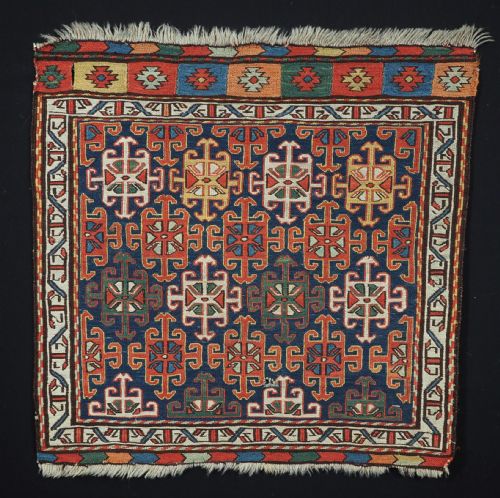
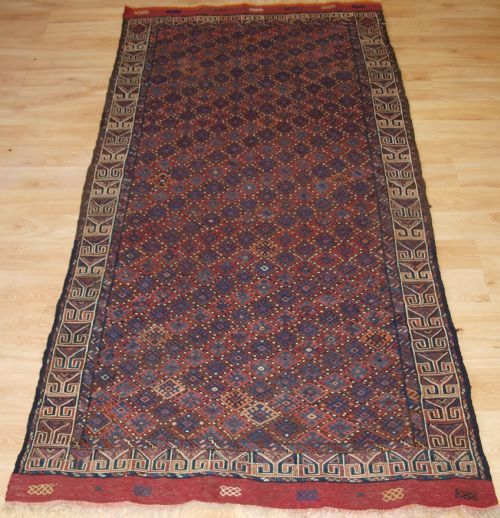
Tribal Soumak Weave Carpet
A tribal soumak weave carpet brings remarkable flatweave texture and geometric design directly into a room from nomadic traditions.
Tribal Soumak Weave Carpet
A tribal soumak weave carpet represents a sophisticated flatweave tradition created by nomadic groups across the Caucasus, Persia, and Central Asia. These textiles range from room-sized carpets and long kilims to smaller bag faces and saddlebags originating from the nineteenth and early twentieth centuries.
The aesthetic centres on bold geometric motifs, medallions, and traditional animal or bird designs associated with specific weaving groups such as the Shahsavan, Yomut Turkmen, and Afshar. Buyers encounter diverse formats, including complete carpets with extended kilim ends, individual panels, and portable utilitarian items transformed into decorative floor coverings.
Dated examples span from the mid-nineteenth century through to the early decades of the twentieth century, reflecting a period of traditional nomadic production before industrial dyes became widespread. Each piece embodies the distinct visual vocabulary of its maker tribe, offering authentic regional characteristics.
How they were made
Makers constructed these flatweaves using hand-spun wool manipulated through a specific wrapping technique that creates a durable structure without a traditional pile. Weavers wrapped coloured pattern wool threads over and under the warp threads, often leaving supplementary weft floats trailing on the reverse.
Colour derives entirely from natural dyes and vegetable sources, producing rich tones that age with considerable depth and character. The interplay of hand-spun wool and natural colourants gives the surface its characteristic tactile quality and visual variation.
Listings feature works attributed to the Shahsavan, Afshar, and Yomut Turkmen tribes, spanning from eighteen-sixty to nineteen-twenty.
What varies in quality
Quality rests in the precision of the wrapping technique, the clarity and complexity of the geometric medallion design, and the overall integrity of the structure. Finer examples display meticulous control over intricate motifs like dragons or diamond patterns, maintaining straight structural lines across the field.
The depth and nuance of the natural dyes and vegetable colours contribute significantly to a piece's standing, alongside the preservation of original kilim ends and borders. Intact bag faces and long kilims retain higher degrees of their original utilitarian context, reflecting superior nomadic craftsmanship.
The Tribal Soumak Weave Carpet Glossary
- Soumak
- A flatweave textile technique where pattern threads are wrapped horizontally around vertical warp threads, creating a raised braided texture on the face and loose threads on the back. This method provides greater durability than standard kilim weaving.
- Kilim
- A flat tapestry-woven carpet or rug produced without a pile, resulting in a thin, flexible textile suitable for floor use or hanging. These pieces rely on interlocking weft threads to form crisp geometric patterns.
- Warp
- The vertical foundation threads stretched lengthwise on a loom before weaving begins. Weft and pattern threads are interlaced through these stationary elements to build the textile.
- Bag face
- The decorative front panel of a nomadic storage sack, typically preserved and framed as a small rug. These sections often contain the most concentrated and intricate tribal iconography.
- Natural dyes
- Colourants derived from plants, insects, and minerals used prior to the introduction of synthetic aniline dyes. They yield subtle variations in shade that soften harmoniously over time.
Tribal Soumak Weave Carpet: Frequently Asked Questions
What is a soumak weave?
A soumak weave is a distinct flatweave technique where coloured wool is wrapped around the vertical warp threads in a continuous motion. This creates a durable fabric with a pronounced ribbed texture on the front and visible trailing threads on the reverse.
Unlike standard pile carpets, soumaks have no knotted pile, offering a firm, flat surface that suited the practical needs of nomadic tribes for portable furnishings.
How do I care for a flatweave carpet?
Protect a flatweave carpet by using a quality underlay to prevent sliding and reduce friction against hard floors. Regular gentle vacuuming without a rotating brush roll helps remove grit that settles between the flatweave threads.
Rotate the textile periodically to ensure even exposure to light and foot traffic. Professional cleaning designed for antique textiles is essential when deeper maintenance is required.
Where were these textiles made?
Nomadic and semi-nomadic tribes produced these textiles across the Caucasus region, Persia, and Central Asia during the nineteenth and early twentieth centuries. Groups such as the Shahsavan, Afshar, and Yomut Turkmen wove them in regional encampments and settlements.
These pieces served functional purposes within nomadic daily life, functioning as storage bags, saddle furniture, and floor coverings before entering the decorative market.