


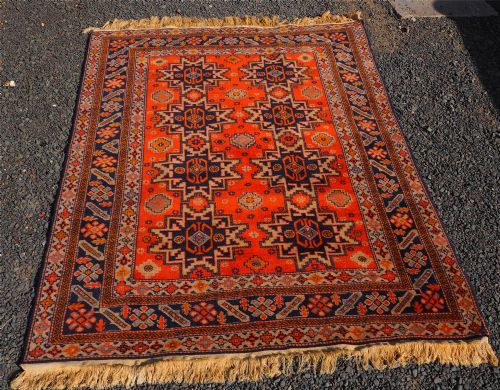
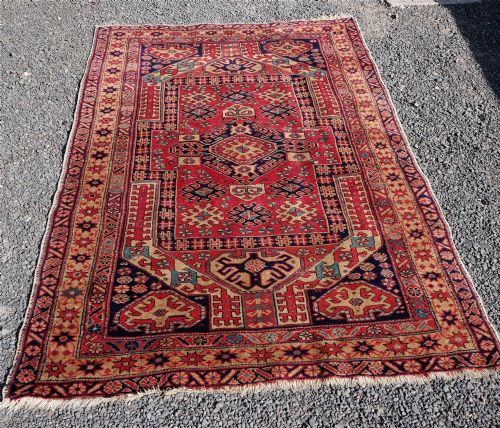
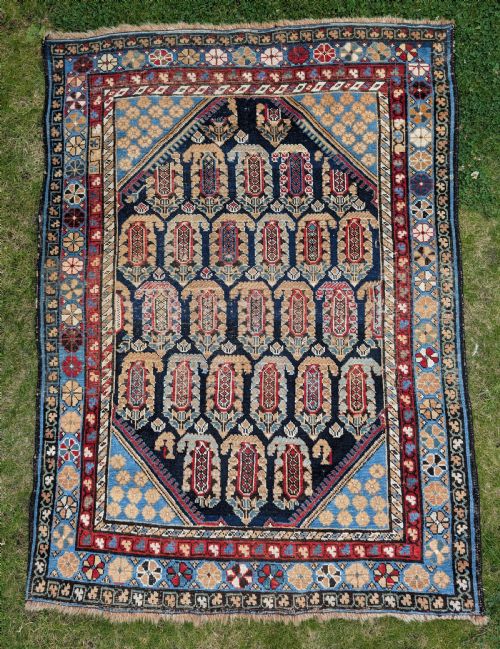
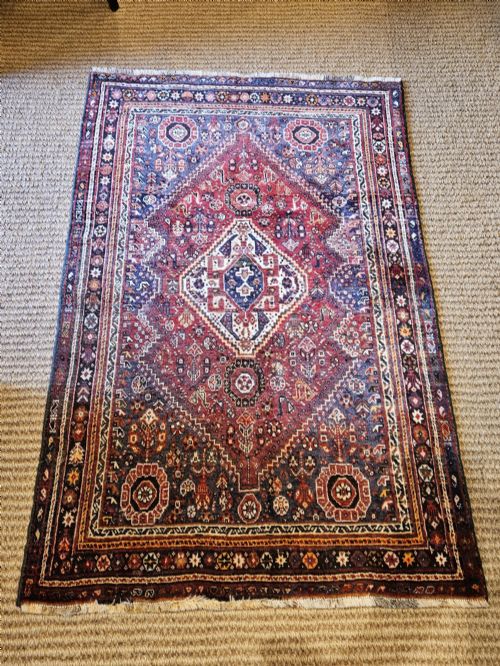
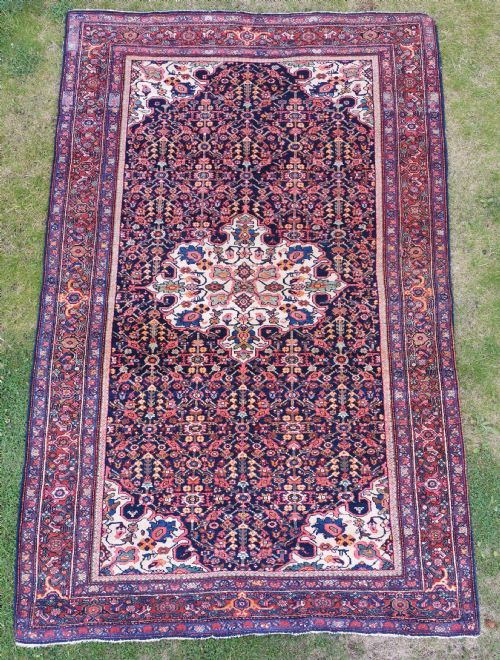
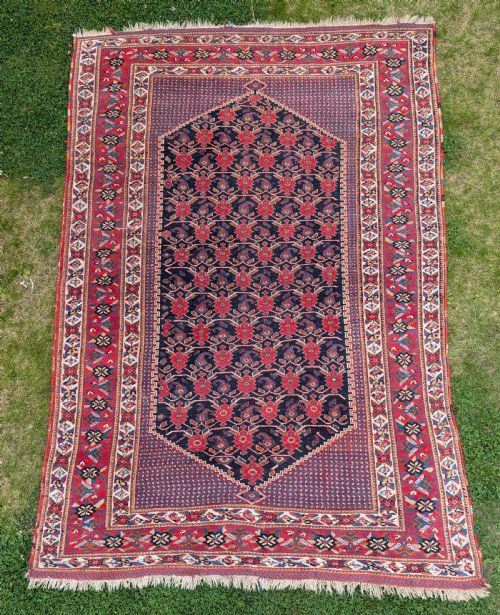
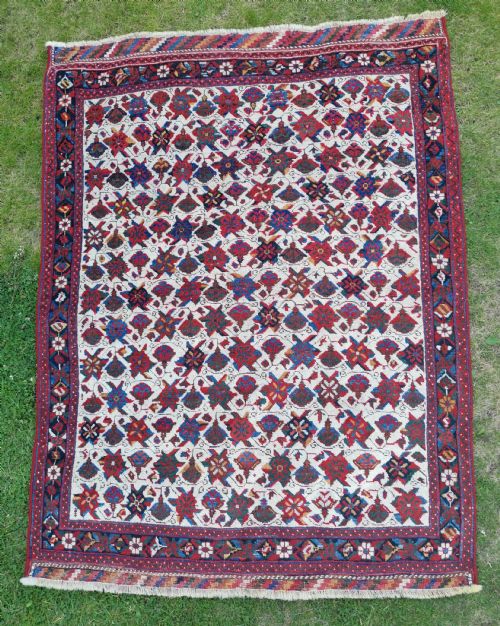
Navy Wool Oriental Rug
A navy wool oriental rug brings deep indigo and midnight grounds together with intricate tribal and city designs.
Navy Wool Oriental Rug
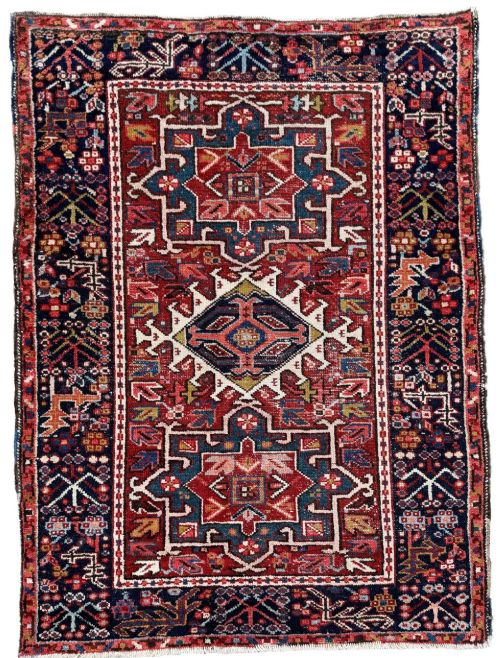
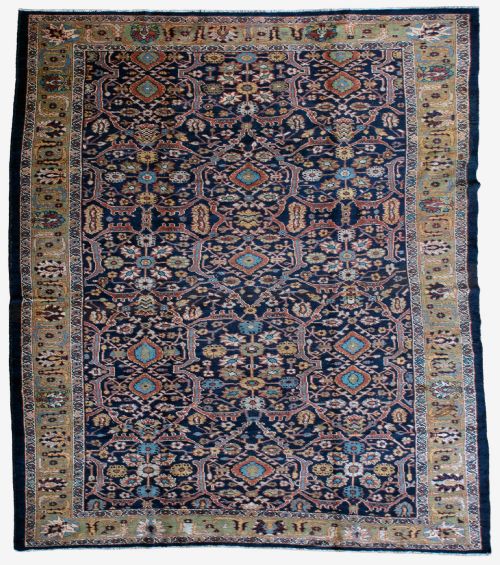
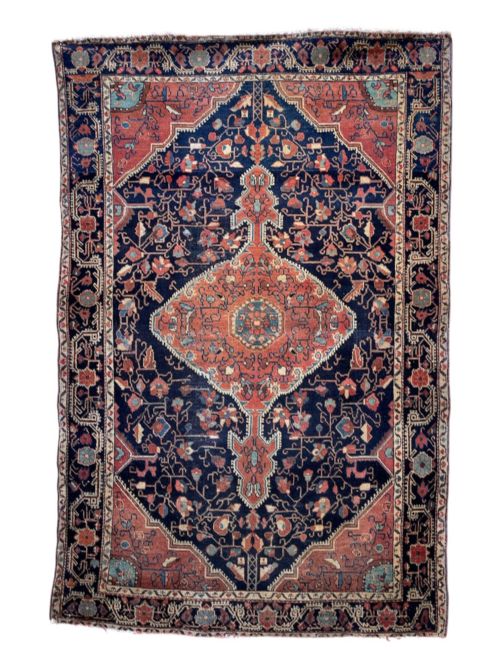
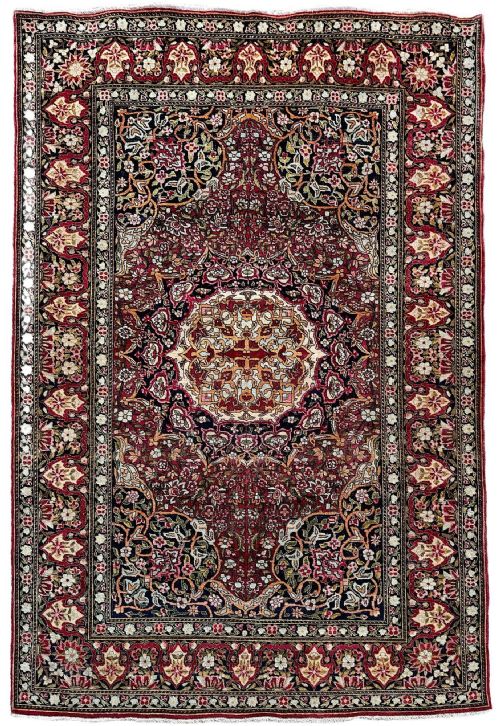
When you search for a navy wool oriental rug, you are looking at floor coverings woven across Persia and the Caucasus from the mid nineteenth century into the twentieth century. These textiles include large carpets, scatter rugs, long hallway runners, and occasional cushion covers produced by tribal confederacies and settled workshops alike.
The pieces you are most likely to meet on this page date from the decades around nineteen hundred, spanning periods from eighteen fifty up to nineteen thirty. They display styles ranging from geometric Caucasian tribal patterns to curvilinear Persian medallion designs.
Makers utilised various formats, from small Baluch prayer rugs to expansive Heriz and Mahal carpets. The enduring appeal lies in the deep blue wool foundations that anchor complex vegetal and geometric motifs.
What varies in quality
Quality in these textiles depends on the fineness of the knot count and the precision of the geometric or floral drawing. Denser knots allow for sharper definition in medallions, borders, and intricate field patterns.
The handling of the wool also distinguishes finer examples, as high-grade hand-spun wool absorbs dye evenly and retains a rich lustre across decades of wear. Secondary materials like sturdy cotton foundations ensure the structural integrity of larger carpets.
Listings feature pieces dated from eighteen fifty through nineteen thirty, alongside general nineteenth-century examples.
The Navy Wool Oriental Rug Glossary
- Medallion
- A central ornamental motif set in the middle of the rug field. It often takes a geometric or floral form that dictates the symmetry of the surrounding design.
- Mihrab
- A niche design associated with prayer rugs, representing the direction of Mecca. It points toward the viewer with distinct architectural arches.
- Warp
- The vertical threads stretched tightly on the loom that form the skeletal foundation of the rug. Fringe ends typically consist of these extended warp threads.
- Weft
- The horizontal threads passed through the warps between rows of knots to bind the structure together. They stabilize the width of the textile.
- Pile
- The upright woolen surface formed by the cut ends of knots. This plush layer provides the colour, texture, and pattern of the piece.
Navy Wool Oriental Rug: Frequently Asked Questions
How do I clean a wool rug?
Vacuum gently without a rotating brush roll to prevent pulling the delicate hand-knotted pile.
Professional specialist cleaning is recommended for deep washing to protect the natural wool fibres and dyes.
Where should I place a runner?
Runners fit well in long hallways, narrow corridors, or alongside beds where narrow dimensions suit the floor space.
Ensure adequate underlay is placed beneath the textile to prevent sliding on smooth wooden or tiled floors.
How do I identify a tribal rug?
Tribal rugs display spontaneous geometric patterns, stylized animals, and hooked motifs woven from memory rather than strict architectural cartoons.
They often use rich saturated tones and variable village wools characteristic of nomadic groups like the Baluch or Qashqai.