


Antique Brown Kilim Rug
An antique brown kilim rug brings rich tribal character and flatweave texture to a room.
Antique Brown Kilim Rug
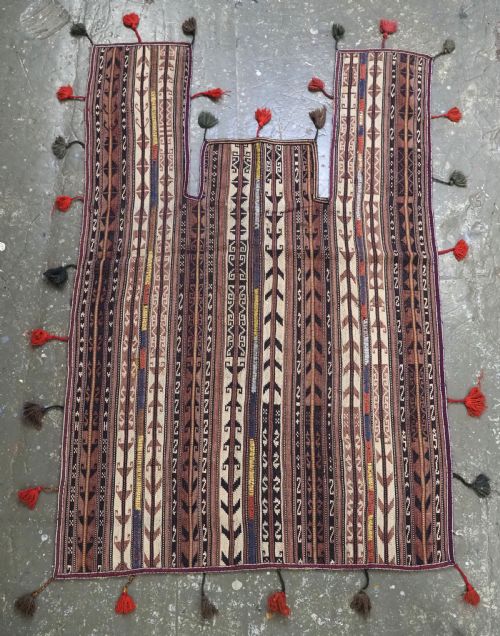
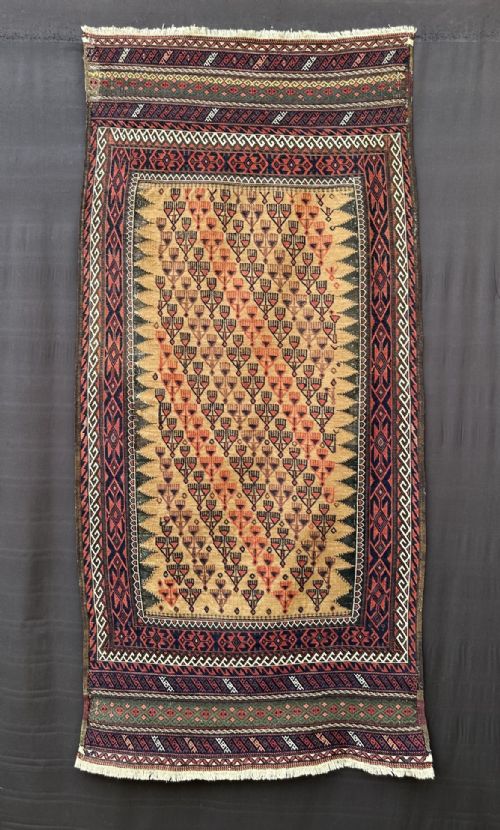
An antique brown kilim rug encompasses flatwoven textiles, prayer rugs, storage sacks, and ceremonial covers produced by nomadic and village weavers across Persia, Anatolia, the Caucasus, and Central Asia. These items date from the late nineteenth century through to the early decades of the twentieth century, reflecting traditional tribal motifs rather than urban workshop designs. Buyers searching for an antique brown kilim rug encounter pieces spanning diverse regional groups such as the Qashqa'i, Yomut Turkmen, Shahsavan, and Timuri.
The most common formats on this page include utilitarian flatweaves originally utilised as bread sofreh, wheat-sacks, and tent bands, alongside room-size and runner formats adapted for modern floor placement. These textiles often display earthy tones derived from natural dyes, grounding the palette in rich browns, deep reds, and muted neutrals. Each piece carries the distinct structural markers of its specific tribal origin.
Tribal flatweaves differ significantly from piled carpets due to their slit-weave construction, which creates clean geometric lines and graphic boundaries between colour fields. Makers produced these textiles primarily for domestic utility, storage, or communal dining, meaning many surviving examples transitioned from functional objects into decorative floor coverings. The designs reveal generational patterns passed down within specific weaving communities across Central Asia and the Middle East.
Factors determining quality in flatweaves
Quality depends upon the tightness and consistency of the weave, where finer tension and closer packing of the weft threads create a more durable and structurally sound textile. Pieces with exceptionally fine weave structures display sharper geometric precision in their motif outlines.
The integrity of the natural dyes and the depth of the wool handle separate superior examples from more routine village work. Well-preserved textiles retain their original side cords and complete flatweave end finishes without extensive structural intervention.
Rarity of form and regional design execution elevate certain flatweaves, particularly when utility objects like grain sacks or animal covers survive with their original backs and fastenings intact. The harmony of the natural palette and the clarity of the tribal symbols further distinguish the upper tier of pieces.
Listings feature flatweaves spanning from the 1870s through the 1930s, utilising hand-spun wool and natural dyes across Persian, Anatolian, Caucasian, and Central Asian tribal origins.
The Antique Brown Kilim Rug Glossary
- Kilim
- A flatwoven textile produced without a pile by tightly inter-weaving warp and weft strands. This technique results in a lightweight, reversible cloth characterised by distinct geometric patterns and slit openings between colour blocks.
- Sofreh
- A spreading cloth utilised for dining, bread making, or food preparation within nomadic households. These rectangular flatweaves frequently feature bold field designs framed by protective tribal borders.
- Soumak
- A supplementary weft-wrapping technique that creates a durable ribbed surface texture on the face of the textile while leaving loose threads floating on the reverse. It adds structural weight and dimensional detail to flatweaves.
- Mafrash
- A large rectangular storage bag or chest panel utilised by nomadic tribes for transporting household goods during migration. They often feature banded flatweave designs or soumak face panels.
- Abrash
- A natural variation in colour shading within a single field of wool, caused by changes in dye batches or hand-spun yarn lots. It signals the authentic use of traditional natural dye methods.
Antique Brown Kilim Rug: Frequently Asked Questions
What is a kilim rug?
A kilim is a flatwoven textile made by tightly inter-weaving horizontal weft threads across vertical warp threads without creating a pile. This construction produces a smooth, durable surface with crisp geometric patterns.
Nomadic and village communities across the Middle East and Central Asia produced these textiles for everyday domestic functions, including floor coverings, wall hangings, and storage containers.
How do I care for an antique flatweave?
Protect the textile by placing a quality rug underlay beneath it to prevent slipping and reduce friction against hard floors. Vacuum the surface gently using suction only, avoiding rotating brush attachments that can pull at the hand-spun wool.
Rotate the rug periodically to ensure even exposure to foot traffic and ambient light. Seek out professional textile conservators experienced in handling historic tribal flatweaves for any cleaning.
Where were these tribal rugs made?
These flatweaves originated among nomadic tribes and settled village groups residing in Persia, Anatolia, the Caucasus, and Central Asia. Specific regions include the Fars province, Western Persia, and the borderlands between Persia and Afghanistan.
Each weaving group utilised distinct tribal motifs, structural methods, and regional dye palettes to identify their community and heritage.
Are these rugs suitable for heavy floor use?
Most antique flatweaves possess a sturdy wool and cotton construction capable of handling standard residential foot traffic in domestic spaces. Placed over an appropriate pad, they withstand regular daily use in sitting rooms, studies, and hallways.
Delicate ceremonial covers or fragile pictorial panels function best in low-traffic areas or displayed securely as wall hangings.