

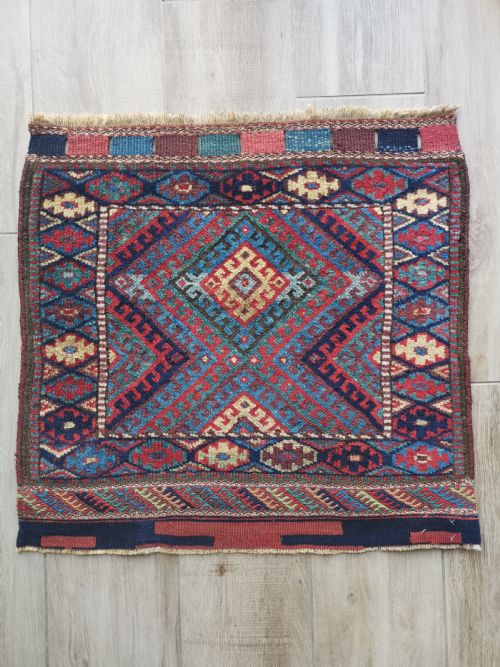


Tribal Carpet Fragment
When you handle a tribal carpet fragment, you hold a surviving piece of nomadic weaving history made to last.
Tribal Carpet Fragment
A tribal carpet fragment represents a surviving section of a larger nomadic textile, often originating from Central Asian and Caucasian weaving traditions. These pieces include sections of torbas, chuvals, bag faces, and tent bands produced by tribes such as the Turkmen, Yomut, Tekke, Ersari, and Shahsavan.
On this page, you are most likely to encounter fragments and bag faces dating from the eighteenth century through to the end of the nineteenth century. These remnants preserve traditional tribal designs like gul motifs, curled leaves, and stepped medallions within manageable portions of nomadic work.
Collectors seek these fragments for their authentic structural details and uncompromised village aesthetics. They offer a direct connection to the material culture of nomadic groups without requiring the floor space of a complete carpet.
Materials and construction
The foundation of these pieces relies on hand-spun wool and cotton, often utilising wool for both the pile and the structural warps and wefts. Some pieces incorporate natural dyes alongside elements of linen or silk for specific contrast details.
Weavers employed traditional knotting techniques alongside soumak or flatweave structures, depending on whether the item functioned as a storage bag, tent hanging, or trapping. The handling of natural dyes creates subtle tonal shifts across the surface as the wool ages.
Some fragments still carry the stubborn dust of the Central Asian steppes, whispering tales of camels, tents, and nomadic campfires.
Qualities that distinguish the work
The quality of a fragment rests upon the density of the weave and the precision of the drawing within the design motifs. Finer knotting and careful handling of complex patterns separate the standard utility items from the exceptional tribal pieces.
Colour retention and the richness of the natural dyes play a major role in the visual impact of the remnant. Pieces that maintain deep, saturated crimson, ivory, and contrasting tones demonstrate superior dye preparation and material selection.
The Tribal Carpet Fragment Glossary
- Gul
- A primary medallion or repeating octagonal motif characteristic of Turkmen and Central Asian carpet weaving. These designs often identify the specific tribe or sub-group that produced the textile.
- Torba
- A small storage bag produced by nomadic tribes for domestic use inside the tent. They frequently feature elaborate face designs that survive independently as decorative fragments.
- Chuval
- A large tent bag used for storing household goods during nomadic migrations. Their faces display prominent tribal gul patterns and rich natural colour palettes.
- Soumak
- A flatweave technique involving wrapping the weft threads over the warp threads to create a textured, durable surface. This method appears frequently in bag faces and trappings.
- Mafrash
- A rectangular storage bale or container used in nomadic households. Fragments of these pieces preserve distinct end panels and side designs.
Tribal Carpet Fragment: Frequently Asked Questions
What is a tribal carpet fragment?
A tribal carpet fragment is a surviving portion of an older nomadic weaving, such as a bag face, tent band, or carpet section. These pieces were separated from larger textiles through wear or deliberate division over time.
They allow collectors to own authentic examples of historical tribal art, including detailed gul patterns and natural dyes, in a smaller format.
How were these fragments used?
Nomadic groups utilised the original textiles as storage bags, tent furnishings, animal trappings, and household partitions. Items like torbas and chuvals held bedding, clothing, and domestic goods inside the yurt.
Over decades, damaged or unused sections were trimmed, leaving behind the decorative faces that survive today as collectible textile art.
How do I live with a fragment?
Many collectors mount and frame these fragments behind glass or display them safely on walls to protect the old wool and cotton structures from floor traffic. Keeping them out of direct sunlight preserves the natural dye colours.
Their compact size makes them suitable for smaller wall spaces where a full-sized rug would not fit.
How can I tell the tribal origin?
Tribal origin is identified through specific design motifs, such as the repeating gul patterns of the Tekke, Yomut, or Ersari tribes. Colour combinations, weave density, and structural materials also provide clear indicators of regional style.
Comparing the drawing style of the motifs against known nineteenth-century examples helps narrow down the specific group.