
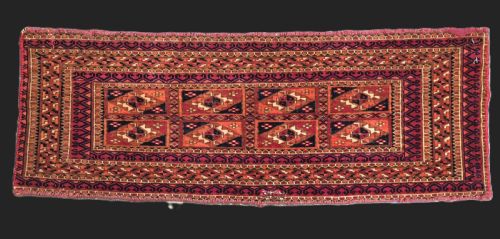
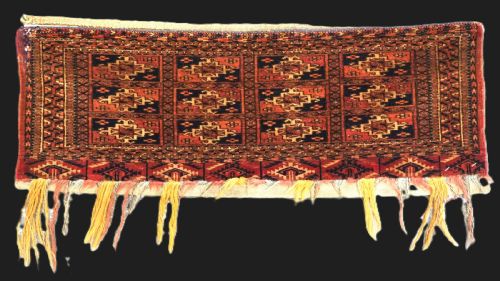


19th Century Tekke Torba
These 19th century tekke torba pieces are tribal rug bags from Central Asia that bring rich wool texture and nomadic history directly into a room.
19th Century Tekke Torba
When you search for 19th century tekke torba, you encounter tribal textile bags and rug faces woven by Turkmen nomads. These pieces served practical functions within nomadic camps before entering the decorative sphere.
The selections on this page span from the first half of the nineteenth century through to the eighteen-eighties. You will find complete examples with their original backs alongside mounted fragments and bag faces.
Designs on these pieces frequently incorporate traditional motifs such as aina gul, salor guls, chuval guls, and curled leaf patterns. Sizes vary from small dowry weaving formats to multi-gul compositions.
How They Were Made
Weavers constructed these tribal bags entirely from wool, utilising natural dyes to achieve deep and enduring colour palettes. The structural weave ranges from standard tribal density to exceptionally fine knotting.
Production relied on traditional nomadic techniques passed down through generations within Turkmen and Central Asian tribal groups. Each piece reflects the specific regional knowledge of its maker.
What Varies in Quality
Quality in a 19th century tekke torba rests upon the precision of the drawing and the fineness of the weave. Tighter knot counts allow for sharper rendition of complex tribal guls and botanical motifs.
The purity and depth of the natural dyes dictate the visual strength of the piece. Examples retaining complete backs and strong structural integrity command greater interest from collectors of tribal textiles.
The 19th Century Tekke Torba Glossary
- Torba
- A small horizontal tribal rug bag used by Turkmen nomads for storage inside the tent. These pieces often feature prominent gul patterns along the face.
- Gul
- A primary medallion motif used repeatedly in Turkmen rug and textile design. Different tribes employed distinct gul shapes to signal their specific heritage.
- Mafrash
- A rectangular storage bag or container face produced by nomadic weavers. These items functioned as luggage and domestic storage in tribal camps.
- Natural Dyes
- Colourants derived from plants, insects, and minerals before the advent of synthetic aniline dyes. They produce the varied and stable hues seen on nineteenth-century textiles.
- Chuval
- A large tent bag woven by Central Asian nomads. Their primary motifs often appear in related smaller formats such as torbas.
19th Century Tekke Torba: Frequently Asked Questions
What is a tekke torba?
A tekke torba is a small tribal bag woven by the Tekke Turkmen tribe in Central Asia during the nineteenth century. These items were traditionally used for household storage inside nomadic tents.
Today, collectors appreciate them primarily as decorative wall hangings or textile art. Their distinctive geometric guls and wool construction make them prominent examples of nomadic craftsmanship.
How were these bags used?
Nomadic families utilised these bags to store clothing, bedding, and smaller household possessions within the yurt or tent. They hung against the lattice walls or served as functional containers during migration.
Over time, many of these utilitarian objects became separated from their original backs. Surviving faces and complete pieces now function as textile art for interior display.
How do I date a torba?
Dating relies on assessing the wool quality, the specific natural dye palette, and the fineness of the weave. Nineteenth-century examples typically display softer, more integrated colour transitions and denser knotting than later commercial pieces.
Structural details such as the presence of original backs and specific tribal drawing styles help narrow the period. Comparative study with archived pieces provides further context for attribution.
How should I display a torba?
These textile bags work well mounted flat on a wall as a focal point in a room. Proper support distributes the weight evenly across the wool backing to prevent distortion.
Keep displayed textiles away from direct sunlight to protect the natural dyes from fading. Gentle rotation and periodic inspection help maintain the condition of the wool over time.