


Traditional Wool Floor Covering
Traditional wool floor covering pieces bring grounded texture and enduring regional designs to a room, offering authentic hand-knotted craftsmanship from past centuries.
Traditional Wool Floor Covering
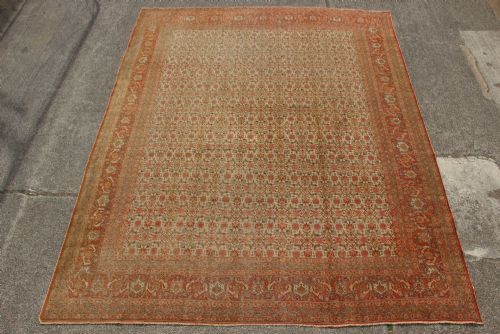
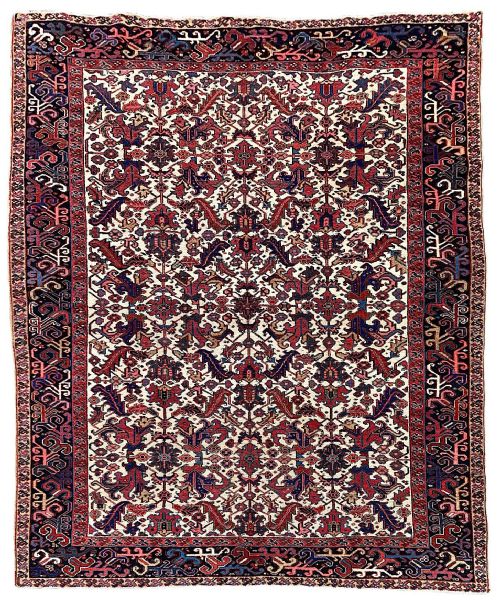
A traditional wool floor covering search brings up heavy hand-knotted carpets and rugs originating primarily from Persia, Turkey, the Caucasus, and China. These textiles function as durable floor coverings and decorative centerpieces, varying from small tribal fragments to room-sized palace carpets.
The selections available here span from the mid-nineteenth century through the early twentieth century, encompassing distinct regional weaving traditions. Buyers regularly encounter named styles such as Heriz, Ushak, Isfahan, and Tabriz alongside tribal pieces from Kashgai and Afshar weavers.
Most entries are classified as rugs and carpets, though related soft furnishings like cushions also appear. These textiles utilise wool pile combined with cotton foundations to create dense, patterned surfaces designed for heavy daily use.
Materials and construction methods
Weavers sourced natural materials for dyeing the wool yarns, achieving rich colour palettes that mellow gracefully over decades. The density of the knots and the quality of the wool determine the weight and drape of each finished carpet.
Tribal weavers occasionally tucked small personal symbols and stray animal tufts directly into the wool pile.
Quality differences in these textiles
The standard of a traditional wool floor covering depends upon the precision of the knotting and the fineness of the wool selected by the weaver. Tighter knot counts allow for sharper graphic detail in traditional medallion and floral motifs.
Condition and integrity of the foundational structure separate average examples from superior ones. Pieces retaining their original borders and even pile wear demonstrate better long-term durability and careful historic maintenance.
Benlian·Mokhtashem
The Traditional Wool Floor Covering Glossary
- Pile
- The vertical or diagonal loops of wool yarn that form the soft surface of the carpet. This layer absorbs foot traffic and displays the woven design.
- Warp
- The vertical foundation threads running the length of the carpet fringe to fringe. Weavers tie individual wool knots directly onto these tensioned strands.
- Weft
- The horizontal threads passed across the warp strands between rows of knots to lock the pile in place. They give the carpet its structural firmness.
- Medallion
- A large central ornamental design motif placed in the middle of the carpet field. Many Persian and Turkish styles organise their geometric or floral elements around this focal point.
- Border
- The decorative framing bands that enclose the central field of the carpet. These outer stripes typically feature repeating geometric or floral guard borders.
Traditional Wool Floor Covering: Frequently Asked Questions
How do I identify a Heriz carpet?
Heriz carpets generally display large, bold geometric medallions set against rust or red fields, often featuring stiff, stylised floral corners. Their robust construction uses heavy wool suited for high-traffic areas.
They originate from the Northwest region of Persia and date frequently from the late nineteenth and early twentieth centuries.
What is an Oushak carpet?
Oushak carpets come from Turkey and are recognised by their softer pastel palettes and large-scale, relaxed floral or vine motifs. They utilise lustrous wool that gives the surface a glowing appearance.
These large formats suit contemporary interiors well due to their muted secondary tones and decorative versatility.
Where were Afshar rugs made?
Afshar rugs were produced by semi-nomadic tribal groups living primarily around the Kerman province in South Persia. They often feature repeating boteh motifs or geometric all-over patterns.
Their tribal origins result in spontaneous colour choices and sturdy structures designed for practical daily life.
How should I clean an antique wool rug?
Antique wool rugs require gentle professional cleaning rather than immersion or harsh chemical treatments. Regular light vacuuming without a rotating beater bar prevents dust accumulation in the pile.
Keeping these textiles out of direct, harsh sunlight preserves the natural dyes used in their construction.