



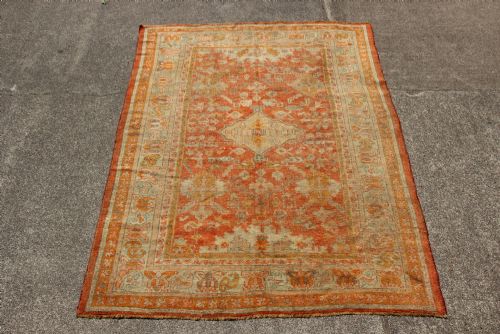
Large Oriental Floor Carpet
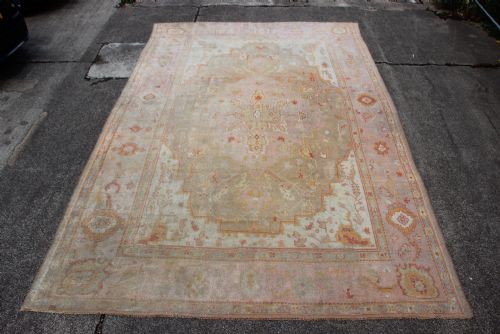
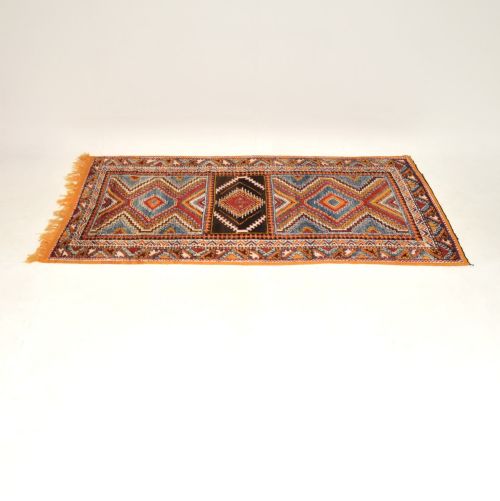
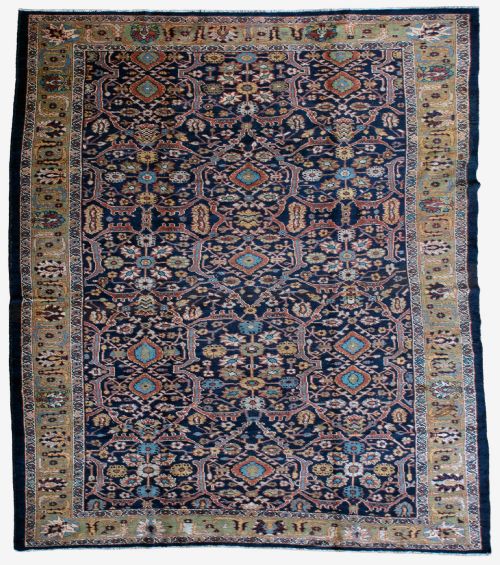
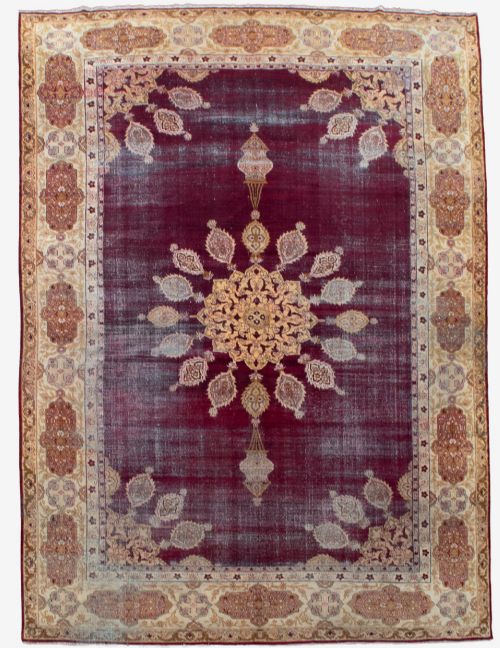
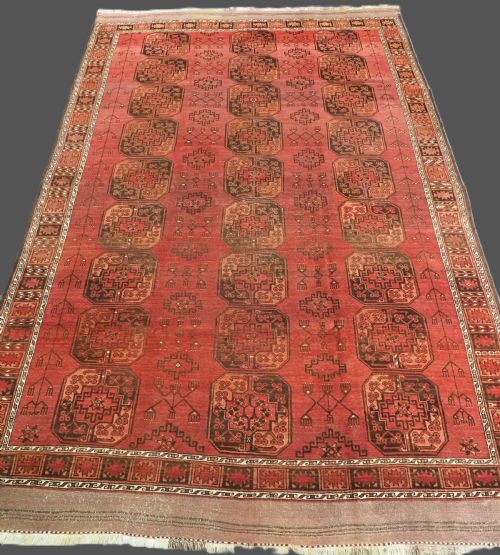
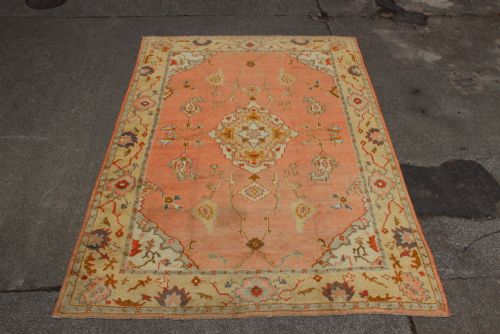
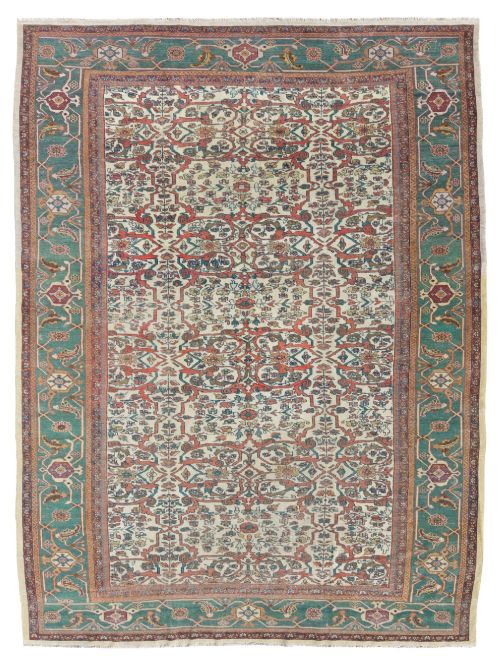
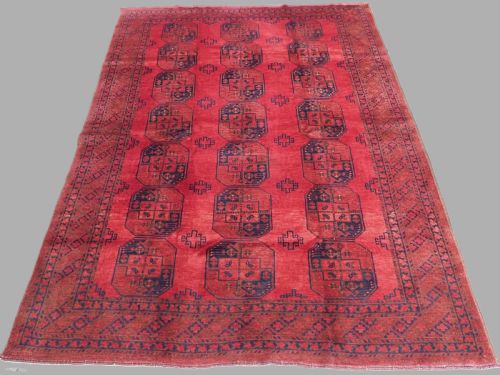
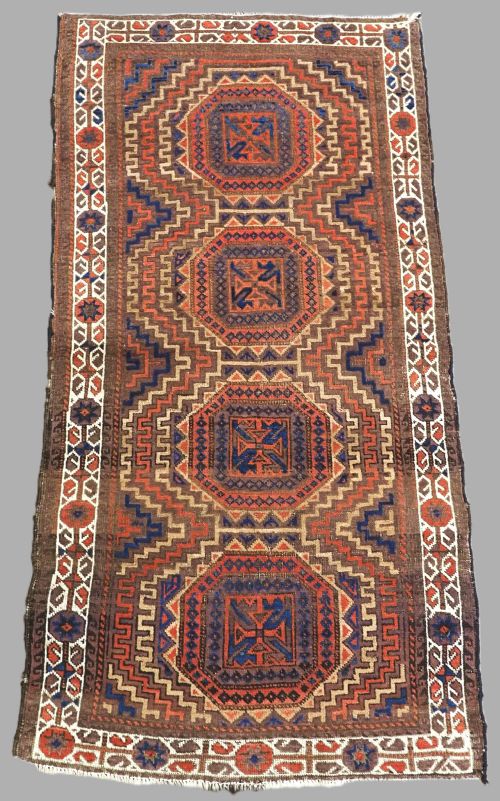
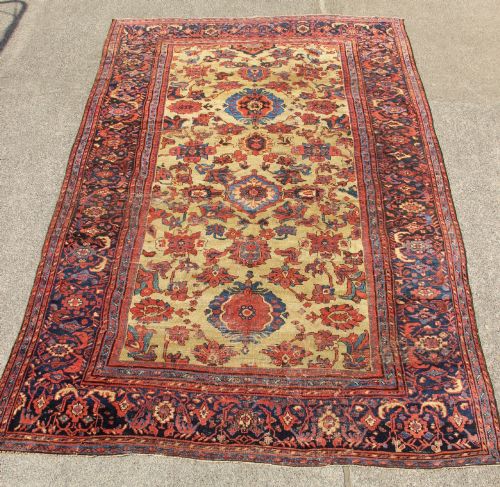
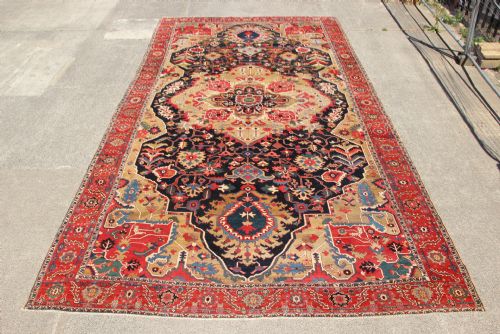
A large oriental floor carpet anchors a room with dense botanical motifs and geometric medallions woven in wool.
Large Oriental Floor Carpet
When searching for a large oriental floor carpet, buyers encounter expansive room-size room coverings originating from Persian, Ottoman, and Turkmen weaving centres. These substantial floor coverings span the nineteenth and early twentieth centuries, encompassing traditional regional aesthetics from Heriz, Oushak, Tabriz, and Amritsar. The selection prioritises substantial formats suited for anchoring spacious reception rooms and historic interiors.
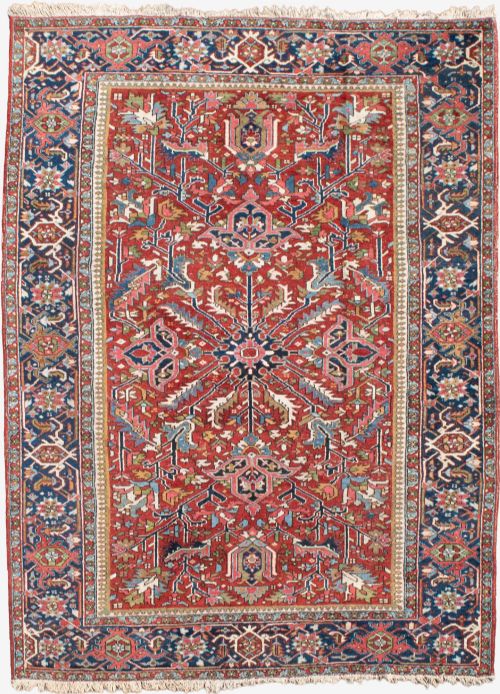
Heriz and Serapi weaves dominate the available examples, offering robust geometric medallions and sturdy cotton foundations paired with thick wool piles. Alongside these robust north-west Persian pieces appear softer Oushak and Sultanabad room carpets, characterised by sprawling palmettes and muted vegetal dyes. Buyers also encounter grand country house carpets from Amritsar and intricate workshop productions from Tabriz and Kirman.
Materials and construction methods
Traditional production relies upon durable wool piles knotted onto sturdy cotton warp and weft foundations. Artisans utilised hand-spun natural dyes derived from plants and minerals to achieve deep terracotta reds, indigo blues, and soft ivory grounds.
The density of the knotting varies according to the regional workshop tradition, ranging from coarse tribal structures to finely articulated city carpets. Weavers tied symmetric or asymmetric knots by hand across horizontal or vertical looms, finishing the edges with sturdy overcast selvedges.
Large Oriental Floor Carpet Retail Price Guide 2026
Typical asking prices for large oriental floor carpet among the pieces listed under this phrase on Sellingantiques today, from the lower quarter to the upper quarter. They describe what is for sale here now, not the wider market.
Listings span nineteenth and early twentieth-century Persian, Ottoman, and Indian workshops, dominated by wool piles on cotton foundations.
Distinctions in craftsmanship and design
Quality rests upon the precision of the drawing, the crispness of the secondary motifs, and the depth of the wool pile. Superior examples display balanced proportions within their central medallions and harmonious saturation across the field.
The handling of the wool and the complexity of the colour palette distinguish exceptional workshop carpets from standard village production. Finer knot counts allow for sharper curvilinear details in Tabriz and Kirman formats, whereas robust Heriz carpets depend on bold graphic clarity.
Haji Jalili
The Large Oriental Floor Carpet Glossary
- Heriz
- A rug-producing district in north-west Persia known for durable carpets featuring bold geometric medallions and robust corner spandrels. These carpets utilise strong cotton foundations to support thick wool piles.
- Oushak
- A historic weaving centre in Anatolia famous for large-scale floral designs and subdued terracotta or golden colour palettes. Their relaxed geometry distinguishes them from tighter Persian city formats.
- Gul
- A repeating octagonal medallion motif frequently found in Turkmen and Afghan tribal rugs. Each tribal group utilises distinct variations to denote lineage and heritage.
- Warp
- The stationary vertical threads stretched across the loom that form the structural foundation of the carpet. The exposed ends often terminate in visible fringes at either end of the piece.
- Weft
- The horizontal threads passed alternately over and under the warp threads between rows of knots to secure the pile. Proper tension in the weft ensures the structural stability of the woven field.
Large Oriental Floor Carpet: Frequently Asked Questions
How do I choose the right size?
Measure the floor space of the room while allowing a uniform margin of exposed floorboards around the perimeter of the carpet. Large oriental floor carpets generally require enough clearance to sit comfortably beneath primary furniture groupings without crowding the walls.
Consider the operational clearance needed for doors to swing freely across the pile. Room-size formats look best when major seating furniture rests entirely on the field or at least has the front legs positioned firmly on the wool.
How should I care for wool carpets?
Vacuum the pile regularly using suction attachment settings without rotating brush bars to prevent fibre distortion. Professional cleaning by specialists in antique textiles is recommended every few years to remove embedded dust.
Position the carpet away from direct, harsh sunlight to prevent natural dyes from fading unevenly over time. Utilising a breathable underlay prevents slipping and cushions the foundation against premature wear from foot traffic.
How do I distinguish Heriz from Oushak carpets?
Heriz carpets feature rigid geometric medallions, distinct angular corner spandrels, and robust brick-red or navy colour schemes. Their structured drawing conveys a sense of architectural permanence.
Oushak carpets display expansive curvilinear floral motifs, sprawling palmettes, and softer secondary tones like salmon, terracotta, and pale blue. Their overall aesthetic feels more relaxed and painterly compared to north-west Persian geometry.
What is a village carpet?
Village carpets are produced by independent weavers working in domestic settings rather than centralized urban workshops. Their designs often incorporate memory-drawn tribal motifs and charming irregularities in symmetry.
These pieces typically showcase heavy, durable wool and rustic foundations suited for everyday domestic utility. The spontaneous variations in colour shading across the field reflect the limits of small-scale dye batches.