
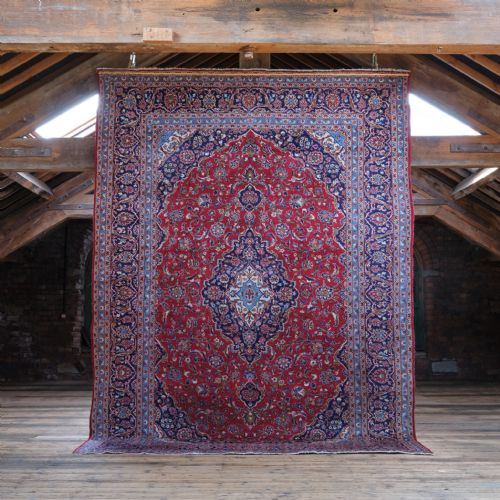


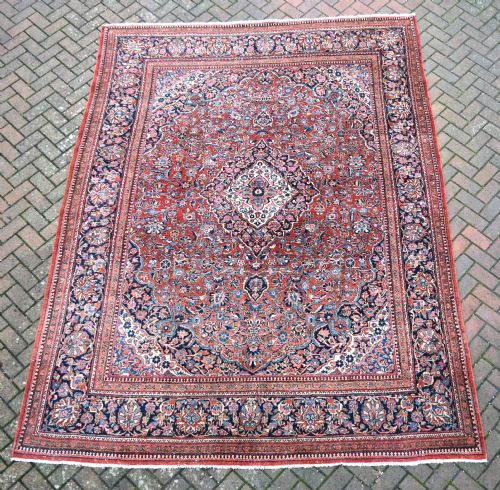


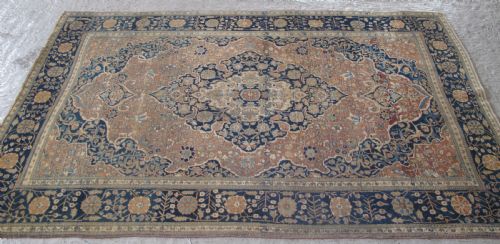
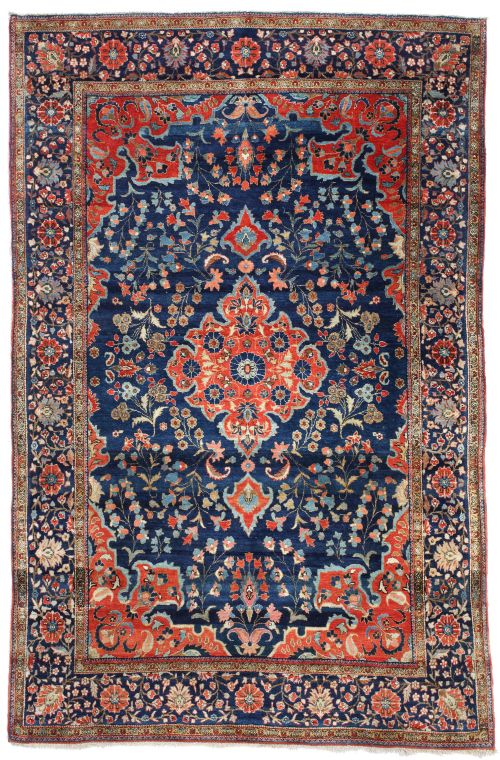
Kashan Medallion Carpet
A kashan medallion carpet brings centuries of Persian weaving tradition into a room, offering intricate centre motifs and rich wool or silk.
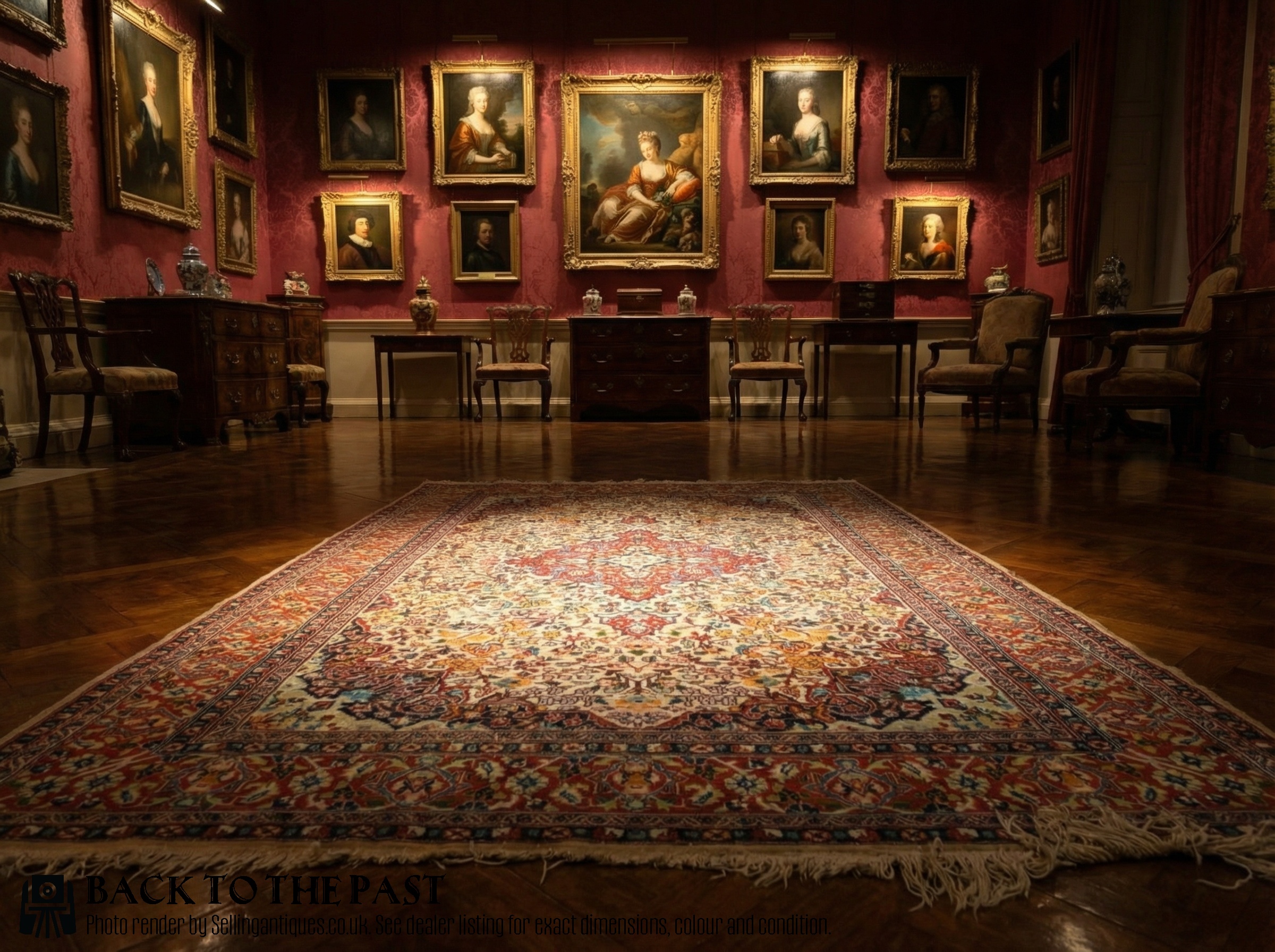
Kashan Medallion Carpet
A kashan medallion carpet stands as a distinct type of floor covering originating from central Persia, defined by its prominent central ornament and traditional Persian styling. When you search for a kashan medallion carpet, you encounter formats ranging from manageable area rugs to large palace-size carpets produced across the nineteenth and twentieth centuries.
The pieces available here span various eras including Edwardian examples alongside specimens dated from nineteen hundred through to nineteen forty. Traditional Persian designs dominate the selection, though variations such as Indo-Persian pieces also appear alongside formats featuring pictorial elements or khatami designs.
Most entries function as area rugs or larger carpets, woven in regions including north-west central Persia. Buyers select these items for their classic aesthetic and the distinct central medallion structure that anchors the visual composition of a room.
Materials and Techniques
These carpets rely on hand-knotted construction utilising natural fibres such as cotton, wool, and silk. Cotton frequently forms the foundation structure, providing stability and crisp definition to the overall weave.
Pile construction involves standard wool alongside finer materials like silk, part silk, kork wool, and kurk wool. The employment of superior wool types allows for softer textures and finer knot density in selected pieces.
One enthusiastic weaver signed his work with a rose pink hue so bright it reportedly startled the local sheep.
Understanding Quality Variations
Quality differences in a kashan medallion carpet stem primarily from the choice of pile material and the fineness of the hand-knotted execution. Pieces incorporating silk or soft kork wool generally demonstrate higher refinement in both handle and visual detail compared to standard wool variants.
The intricacy of the central medallion design and the precision of the weaving technique further distinguish superior examples. Older specimens from the nineteenth century or early twentieth century derive additional standing from their historical origin and specific workshop attribution.
Mohtasham Kashan·Haroon Kashan·Mokhtashem Keshan
The Kashan Medallion Carpet Glossary
- Medallion
- A central ornamental motif, often circular or star-shaped, placed at the heart of the carpet design. This feature acts as the focal point around which the field and borders are organised.
- Hand-knotted
- A traditional production method where individual tufts of yarn are tied manually onto the warp threads. This technique ensures durability and allows for complex pictorial or geometric patterns.
- Kork wool
- High-grade fleece gathered from the neck and shoulders of lambs, known for exceptional softness. Carpets utilising this material offer a particularly dense and plush pile.
- Area rug
- A portable floor covering smaller than a fitted carpet, used to define a specific zone within a room. These formats allow flexible placement across different interior spaces.
- Pile
- The upright yarn loops or cut ends that form the usable surface of the carpet. The density and material of the pile determine the texture and longevity of the piece.
Kashan Medallion Carpet: Frequently Asked Questions
What defines a kashan medallion carpet?
A kashan medallion carpet is characterised by a prominent central motif set against a detailed field, originating from the Persian weaving tradition.
These pieces utilise traditional designs and materials like wool, silk, and cotton, reflecting the heritage of central Persian craftsmanship.
How do I care for a silk and wool rug?
Care involves gentle vacuuming without a beater bar and regular professional cleaning by a specialist familiar with antique textiles.
Protecting the piece from direct sunlight preserves the natural dyes used in the wool and silk pile over time.
Where were these carpets traditionally made?
These carpets were produced in Kashan, a historic city in central Persia renowned for master weavers and high-knot-density textiles.
Certain pieces also reflect regional influences from north-west central Persia or associated Indo-Persian workshops.
How can I tell the age of a carpet?
Age is determined by examining the structural materials, knotting techniques, dye types, and stylistic indicators present in the weave.
Nineteenth-century examples often display distinct wear patterns and natural colour variations compared to mid-twentieth-century productions.