
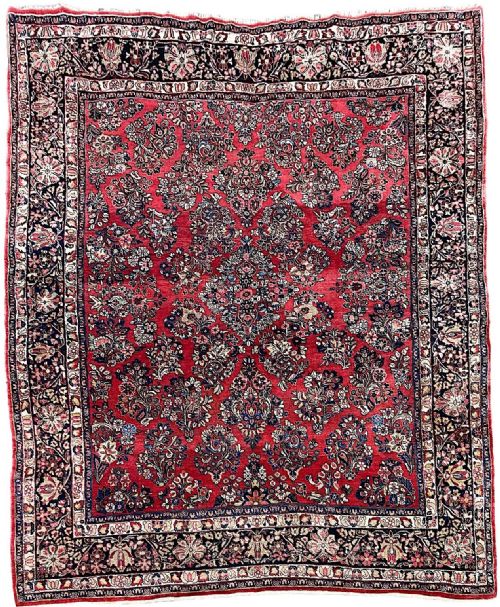


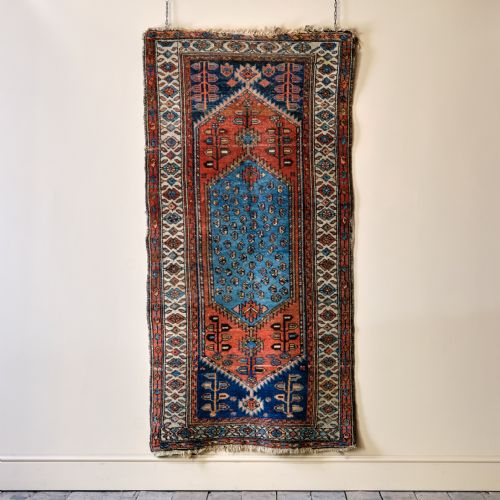


Medallion Pattern Floor Carpet
A medallion pattern floor carpet anchors a room with a central geometric or floral motif handed down through generations of weavers.
Medallion Pattern Floor Carpet
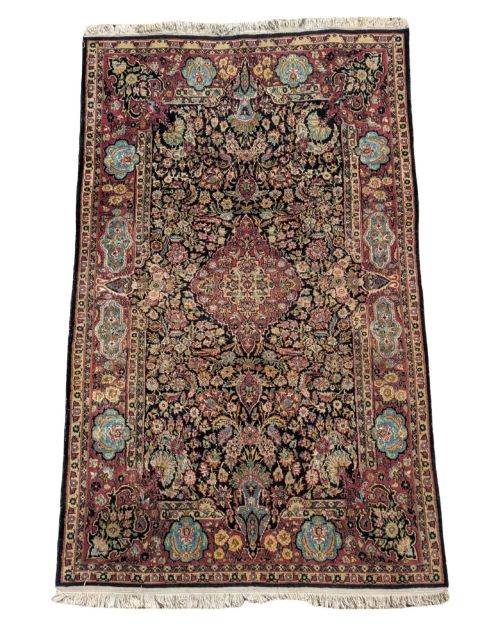
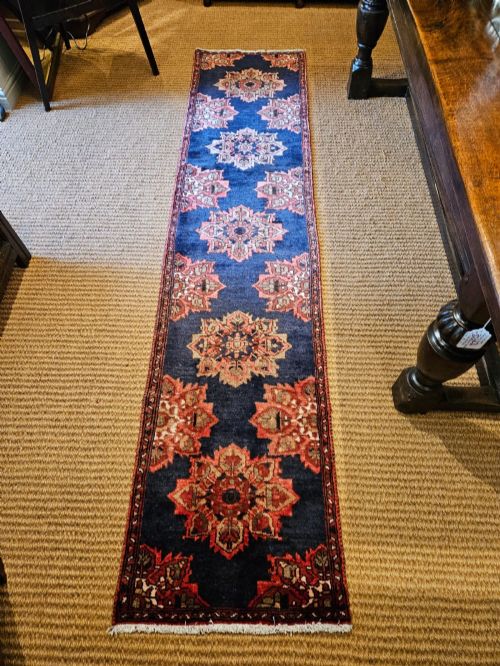
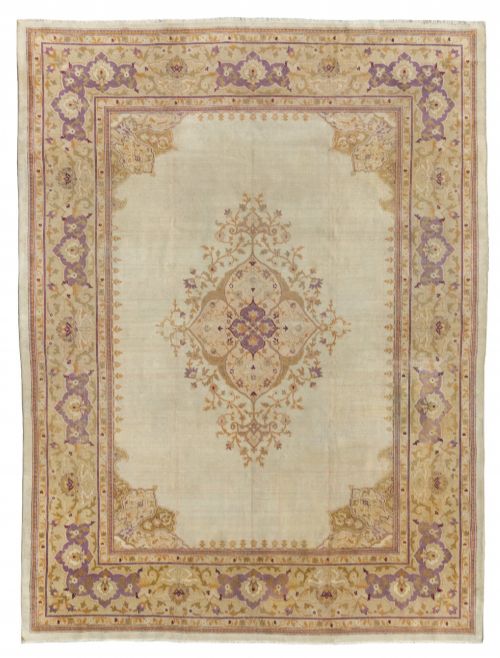
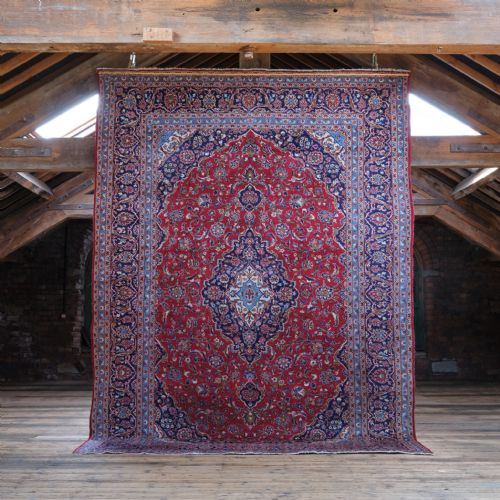
A medallion pattern floor carpet is a woven textile featuring a distinct central ornament, usually surrounded by elaborate borders and field designs. These pieces span from the late nineteenth century into the mid-twentieth century, originating primarily from Persian, Ottoman, Caucasian, and Indian weaving traditions. Buyers encounter everything from compact area rugs and runners to room-sized palace carpets.
The selections on this page demonstrate the enduring appeal of traditional village and city workshops. Common regional forms include Heriz, Kashan, Ushak, and Bidjar, each bringing distinct structural traits and central motifs to the floor. These textiles reflect the aesthetic preferences of their periods, ranging from the structured geometry of tribal runners to the curvilinear elegance of classical Persian workshops.
Materials and construction
The construction relies on traditional hand-knotting techniques executed on upright looms, employing sturdy foundations of cotton or wool. Weavers worked from memory or traditional cartoons, binding the pile yarn tightly to the warp and weft threads to ensure resilience under foot traffic. Finish work involved securing the edges and trimming the pile to an even height.
Materials consist predominantly of natural wool, occasionally paired with cotton foundations, alongside silk highlights or mercerised cotton in specific urban workshop pieces. Angora wool and art silk also appear in select early twentieth-century examples, contributing varied tactile qualities and surface sheens to the finished floor coverings.
Listings feature wool, cotton, silk, and art silk across pieces dated from the nineteenth century through the 1940s.
Assessing quality
Quality rests in the precision of the knotting and the integrity of the materials. Tighter knot counts allow for sharper delineation of the central medallion and intricate border details, whereas coarser weaves yield a more rustic, relaxed aesthetic. The handle of the rug - its suppleness and weight - reveals the quality of the wool and the tension of the weave.
The depth and harmony of the natural dye palette separate standard pieces from superior examples. Subtle tonal variations within the wool, often called abrash, demonstrate the use of traditional dye vats rather than uniform synthetic colours. Preserved border proportions and balanced symmetry across the field indicate the disciplined hand of an accomplished workshop or village weaver.
Tuduc Copy
The Medallion Pattern Floor Carpet Glossary
- Medallion
- The central ornamental motif dominating the field of the carpet, often circular, oval, or lobed in design.
- Warp
- The vertical threads stretched lengthwise on the loom that form the structural skeleton of the carpet.
- Weft
- The horizontal threads passed alternately over and under the warp threads to bind the knots in place.
- Pile
- The upright cut ends of the knotted yarn that form the usable surface texture of the carpet.
- Abrash
- Subtle colour variations within a field of a single hue, caused by different dye batches of wool.
Medallion Pattern Floor Carpet: Frequently Asked Questions
How do I place a runner?
Runners suit narrow spaces such as hallways, corridors, and galleys where foot traffic is frequent. Their linear format guides the eye along the floor while protecting underlying timber or tile.
Ensure the rug leaves a visible margin of exposed flooring on all sides to frame the space properly. Underlays help keep the runner secure on smooth surfaces.
How are these cleaned?
Routine maintenance involves gentle vacuuming without a rotating brush roll to protect the wool pile and fringe. Professional textile cleaners experienced in antique Persian and oriental weaves should handle deeper washing.
Avoid harsh chemical treatments or excessive moisture, which can destabilise natural dyes and cotton foundations. Promptly blot liquid spills rather than rubbing them into the fibres.
Are these suitable for daily use?
Traditional hand-knotted wool textiles are durable and built to withstand decades of regular domestic use. The natural lanolin in the wool helps resist dirt and wear.
Placing them in moderate-traffic areas allows the pile to age gracefully without premature thinning. Quality underlays reduce friction against hard floors.
How do I date a carpet?
Dating relies on stylistic markers, dye types, structural materials, and regional weaving characteristics recorded across the era. Pieces from the nineteenth century often display specific saturated vegetable dyes and looser tribal structures.
Early twentieth-century examples frequently incorporate refined city workshop patterns alongside transitional synthetic or mixed natural palettes. Comparing knot density and border motifs helps narrow the period of origin.