
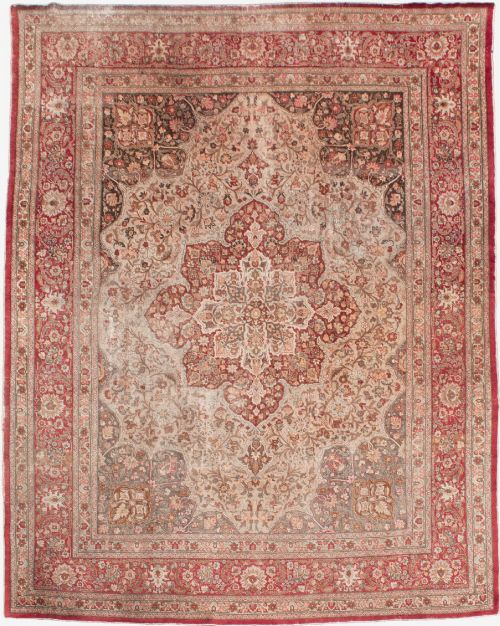


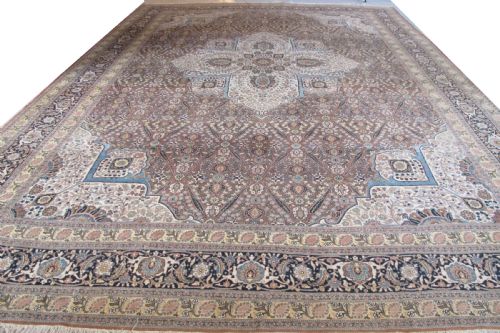


Oversized Persian Room Rug
An oversized persian room rug anchors a grand interior with intricate traditional motifs and generous proportions.
Oversized Persian Room Rug
When you search for an oversized persian room rug, you are looking at substantial carpets designed for large spaces such as country houses and principal reception rooms. These floor coverings span several decades and centuries, originating from renowned weaving centres across Persia. The pieces available here include grand examples from regions such as Mahal, Bidjar, Tabriz, Heriz, Kerman, and Kashan, each displaying distinct regional characteristics.
Most pieces date from the late nineteenth century into the early decades of the twentieth century, reflecting traditional craftsmanship before modern commercial production took over. You will encounter formats that exceed normal domestic scales, often measuring well over four metres in length. These heavy floor coverings were woven to withstand centuries of footfall while retaining their decorative presence in vast rooms.
Construction and materials
These carpets are constructed using durable wool foundations and pile, combined with sturdy cotton warps and wefts to maintain structural integrity across massive dimensions. The natural wool provides a resilient surface that softens in colour over time, while cotton adds crispness to the intricate geometric and floral details. Weavers tied dense knots by hand, building up heavy piles designed to insulate stone or timber floors.
Dyes derived from natural sources interact with the wool fibres to create subtle variations in tone across the expanse of the carpet. The weaving techniques vary slightly by region, with some workshops employing heavy double-wefting for extra rigidity, while others focus on finely spun knotting that yields a lower, tighter pile.
The selection includes prominent production hubs such as Tabriz, Bidjar, Mahal, and Heriz, alongside specific historic workshop attributions.
Distinguishing quality and character
The distinction between ordinary and exceptional examples lies in the precision of the drawing and the complexity of the design layout across a grand scale. Finer pieces maintain exact symmetry and sharp botanical or medallion details, whereas simpler village rugs show charming irregularities in line and proportion. The handling of the wool also dictates quality, with denser, lanolin-rich fleece offering superior resistance to wear.
The integrity of the original borders and the preservation of the expansive field define the upper tiers of these large formats. Carpets that retain their full original dimensions without heavy restoration command greater appreciation from collectors seeking untouched historic textile art.
Ziegler & Co·Haji Jalili
The Oversized Persian Room Rug Glossary
- Tabriz
- A major weaving centre in north-western Persia known for refined workshop carpets and sophisticated classical designs. These pieces often feature intricate central medallions and finely executed floral motifs.
- Bidjar
- A durable type of carpet traditionally woven by Kurdish tribes in western Persia, famous for heavy construction and dense wool piles. Often called the iron rug of Persia due to its rigid foundation.
- Heriz
- A style originating from the mountains of north-west Persia characterised by bold geometric patterns and large central medallions. These carpets are prized for their architectural layouts and robust rustic charm.
- Mahal
- A commercial trade term used for large-format carpets produced in and around the town of Sultanabad, featuring more relaxed all-over floral patterns. They offer softer visual weight compared to tighter city weaves.
- Kerman
- A southern Persian style renowned for fine knotting and detailed pictorial or floral compositions in expansive room sizes. These carpets frequently utilise lighter pastel palettes and graceful curves.
Oversized Persian Room Rug: Frequently Asked Questions
How do I clean a large carpet?
Professional specialist cleaning is essential for oversized carpets due to their immense weight and delicate natural dyes when wet. Regular gentle vacuuming without a beater bar prevents dust accumulation in the deep wool pile.
Avoid using domestic carpet shampoo machines or harsh chemical treatments, which can strip the natural lanolin from the wool fibres and bleed the traditional vegetable dyes.
Where should I place these large carpets?
These grand floor coverings suit principal drawing rooms, dining spaces, and open-plan hallways where their expansive dimensions can be fully appreciated. Ensure the room allows enough perimeter flooring to show off the outer borders.
Using a quality underlay designed for heavy carpets will prevent slipping and protect the historic cotton and wool foundation from uneven wear against hard subfloors.
How do I identify a Heriz carpet?
Heriz carpets are recognised by their striking geometric corner spandrels and bold, angular central medallions rather than curving floral vines. The palette often incorporates strong terracotta, rust, and indigo shades.
The cotton foundations are exceptionally stiff, and the overall design language reflects an architectural approach to traditional Persian motifs.
What is a Sultanabad carpet?
Sultanabad carpets represent nineteenth-century commercial production tailored for Western room-size preferences, featuring large-scale, open floral patterns. They provide a more relaxed aesthetic than rigid city rugs.
These pieces bridge the gap between rural village weaving and formal court designs, making them adaptable to both traditional and contemporary interiors.