
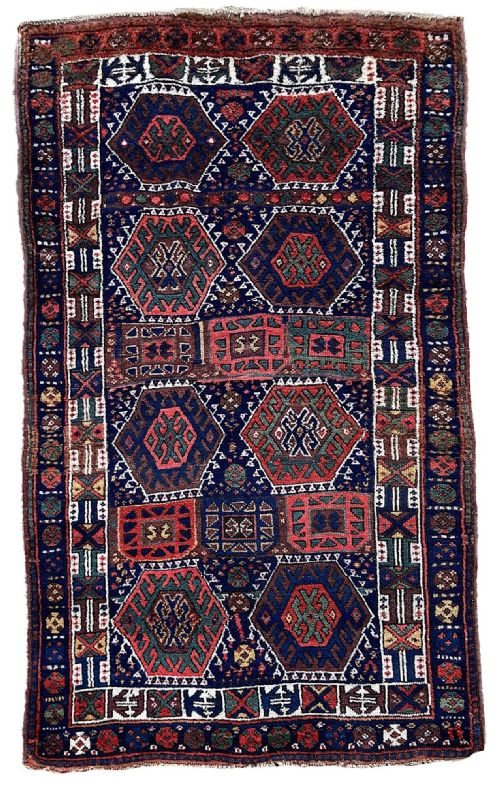

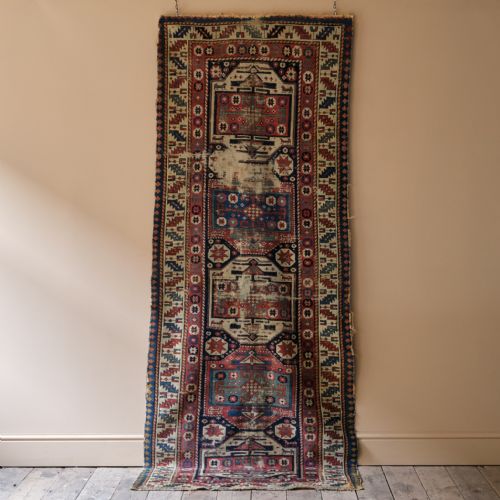


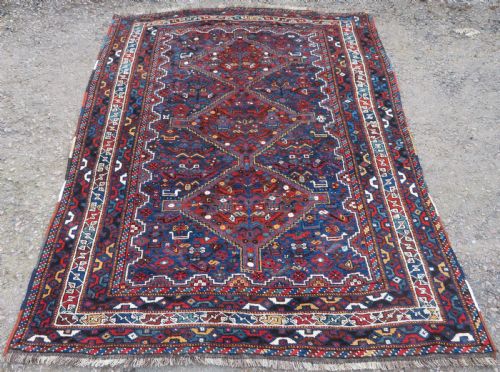


Indigo Blue Persian Rug
An indigo blue persian rug brings deep dye saturation and enduring knotwork into a room, offering both warmth underfoot and historic character.
Indigo Blue Persian Rug
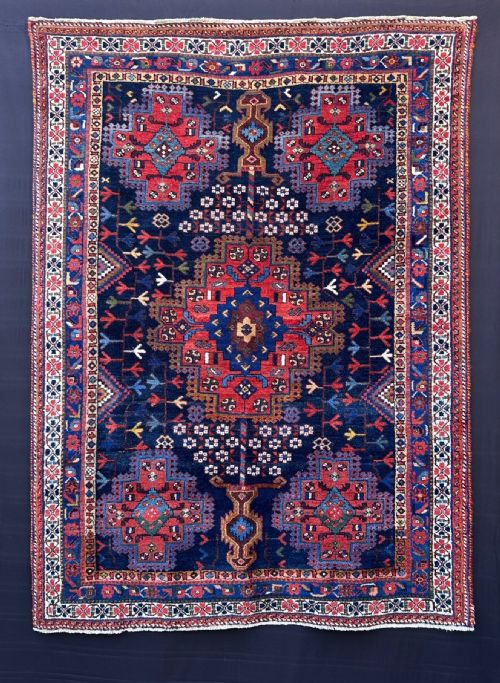
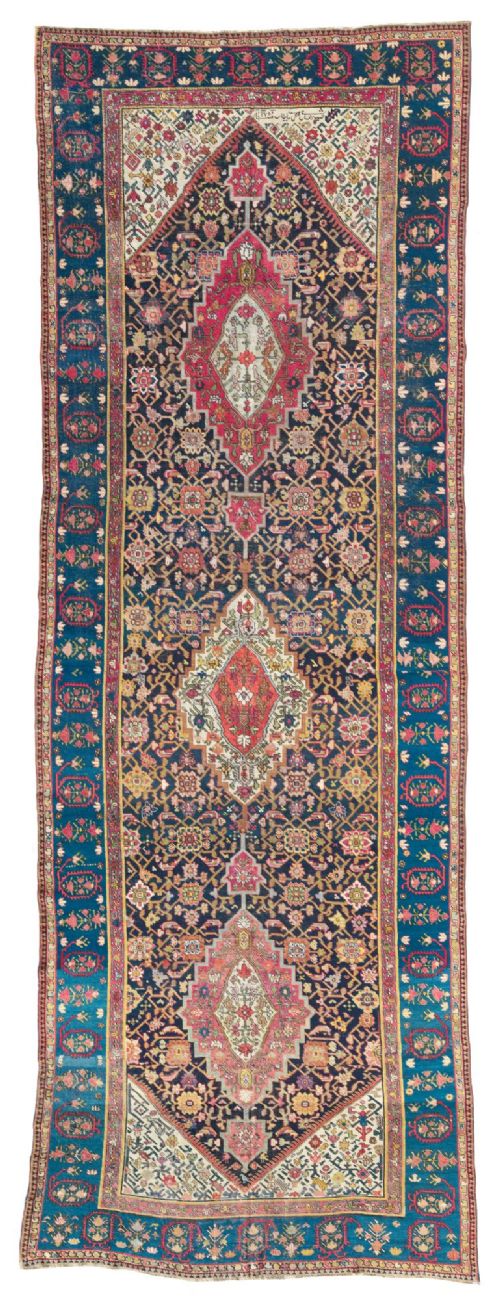
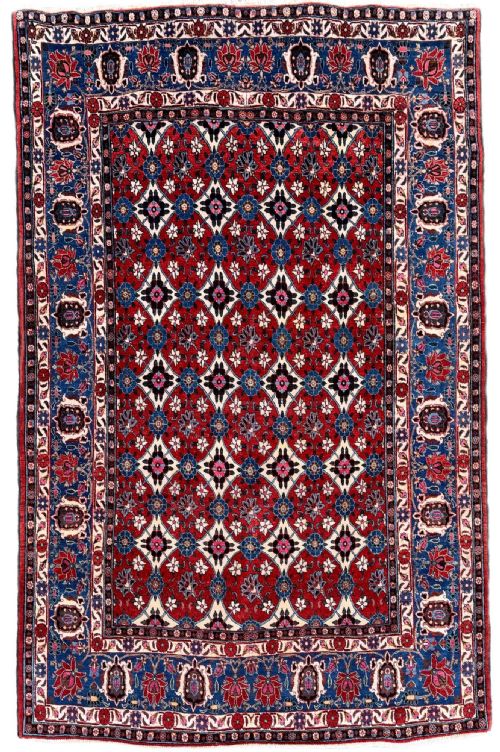
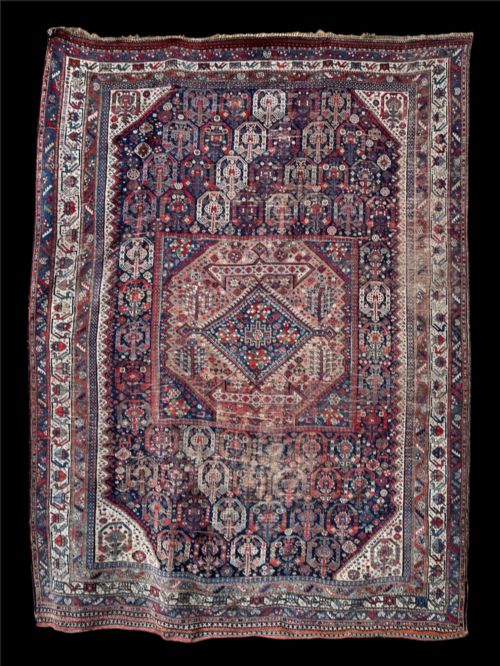
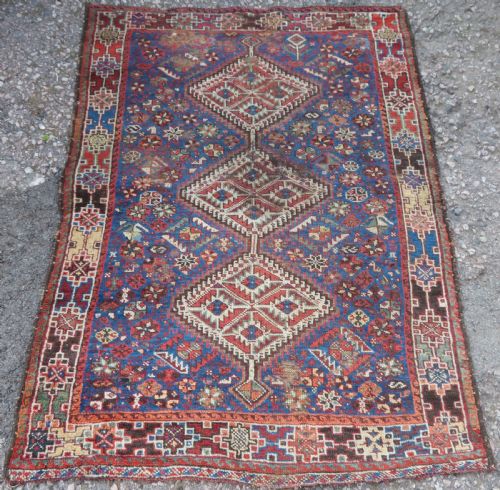
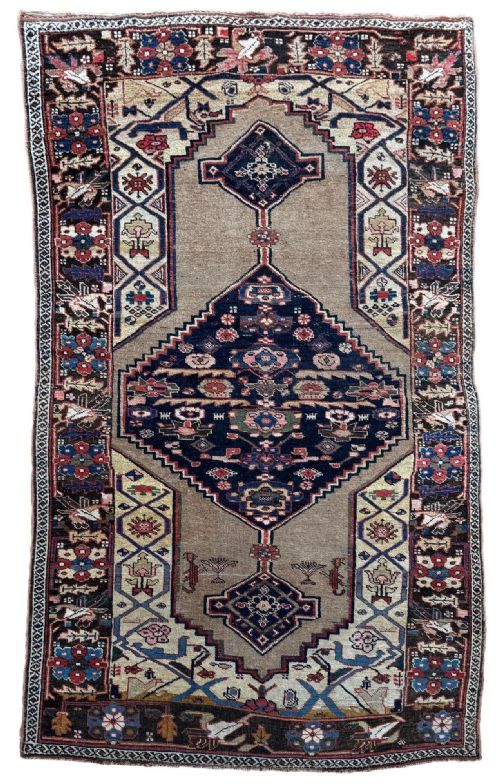
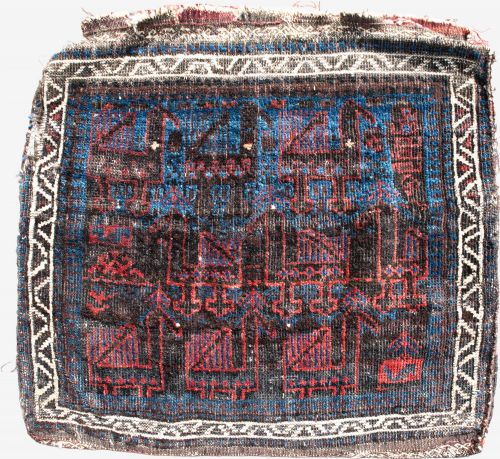
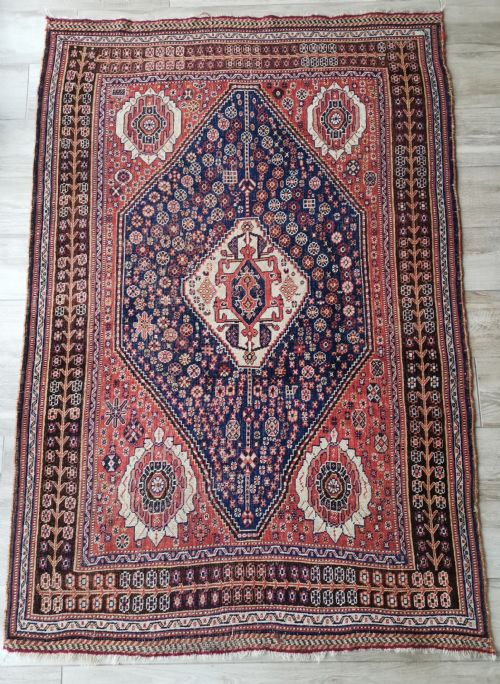
An indigo blue persian rug spans diverse regional workshops and nomadic traditions from the nineteenth and early twentieth centuries. These floor coverings utilise deep blue dye grounds derived from plant sources, forming the canvas for intricate floral or geometric motifs.
Buyers will encounter various formats on this page, ranging from room-sized carpets originating in Kerman or Ziegler workshops to smaller tribal rugs woven by Baluch or Hamadan makers. Each piece reflects the specific aesthetic of its origin, whether the structured elegance of city workshops or the freeform geometry of tribal weaving.
The materials visible across these listings consist entirely of wool and cotton, utilised for pile and foundation structures. These natural fibres provide the durability that allows nineteenth-century carpets to survive into modern interiors.
Construction and materials
Weavers constructed these carpets using natural wool pile knotted onto cotton foundations, ensuring structural resilience alongside soft underfoot comfort. The dyeing process relied on organic materials to achieve deep indigo blue tones that hold fast over generations of use.
Regional workshops and tribal groups employed hand-tied knots and sturdy edge finishes, reflecting traditional techniques passed down through generations. The combination of dense wool pile and stable cotton warp and weft threads allowed large carpets and smaller prayer rugs to maintain their integrity.
Indigo Blue Persian Rug Retail Price Guide 2026
Typical asking prices for indigo blue persian rug among the pieces listed under this phrase on Sellingantiques today, from the lower quarter to the upper quarter. They describe what is for sale here now, not the wider market.
Assessing quality in regional weaving
Quality reveals itself in the precision of the knot density and the crispness of the design execution across the indigo blue ground. Finer workshops achieved greater detail in floral sprays and medallion layouts, whereas tribal pieces favoured bolder, more rustic geometric interpretations.
The handling of the wool and the depth of the indigo dye saturation dictate the visual richness of the surface. Superior examples maintain an even pile and balanced proportions, showing clear artistry in the transition from border to field.
Bidjar·Malayer·Baluch Tribes·Khorassan Province·Ziegler·Kerman Laver·Hamadan
The Indigo Blue Persian Rug Glossary
- Pile
- The upright yarn loops that form the soft surface of the rug. This is knotted onto the foundation threads during the weaving process.
- Warp
- The vertical foundation threads that run the length of the rug from fringe to fringe. Weavers tie the pile knots directly onto these sturdy cotton or wool strands.
- Weft
- The horizontal threads passed alternately over and under the warp threads after each row of knots. This locks the pile firmly into place.
- Medallion
- A large central ornamental design motif placed in the middle of the field. It serves as the primary focal point of the composition.
- Knot density
- The number of knots per unit of area on the reverse of the rug. Higher counts generally indicate finer detail and greater workshop labour.
Indigo Blue Persian Rug: Frequently Asked Questions
How do I clean an old wool rug?
Professional specialist cleaning is essential for nineteenth-century and early twentieth-century textiles. Household cleaning products and excessive water will damage natural wool pile and alter the indigo dye.
Gentle surface vacuuming without a beater bar helps remove everyday dust. Keep these rugs out of direct sunlight to protect the rich blue tones from fading over time.
Where were these carpets woven?
Production spans specific regions and provinces across Persia, including Khorassan, Hamadan, and Kerman. City workshops produced large, finely detailed carpets for export, while nomadic groups created smaller tribal rugs.
Each region utilised distinct local motifs, colour combinations, and knotting techniques. This regional variety gives every rug its specific character.
Are these rugs suitable for high traffic?
Durable wool pile and sturdy cotton foundations make traditional Persian rugs resilient enough for everyday living. Regular placement in moderately busy hallways or living rooms allows the wool to withstand normal foot traffic.
Using a quality underlay prevents slipping and cushions the fibres against hard floors. This simple addition extends the working life of the textile.
What does the date in a listing mean?
Dates such as eighteen-eighty or nineteen-hundred indicate the estimated period of manufacture based on style, materials, and structural evidence. These attributions place the textile within a specific era of Persian weaving history.
Exact day-to-day creation dates are rarely recorded for antique carpets. Instead, dealers rely on comparative analysis of regional designs to establish the decade or century.