
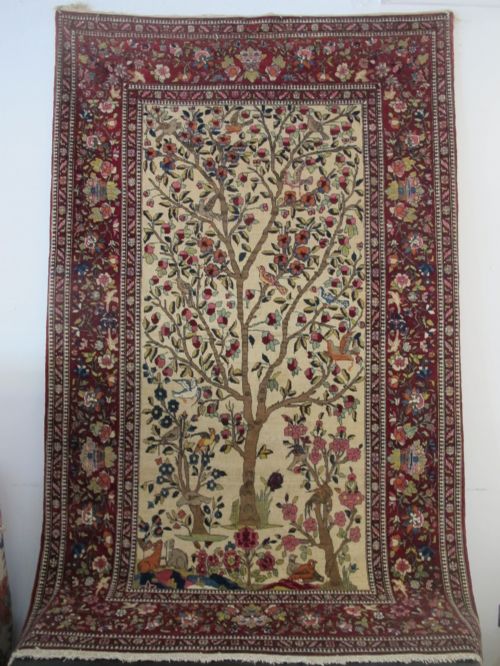


Isfahan Wool Rug
An isfahan wool rug brings the refined knotting and classical central medallion designs of central Persia directly to a room.
Isfahan Wool Rug
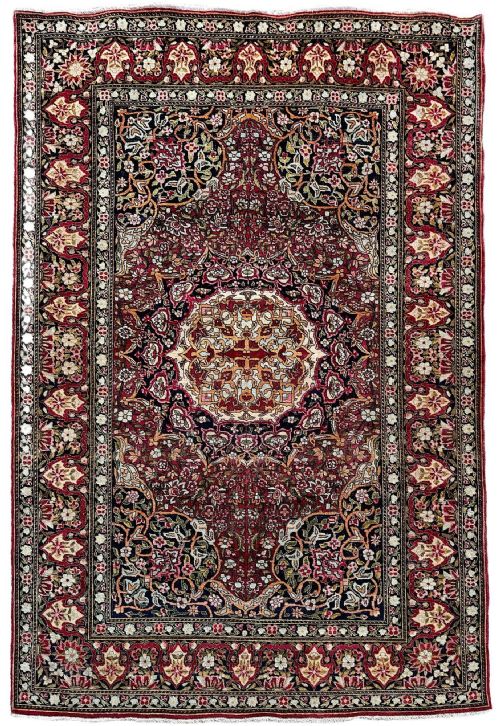
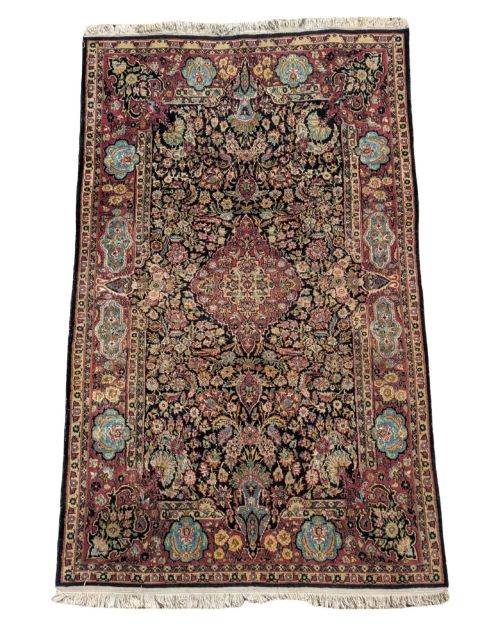
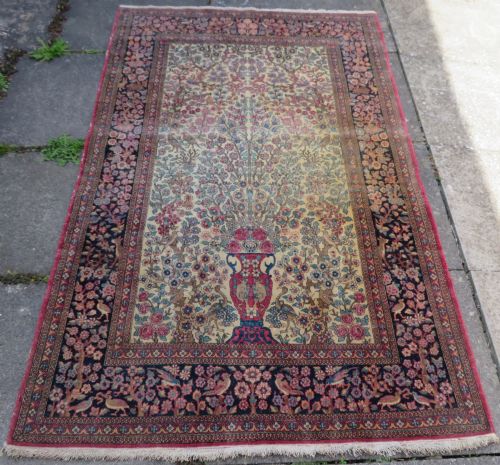
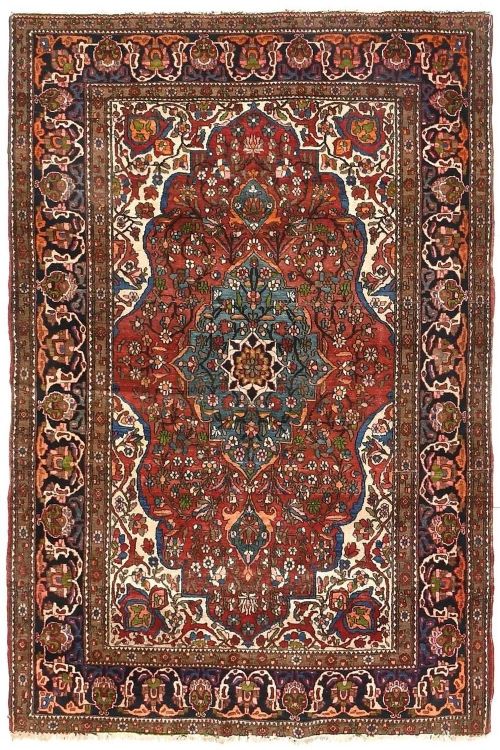
An isfahan wool rug is a woven floor covering originating from central Persia, designed with traditional motifs such as small central medallions or elaborate tree of life patterns. Buyers searching for an isfahan wool rug generally encounter pieces originating from the late nineteenth century through to the early decades of the twentieth century.
The format typically spans smaller area rugs suitable for intimate spaces up to larger carpets designed for principal rooms. These pieces reflect Persian craftsmanship from periods designated as Safavid style, Qajar, or traditional Persian traditions.
Most examples found in trade present established classical layouts that utilise rich colour palettes and intricate floral compositions. The geographic attribution centres on Isfahan in central Persia, known historically for producing finely knotted floor textiles.
Materials and Construction
The construction relies primarily upon a wool pile knotted onto foundations of cotton or silk, occasionally incorporating lambswool for a softer texture. Certain finer pieces utilise silk highlights or foundation threads to delineate intricate patterns within the field.
Weavers employed dense knotting techniques to achieve the very fine weave seen in examples from central Persia. The integration of wool and cotton provides both durability for domestic use and the flexibility required for detailed pictorial and geometric designs.
Isfahan Wool Rug Retail Price Guide 2026
Typical asking prices for isfahan wool rug among the pieces listed under this phrase on Sellingantiques today, from the lower quarter to the upper quarter. They describe what is for sale here now, not the wider market.
Listings span production dates from eighteen ninety to nineteen thirty, incorporating materials such as lambswool, cotton, and silk foundations.
Assessing Quality
Quality rests upon the density of the weave and the precision with which the central medallion or pictorial elements are rendered. Pieces featuring extremely fine knotting and silk highlights demonstrate a higher tier of workshop production.
The choice of materials also dictates grading, with supple lambswool piles and robust silk foundations marking out superior output. Preservation of the pile and structural integrity through the edges and corners further separates standard room-size rugs from exceptional collector carpets.
Ahmadi
The Isfahan Wool Rug Glossary
- Medallion
- A symmetrical ornamental motif placed at the centre of the rug field. It serves as the primary focal point in classical Persian design.
- Pile
- The vertical or slanted yarn that forms the textured surface of the rug. It is typically knotted by hand onto the foundation threads.
- Foundation
- The underlying structure of warp and weft threads that supports the knotted pile. It is commonly constructed from cotton or silk.
- Tree of Life
- A traditional pictorial motif depicting branches, leaves, and animals rising from a single base. This design symbolises eternal life and paradise in Persian art.
- Warp
- The stationary longitudinal threads stretched on the loom before knotting begins. The fringe of a finished rug is formed by the cut ends of these threads.
Isfahan Wool Rug: Frequently Asked Questions
How do I clean an isfahan wool rug?
Maintenance requires gentle vacuuming without a rotating brush head to protect the delicate wool pile and foundation.
Professional specialist cleaning is recommended for any deep washing to preserve the natural dyes and silk highlights.
Are these rugs suitable for heavy traffic?
Traditional pieces with dense wool piles withstand normal domestic footfall in living spaces or reception rooms quite well.
Finer examples incorporating delicate silk foundations require more careful placement in areas with lighter usage.
How can I date an old rug?
Dating relies on examining the specific stylistic traits, colour palettes, and structural materials recorded across pieces from periods such as the late nineteenth and early twentieth centuries.
Analysing the fineness of the weave and regional design influences also helps narrow down the production era.