
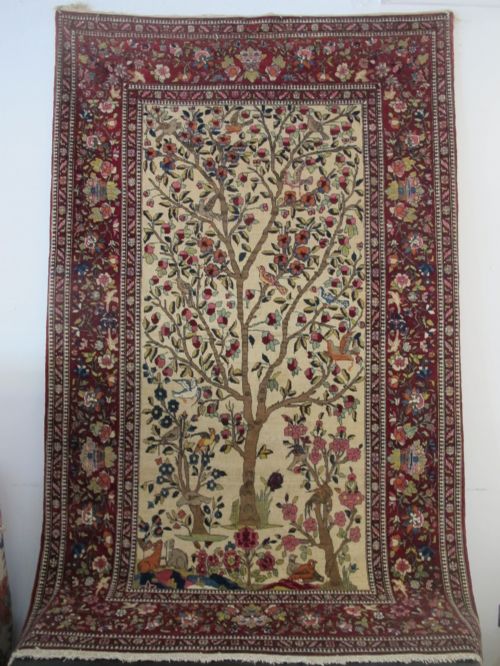


Vintage Isfahan Rug
A vintage isfahan rug brings the refined knotting and traditional medallion patterns of central Persia into a room.
Vintage Isfahan Rug
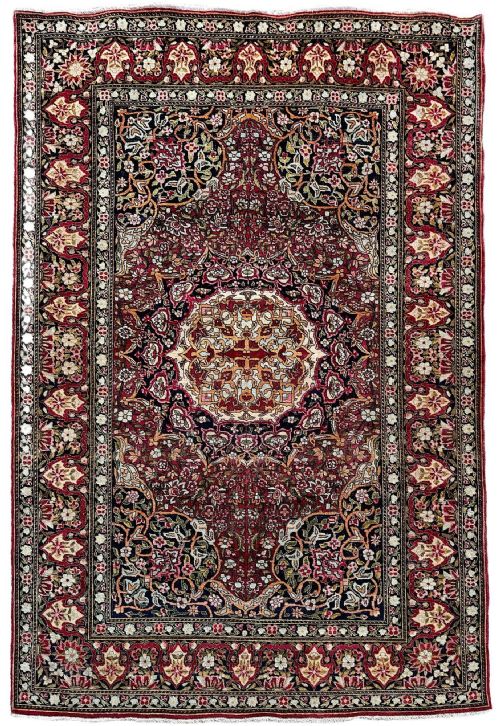
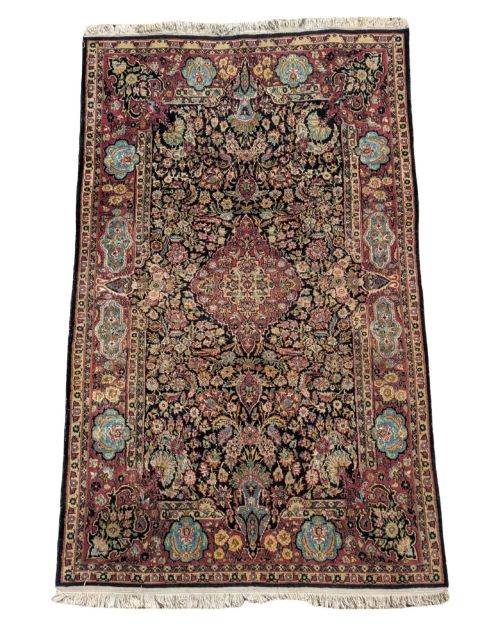
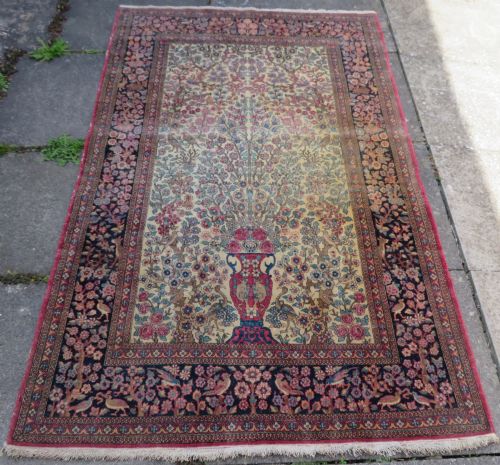
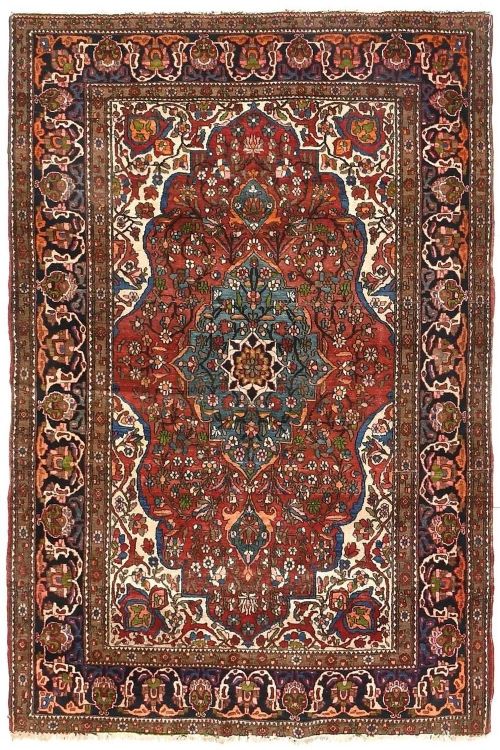
A vintage isfahan rug represents the weaving traditions of central Persia, produced during the late nineteenth and early twentieth centuries. These floor coverings range from smaller area formats to larger carpets featuring classic central medallions and intricate floral motifs.
Most examples encountered here date from the decades between eighteen ninety and nineteen thirty. Buyers will find both room-sized carpets and smaller rugs, often displaying traditional Persian design elements influenced by Safavid and Qajar aesthetics.
Materials and construction
The construction of these pieces relies on wool, lambswool, and cotton, occasionally incorporating silk highlights or silk foundations to add definition to the pile. Weavers utilised fine knotting techniques on sturdy foundations to achieve detailed pictorial and floral compositions.
The combination of a cotton or silk foundation with a soft wool pile allows the intricate curves of the central medallion and tree of life designs to remain crisp and well-defined.
Listings feature pieces dated between eighteen ninety and nineteen thirty, utilising wool, cotton, silk, and lambswool.
Judging quality
Quality in these carpets rests upon the density of the weave and the precision of the design execution. Pieces with silk highlights or silk foundations generally represent a higher tier of technical skill in the workshop.
The clarity of the central medallion and the integrity of the pile dictate the standing of an individual piece. Finer weaves allow for complex pictorial elements and sharper floral details to endure across the decades.
Ahmadi
The Vintage Isfahan Rug Glossary
- Medallion
- A central ornamental motif placed in the middle of the field. This design element forms the focal point of many traditional Persian carpets.
- Foundation
- The underlying structure of warp and weft threads that supports the knotted pile. Cotton and silk are common materials used for this purpose.
- Pile
- The vertical or diagonal loops of yarn that form the usable surface of the rug. Wool, lambswool, and silk are typical materials for this upper layer.
- Tree of Life
- A symbolic motif depicting a branching tree, often associated with growth and paradise. This design appears frequently in central Persian weaving.
Vintage Isfahan Rug: Frequently Asked Questions
How do I date an isfahan rug?
Dating relies on stylistic clues, dye analysis, and structural characteristics recorded in the weaving. Pieces from the late nineteenth and early twentieth centuries show distinct approaches to the classic medallion format.
Examining the foundation materials and the crispness of the wool pile helps place a rug within the eighteen ninety to nineteen thirty timeframe.
Are these rugs suitable for high-traffic areas?
The durability depends on the density of the wool pile and the sturdiness of the cotton foundation. Many traditional Persian carpets withstand everyday use in sitting rooms and studies.
Placing an appropriate underlay beneath the carpet protects the structure from excessive wear over time.
What is a silk foundation?
A silk foundation consists of silk warp and weft threads rather than the more common cotton base. This material choice provides exceptional structural strength for very fine knotting.
It allows the weaver to pack the wool pile tighter, resulting in sharper pattern definition on the surface.
How should I clean a vintage rug?
Professional cleaning tailored to antique wool and silk textiles is essential for maintaining the integrity of the pile. Regular gentle vacuuming without a rotating brush removes surface dust safely.
Avoiding harsh chemical treatments preserves the natural lanolin in the lambswool and protects the original dyes.