




Traditional Wooden Nesting Tables
Traditional wooden nesting tables solve space problems by stacking neatly until you need them.
Traditional Wooden Nesting Tables
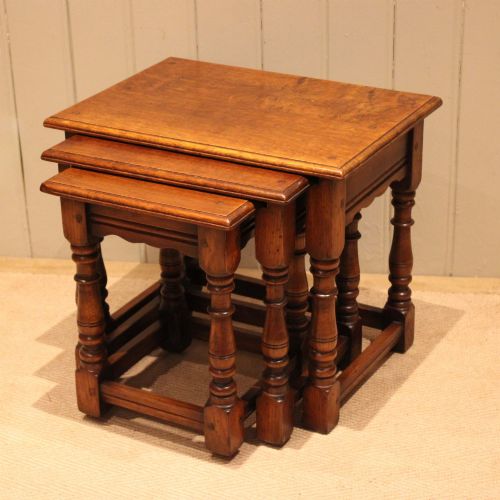
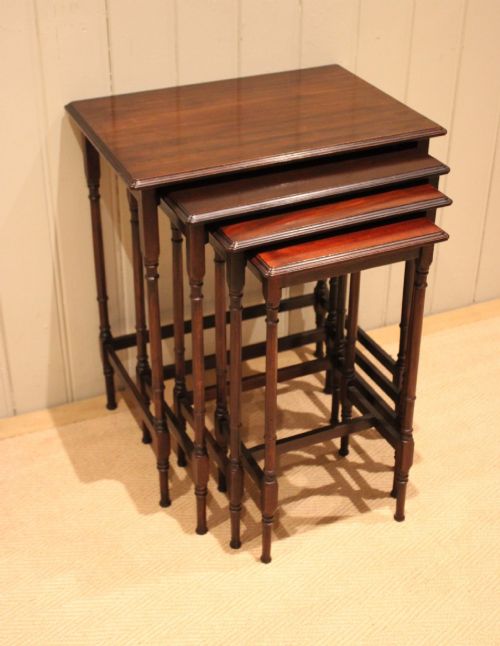
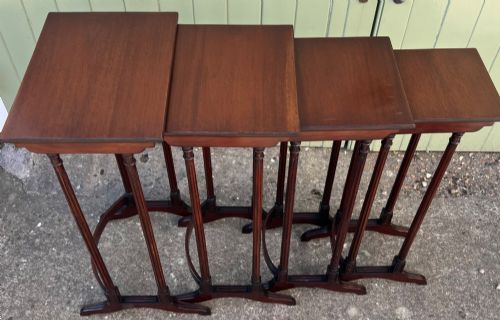
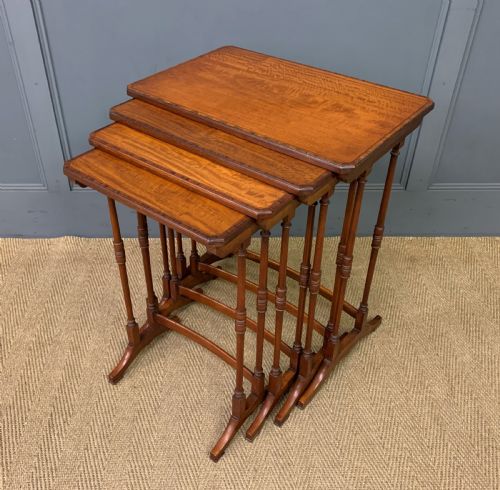
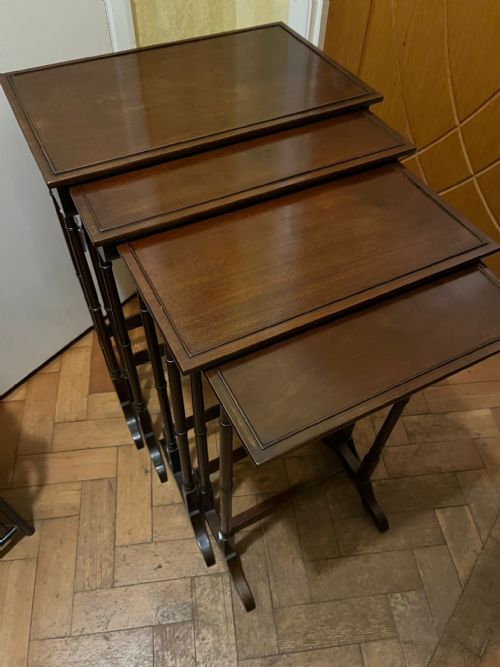
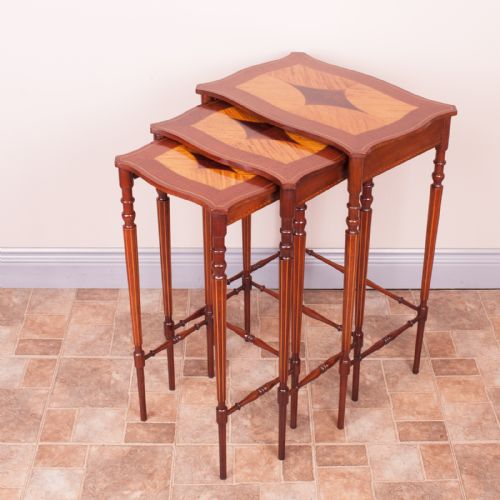
Traditional wooden nesting tables comprise sets of graduating occasional tables designed to fit one beneath another when not in use. The selections on this page span several decades and styles, with sets typically containing either three or four individual tables. Buyers most frequently encounter mahogany examples dating from the Victorian, Edwardian and early twentieth-century periods.
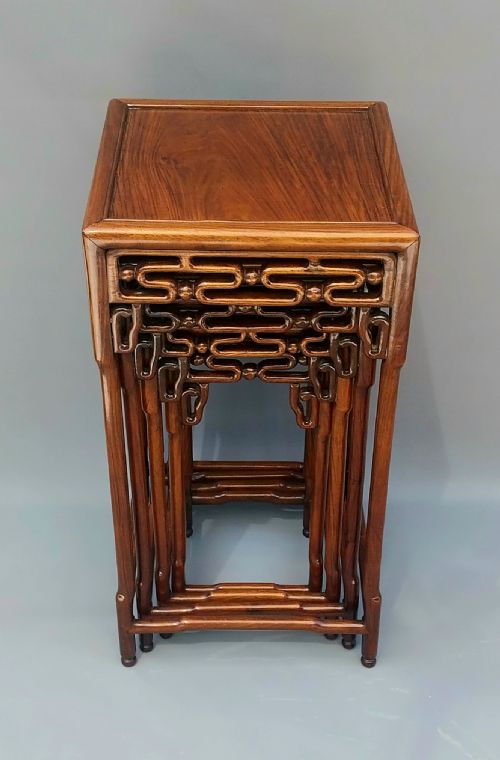
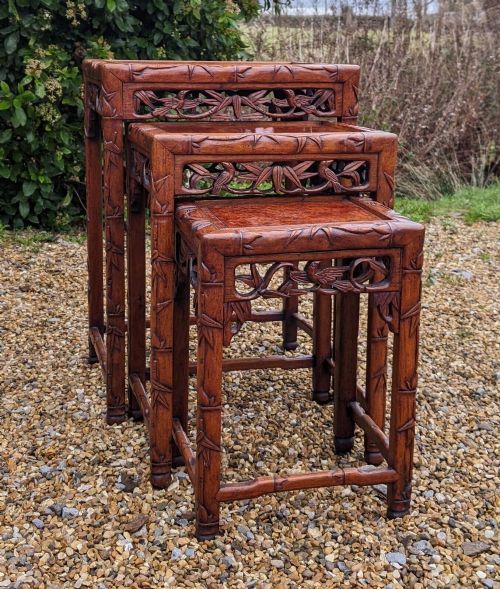
The forms range from simple rectangular English country tables to elaborate Chinese export sets in rosewood and hardwood. Alongside standard rectangular tops, the listings include round and oval shapes, as well as specialised quartetto sets and tall barley twist designs. These pieces serve primarily as occasional surfaces for drinks or books while maintaining a minimal footprint in smaller rooms.
How they were made
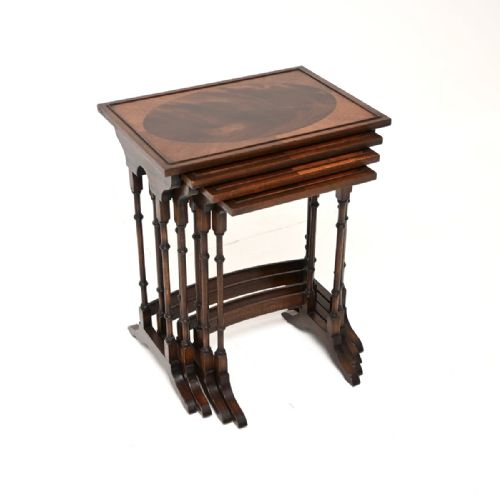
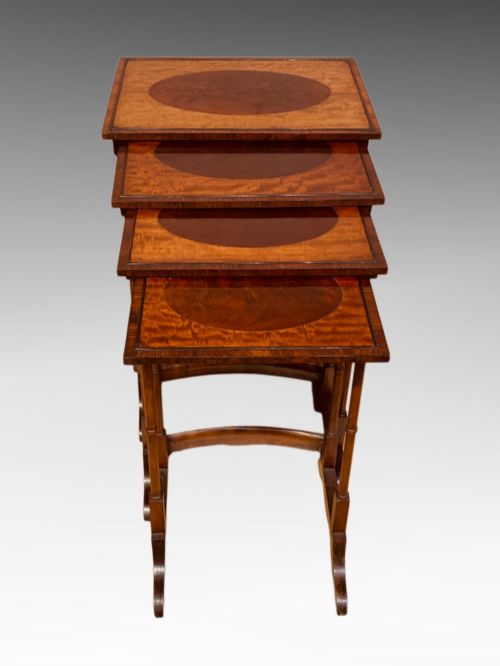
Cabinetmakers constructed these tables using a variety of native and exotic timbers, relying heavily on mahogany, oak and walnut. Many examples incorporate contrasting veneers such as satinwood or burr walnut, alongside detailed parquetry and string inlay. Hardwoods like huanghuali and hongmu appear in Chinese export pieces, demonstrating dense grain and rich natural colour.
Joinery techniques varied according to the period and regional workshop traditions, ranging from straightforward structural framing to intricate Chinese joinery. Table tops occasionally feature shaped edges, while supports include slender turned legs, column frames and barley twists. Finishing involved polishing the timber to highlight the natural figure and grain of the wood.
Some nineteenth-century makers built sets of four so tightly calibrated that sliding the smallest table home caused a gentle puff of displaced air.
What varies in quality
Quality in these tables depends largely on the choice of timber and the precision of the cabinetwork. Sets featuring highly figured mahogany, dense rosewood or crisp inlay sit at the upper end of the range. The grain pattern and depth of colour in the wood distinguish superior examples from plain utility pieces.
Construction rigidity when the tables are assembled and the smoothness of the sliding action as they stack determine the daily utility of a set. Finer examples maintain tight tolerances so each smaller table fits squarely beneath the next without binding or excessive clearance.
The Traditional Wooden Nesting Tables Glossary
- Quartetto
- A matched set of four nesting tables. This term appears frequently in nineteenth and early twentieth-century descriptions of occasional table sets.
- Hongmu
- A traditional Chinese term for dense hardwoods, often translated as red wood. It denotes heavy, durable timber used in fine Asian furniture making.
- Parquetry
- Geometric mosaic woodwork used for decorative surface patterns. It appears on table tops to create contrasting wooden tile effects.
- Barley twist
- A turned wooden furniture leg resembling the spiral shape of barley sugar. This decorative turning style is common on early twentieth-century oak sets.
Traditional Wooden Nesting Tables: Frequently Asked Questions
How do I date a nest of tables?
Dating relies on timber selection, construction methods, and stylistic cues present in the legs and top edges. Earlier nineteenth-century examples often display solid mahogany construction and hand-cut joints, whereas Edwardian and later sets frequently utilise veneers and machine production.
Looking at the wear patterns and secondary woods on the underside also helps confirm the period. Comparing the style against known decorative periods like the Victorian era or Jacobean Revival narrows down the decade of manufacture.
What is a quartetto table set?
A quartetto set consists of four graduating tables designed to slide neatly into one another. The term derives from musical terminology and became popular for matching sets of four occasional tables during the nineteenth and early twentieth centuries.
These sets offer maximum surface area flexibility while occupying the floor space of just one small table. They were commonly placed beside seating areas for serving tea or holding reading material.
Are Chinese export nesting tables different?
Chinese export nesting tables often feature dense Asian hardwoods like rosewood, hongmu or huanghuali rather than European timbers like mahogany or oak. Their construction relies on traditional joinery techniques and distinct regional carving styles.
These pieces frequently display exceptional wood grain and rich natural colour without relying on applied surface veneers. They were built for both domestic use and export to Western markets during the nineteenth century.
How do I care for antique wooden tables?
Maintenance involves keeping wooden nesting tables away from direct heat sources and strong sunlight to prevent the timber and veneers from drying out or splitting. Dusting regularly with a soft, dry cloth preserves the polished finish.
Occasional application of appropriate wax polish maintains the moisture and lustre of the wood without building up heavy residues. Care should also be taken to lift rather than drag the smaller tables when separating them.