

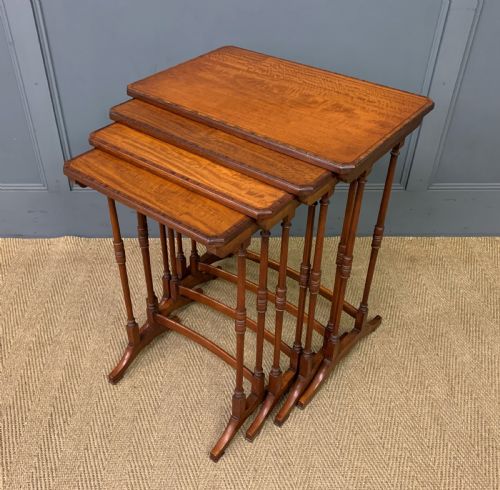

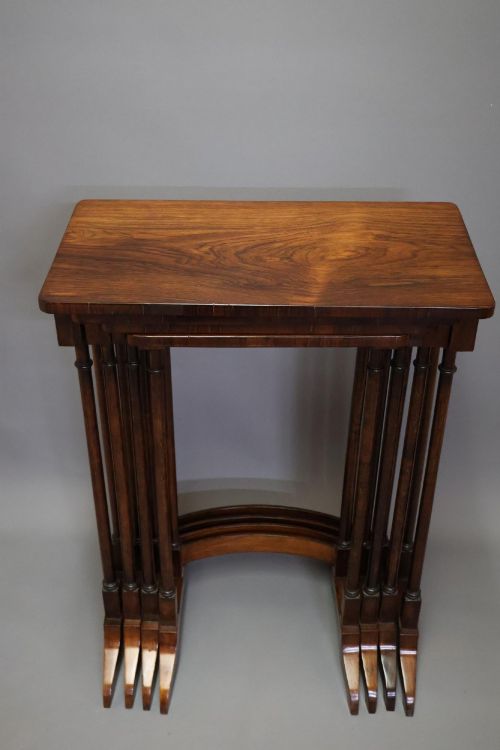


Georgian Quartetto Tables
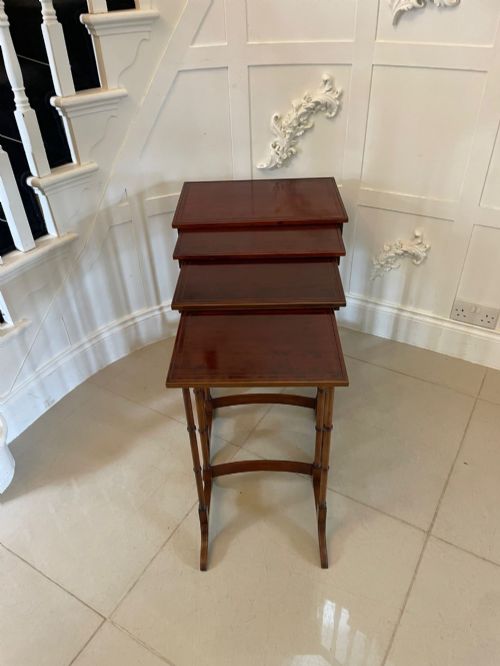
Georgian quartetto tables are clever nesting sets of four graduated tables designed to slide neatly beneath one another when floor space matters.
Georgian Quartetto Tables
Georgian quartetto tables form a graduated set of four freestanding tables designed to stack together in a compact single footprint. When you search for georgian quartetto tables, you encounter sets spanning the eighteenth century through later revival periods up to the nineteen-thirties.
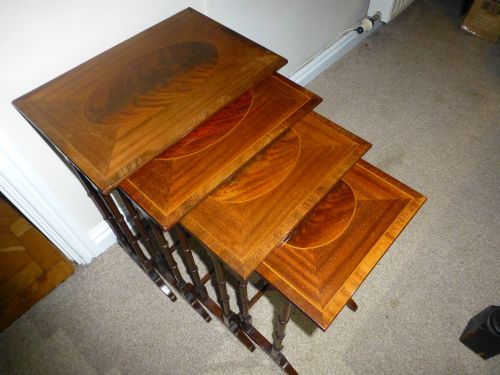
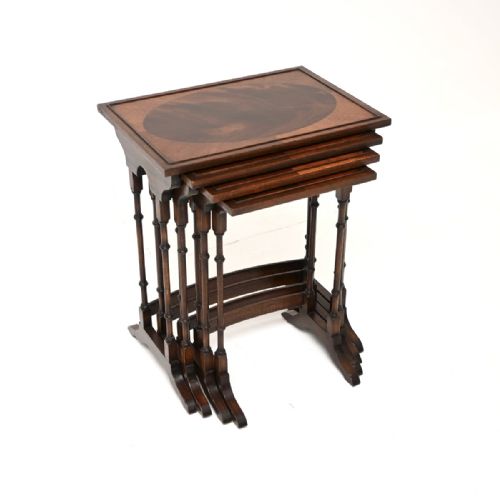
The form relies on slender turned or column supports and rectangular tops sized so each smaller table slides effortlessly beneath the one above it. Mahogany and rosewood examples dominate the selection, often finished with delicate boxwood inlay or satinwood crossbanding.
Materials and construction
Cabinetmakers utilised dense figured timbers such as mahogany and rosewood, applying fine veneers over stable secondary woods to achieve smooth top surfaces. Boxwood stringing and contrasting satinwood inlays define the decorative borders on many surviving examples.
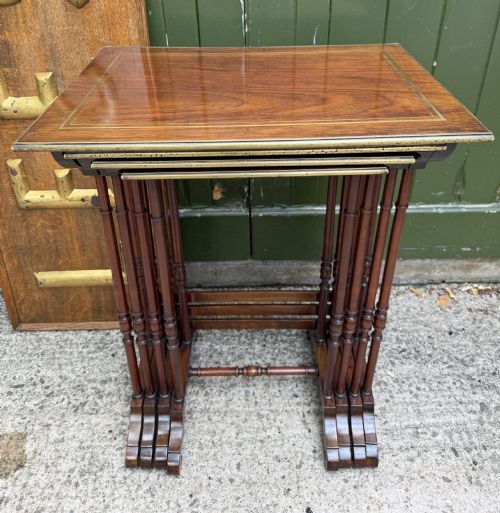
Individual frames depend on precise joinery to ensure the legs maintain structural rigidity while retaining the narrow clearances required for smooth stacking. Brass inlay occasionally appears on Regency period variants, adding metallic contrast to dark polished grain.
Georgian Quartetto Tables Retail Price Guide 2026
Typical asking prices for georgian quartetto tables among the pieces listed under this phrase on Sellingantiques today, from the lower quarter to the upper quarter. They describe what is for sale here now, not the wider market.
Listed examples span the Regency period through Victorian production up to nineteen-thirties revivals.
Assessing quality and craftsmanship
Quality rests primarily on the crispness of the timber selection and the integrity of the sliding mechanism that allows the four pieces to nest without binding. Superior sets maintain matching grain patterns across the stacked surfaces and feature hand-turned columns with sharp detailing.
Lighter secondary woods and heavier, clumsy framing indicate lesser workshops or later revival pieces built without the refined proportions of earlier periods. Original patination and minimal timber replacement elevate the standing of any surviving nest.
Gillows
The Georgian Quartetto Tables Glossary
- Quartetto
- A nested set of four tables designed to stack together. The term derives from musical quartets and gained popularity during the Regency period.
- Satinwood
- A pale, dense exotic timber native to India and the Caribbean. It provides a bright, contrasting surface for stringing and panel inlays.
- Stringing
- A thin inlay of contrasting wood used to create geometric borders around table edges. Boxwood is frequently utilised for this purpose.
- Crossbanding
- A narrow strip of veneer laid across the grain direction around the perimeter of a table top. This technique frames the primary timber.
- Regency
- A British design period spanning the early nineteenth century. Furniture from this era often incorporates classical revival motifs and exotic woods.
Georgian Quartetto Tables: Frequently Asked Questions
What is a quartetto table?
A quartetto table is one member of a nested set of four tables that scale down in size to fit completely beneath the largest piece. The arrangement provides flexible surface space for tea or writing without permanently occupying a room.
Craftsmen engineered the dimensions so the smallest table sits snugly at the centre of the stack. This clever nesting design originated in the Georgian era and remained popular through the Edwardian period.
How were these tables used?
Owners deployed the individual tables around a drawing room when guests required separate surfaces for cups, books or needlework. They returned to a single stacked footprint against a wall when the room needed to remain clear.
The graduated heights allowed servants to distribute the lightweight pieces quickly across a gathering. Each guest could pull their own table closer to a chair or sofa.
Are all listed tables from the Georgian period?
Surviving examples span genuine Georgian production alongside Regency adaptations and later revival pieces made through the Edwardian era and into the nineteen-thirties. Cabinetmakers continued reproducing the popular nest format long after the original reigns ended.
Construction details and secondary timbers help distinguish eighteenth-century originals from later nineteenth-century interpretations and twentieth-century reproductions.
How do I care for rosewood and mahogany?
Polished timber surfaces require protection from direct sunlight and consistent indoor humidity to prevent veneer lifting or wood splitting. Regular dusting with a soft, dry cloth maintains the natural lustre without building up heavy wax layers.
Avoid placing damp items directly onto the polished tops since moisture can cloud the historic finish. Gentle maintenance preserves the depth of the grain over decades of daily use.