

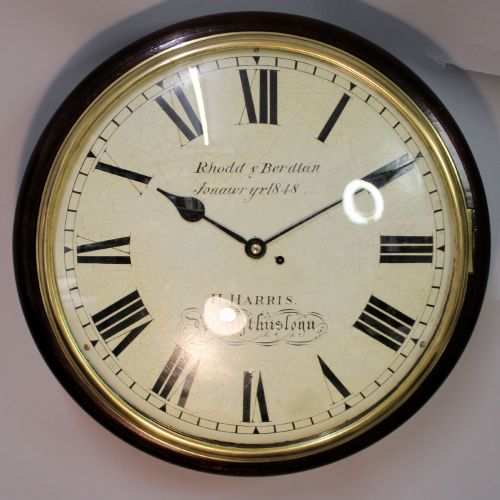
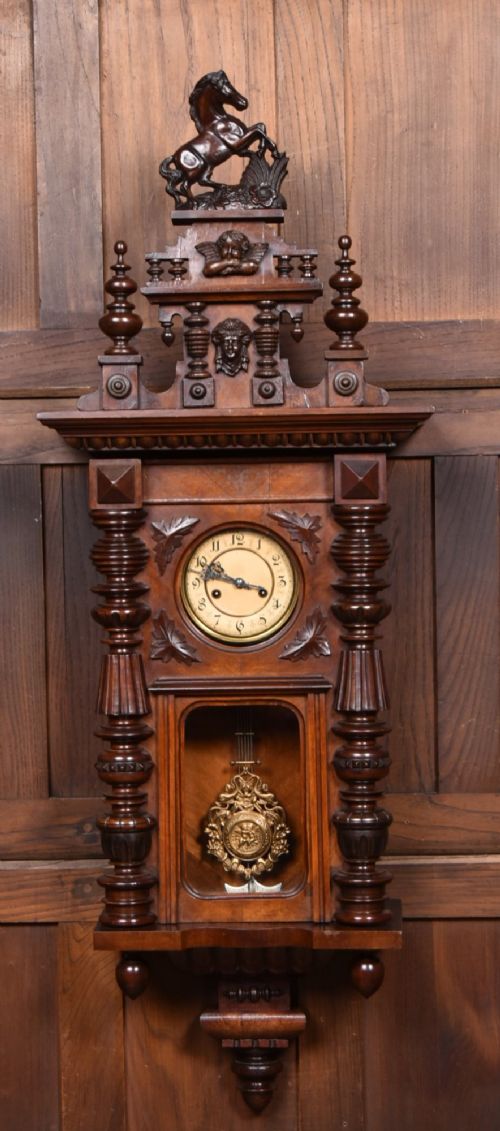
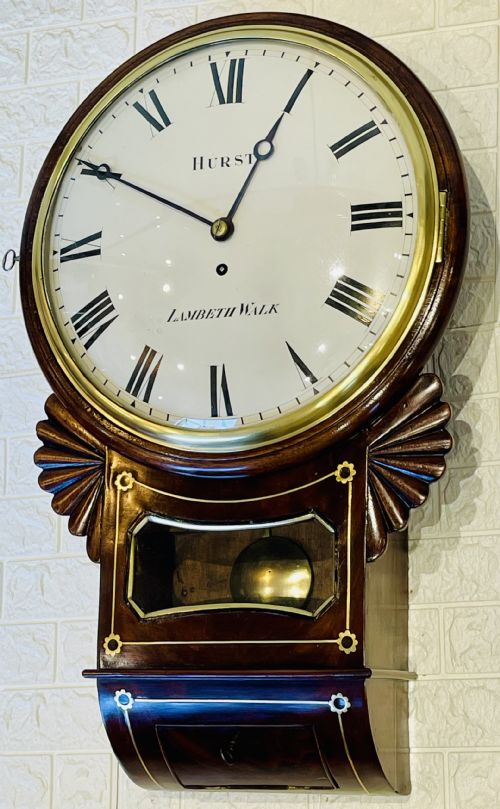
Traditional Wall Clock
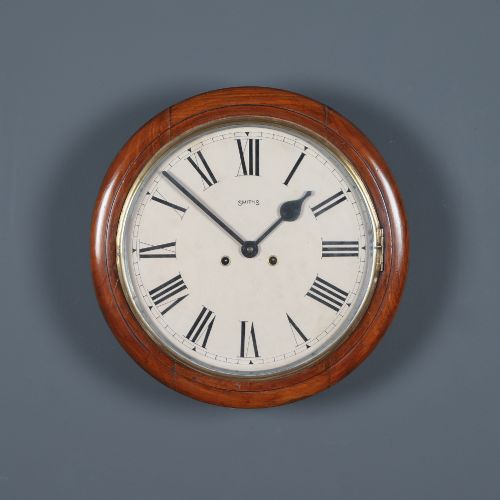
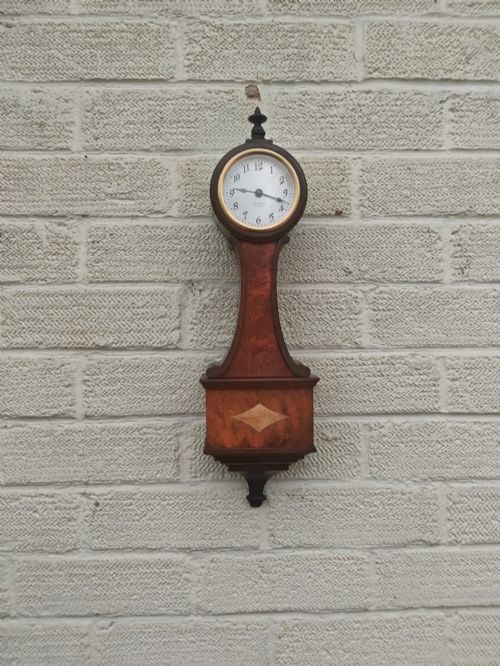
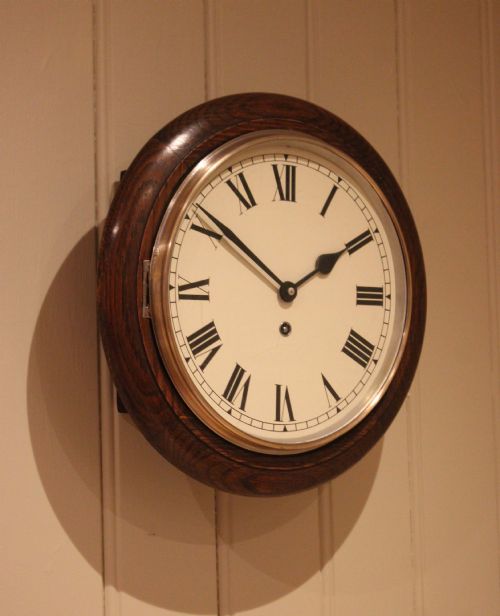
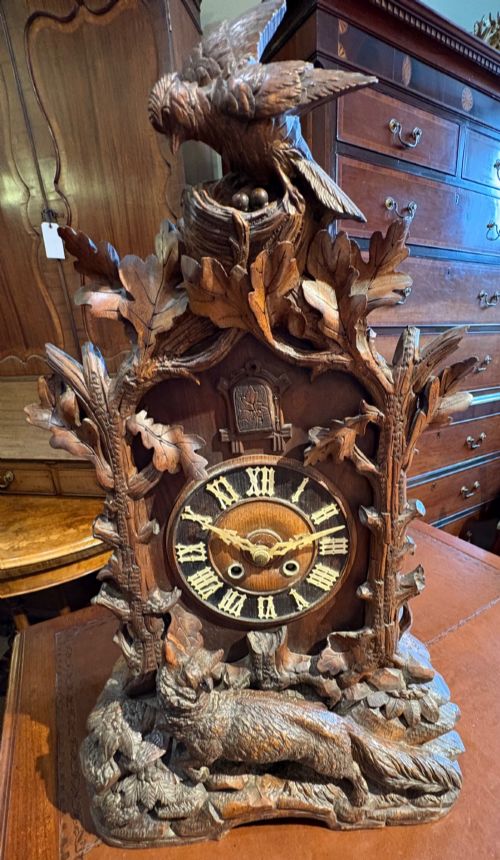
These traditional wall clock pieces range from railway station dials to carved Black Forest cuckoo clocks, keeping time with mechanical weight or spring movements.
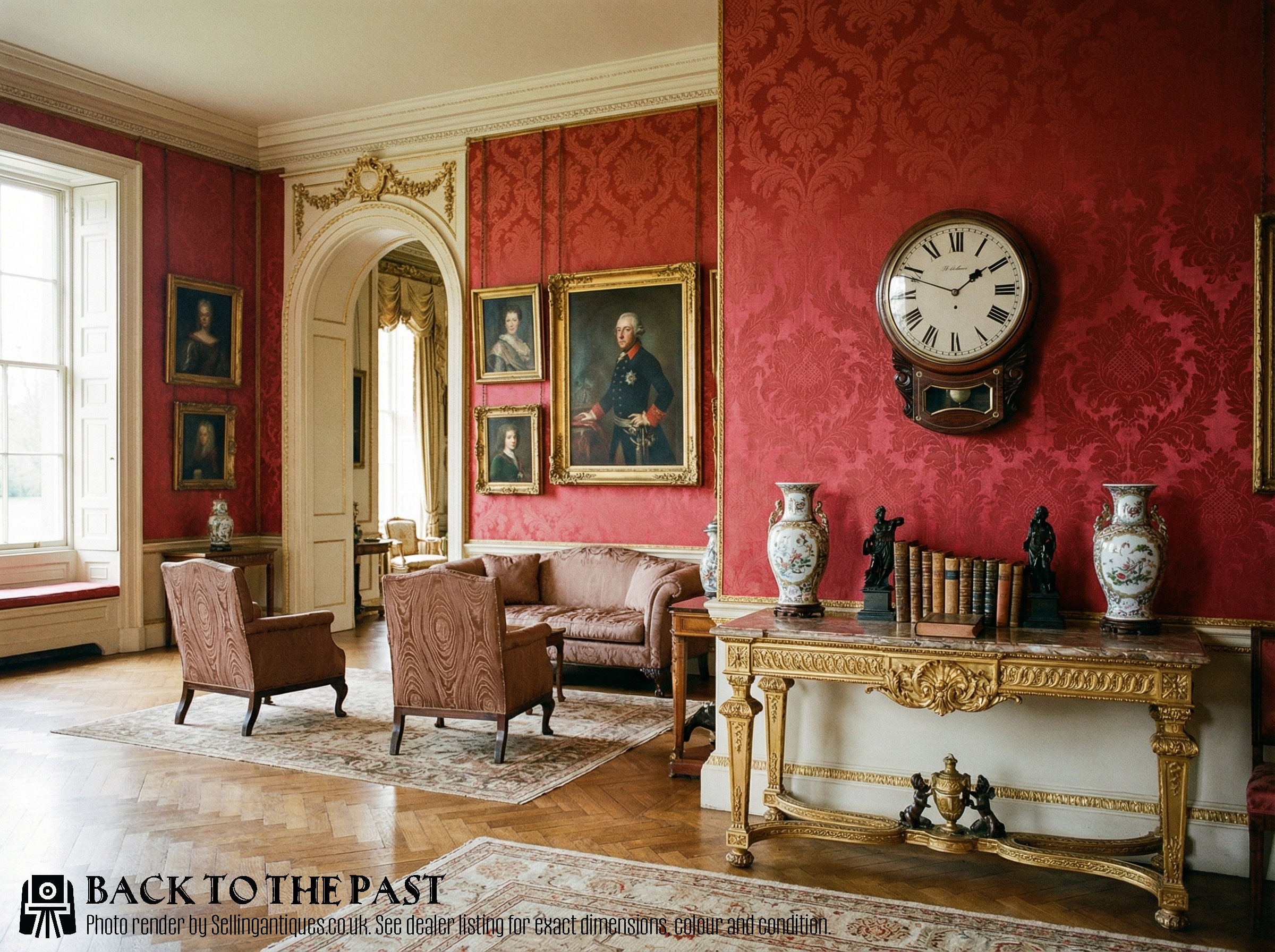
Traditional Wall Clock
A traditional wall clock serves the practical purpose of keeping time while anchoring the visual weight of a room. When buyers search for a traditional wall clock, they generally encounter sturdy timber cases housing reliable mechanical movements.
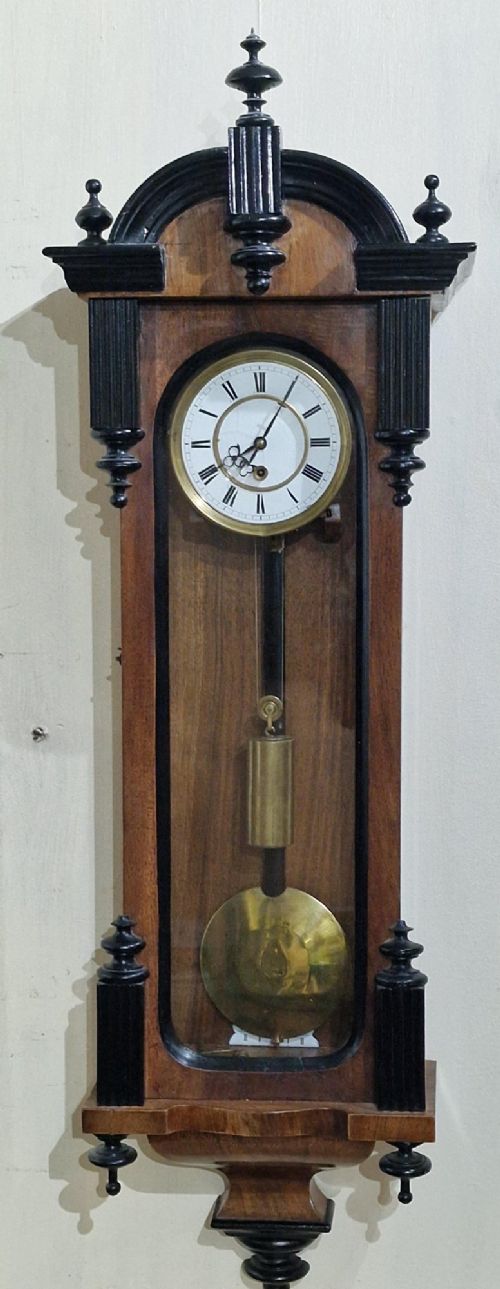
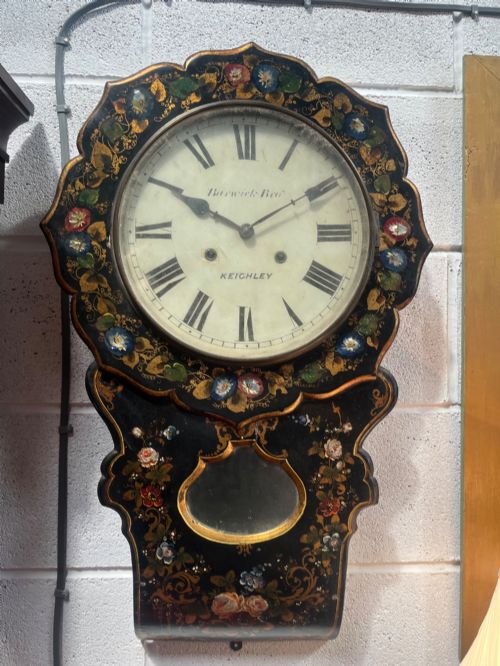
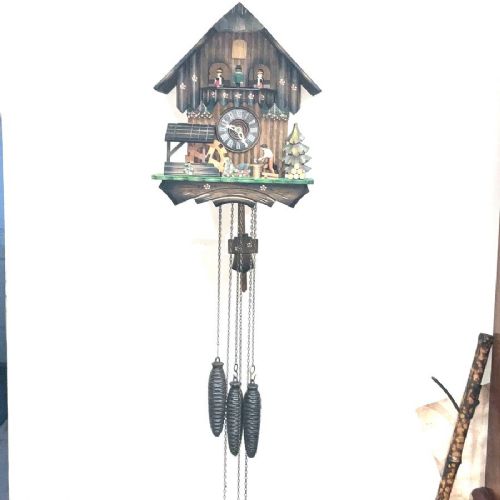
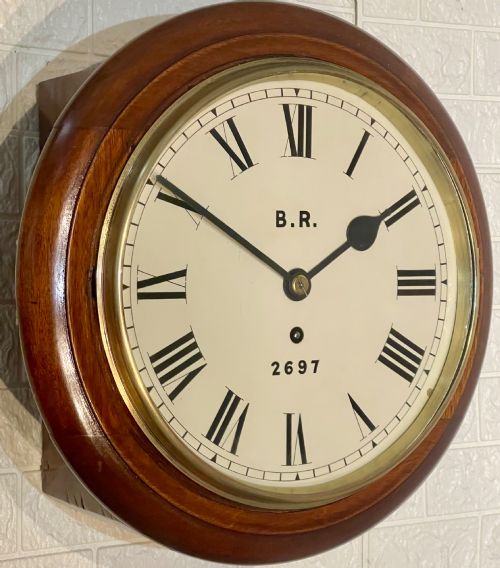
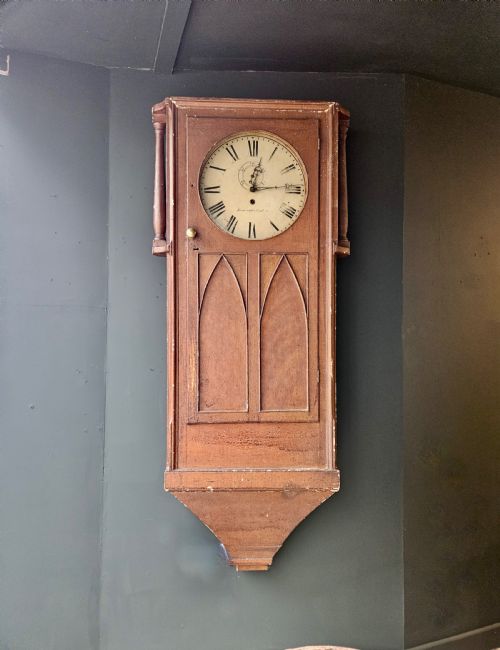
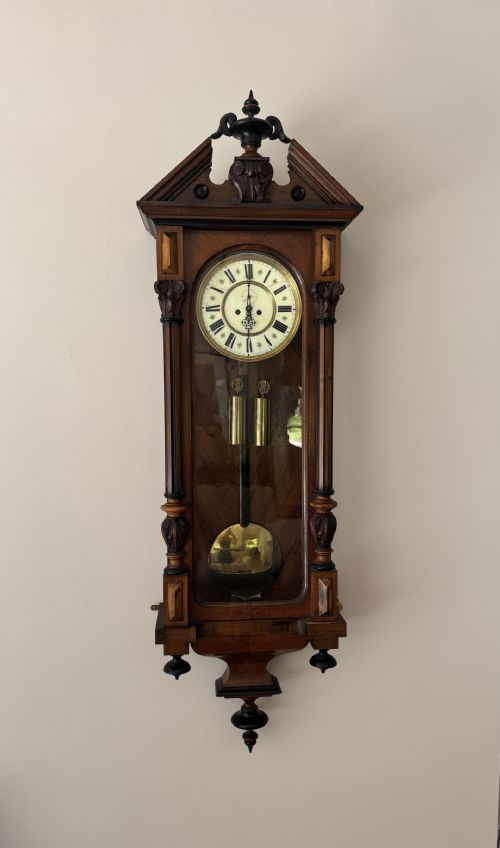
The pieces available here span several distinct forms, including railway dial clocks, drop dial wall clocks, Vienna regulators, and carved wooden cuckoo clocks. Origins range from English provincial workshops to German and Austrian makers.
Dating primarily from the Victorian and Georgian eras alongside early twentieth-century examples, these timepieces reflect the dominant interior styles of their respective periods. Mahogany, walnut, and oak dominate the timber choices across these listings.
How they were made
Cabinet makers constructed the timber cases using solid mahogany, walnut, oak, and pine, often applying carved decoration or painted finishes. Dial faces incorporated brass bezels, convex glass, and hand-painted numerals on enamel or metal plates.
Clock movements relied on traditional brass gear trains powered by fusee springs, hanging weights, or mechanical pendulum systems. Regional variations include the intricate carved walnut cases of Black Forest pieces and the robust joinery of British railway dials.
Traditional Wall Clock Retail Price Guide 2026
Typical asking prices for traditional wall clock among the pieces listed under this phrase on Sellingantiques today, from the lower quarter to the upper quarter. They describe what is for sale here now, not the wider market.
Periods represented span from seventeenth-century lantern clocks up to mid-twentieth-century Dutch and German wall clocks.
What varies in quality
Quality rests primarily in the crispness of the case carving, the choice of cabinet timbers like figured mahogany or walnut, and the sophistication of the internal movement. A fusee movement represents a higher standard of precision timekeeping compared to standard spring-driven alternatives.
The preservation of original painted dials, authentic glass, and untouched maker signatures on the face elevate a piece significantly. Superior examples maintain their original weights, pendulums, and cases without heavy timber replacement or unsympathetic restoration.
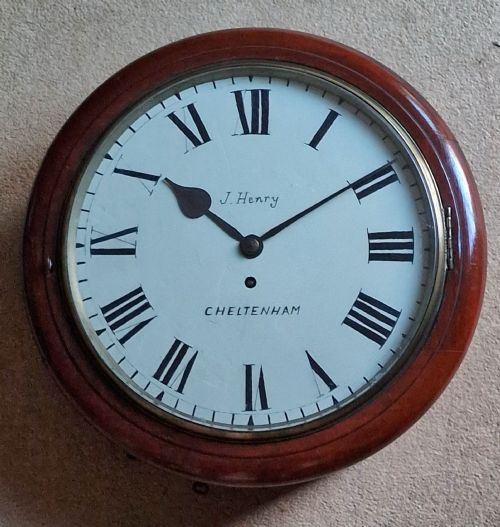
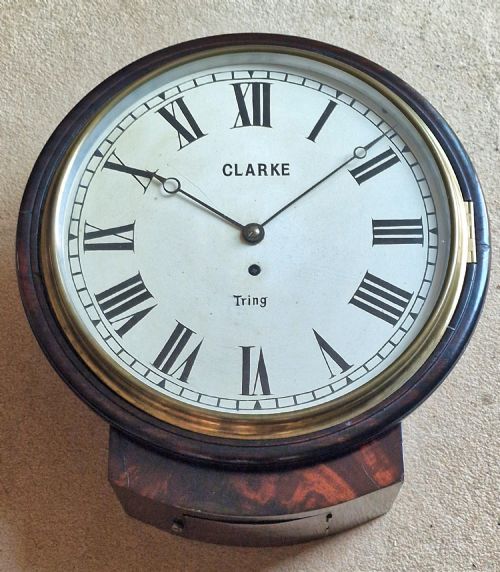
J Henry Cheltenham·George Clarke Tring·Henry Harris Monythusloyn·John Spershott Titchfield·Joseph Bird Stroud·Thomas Hedge Colchester·John Walker·Henry Lamb Windsor·Joseph Mansfield
The Traditional Wall Clock Glossary
- Fusee
- A conical pulley used in a clock movement to maintain even power as the mainspring unwinds. This mechanism ensures more accurate timekeeping throughout the duration of the wind.
- Dial clock
- A wall-mounted timepiece featuring a prominent circular face enclosed by a glass-fronted bezel and a short timber trunk. These were commonly utilised in public buildings, railway stations, and offices.
- Drop dial
- A wall clock design where the circular dial sits above an extended wooden box that houses the pendulum. This drop case is frequently shaped with geometric mouldings or inlaid veneers.
- Vienna regulator
- A precision pendulum wall clock developed in nineteenth-century Austria featuring a long glass-panelled door for viewing the swing. They typically utilise heavy brass weights and sophisticated movement engineering.
- Verge escapement
- An early mechanical escapement mechanism controlling the release of the gear train using a crown wheel and a swinging rod. It represents a traditional method found in older timepieces.
Traditional Wall Clock: Frequently Asked Questions
How do I wind a mechanical wall clock?
Mechanical wall clocks typically utilise a key inserted into holes on the dial face to wind the springs or lift the weights. Care must be taken not to overwind the mechanism.
Most eight-day movements require winding once a week, while weight-driven models may need the weights pulled back up manually depending on the drop height.
What is the difference between a fusee and a spring movement?
A fusee movement uses a conical drum and a chain or cord to equalise the decreasing power of the mainspring as it unwinds. This delivers consistent force to the gear train.
Standard spring-driven clocks lack this conical pulley, meaning the power driving the escapement lessens as the spring relaxes.
Where should I hang a heavy timber wall clock?
Traditional wall clocks with solid mahogany or walnut cases require secure fixing directly into wall studs or masonry using appropriate wall plugs and heavy screws. Hanging them on standard plasterboard without support risks structural failure.
The wall must remain completely stable to prevent vibrations from disturbing the pendulum beat.
How do I keep a pendulum clock beating accurately?
Pendulum clocks rely on being hung perfectly plumb against a flat wall so the tick-tock sound remains even. If the beat sounds uneven, small adjustments to the suspension spring or case levelling are necessary.
Temperature changes and seasonal shifts in wood can also cause the pendulum rod to expand or contract, requiring minor regulation via the adjustment nut.
Are railway dial clocks different from domestic wall clocks?
Railway dial clocks were built for strict utilitarian timekeeping in stations and offices, featuring bold painted numerals and robust oak or mahogany surrounds. They usually lack decorative carvings in favour of clear legibility.
Domestic wall clocks often incorporated finer veneers, brass inlay, and ornate hood or drop-case designs suited for parlour or hallway settings.